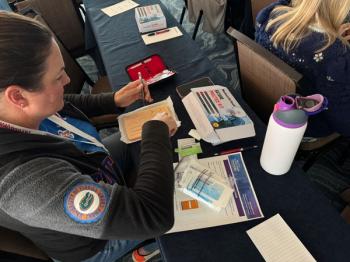
Alexandra Charrow, MD, discussed biologic selection, deroofing, and emerging procedural approaches to hidradenitis suppurativa at Maui Derm NP+PA Fall 2026.
ORKA-001 builds on the proven success of existing IL-23 inhibitors used in psoriasis treatment.
At the recent
ORKA-001 is a next-generation interleukin-23 (IL-23) inhibitor. Current IL-23 inhibitors, including risankizumab, tildrakizumab, and guselkumab, are well established for psoriasis management. These biologics are known for their strong efficacy, favorable safety profile, and infrequent dosing schedules, often administered every 2 to 3 months. Such features have made IL-23 inhibition an attractive therapeutic strategy in dermatology.
Blauvelt emphasized that while existing IL-23 inhibitors are highly effective, ORKA-001 represents an attempt to further optimize treatment. The EVERLAST study is designed not only to evaluate efficacy and safety, but also to explore a treatment regimen that could extend dosing intervals even further. This design aims to test whether patients can achieve durable disease control with fewer injections per year, potentially improving adherence and quality of life.
In the context of psoriasis, durable disease remission and simplified treatment schedules remain key goals. Patient adherence is often challenged by injection fatigue, cost, and the complexity of long-term therapy. A biologic capable of maintaining efficacy with extended intervals could therefore represent an incremental but meaningful advancement.
The promise of ORKA-001 lies in its mechanism and design rationale, but confirmation will depend on trial outcomes. Until then, clinicians should view ORKA-001 as a potential future option within a class that already offers effective choices for moderate to severe psoriasis.