

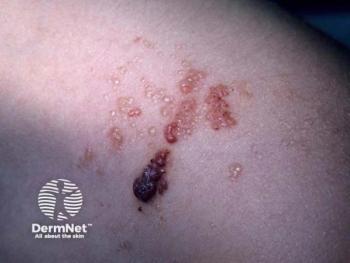
Phase 3 SELVA and phase 2 TOIVA data show Qtorin rapamycin met primary end points for microcystic lymphatic and cutaneous venous malformations.

Kaitlyn Bader is the assistant managing editor of Dermatology Times® and joined the MJH Life Sciences team in June 2022. She oversees the content production of Dermatology Times, from digital and print to videos and podcasts, as well as live coverage of dermatology conferences. Prior to health care news, Kaitlyn worked in digital marketing. She enjoys cooking, reading, and tending to her houseplants.
You can reach her at [email protected].
Phase 3 SELVA and phase 2 TOIVA data show Qtorin rapamycin met primary end points for microcystic lymphatic and cutaneous venous malformations.
Neal Bhatia, MD, outlines the clinical rationale for incorporating photodynamic therapy into skin cancer treatment algorithms, from field cancerization management to emerging applications in superficial basal cell carcinoma.

Maryanne Makredes Senna, MD, shares why mineral sunscreens matter for patients with frontal fibrosing alopecia, and why reprimanding sun-seekers may be more detrimental to patient care.
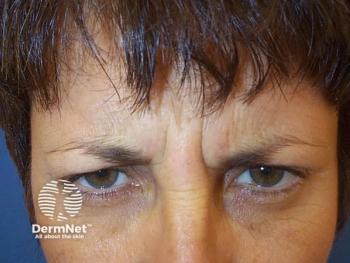
Data presented at SCALE 2026 showed that Ipsen’s investigational recombinant neuroinhibitor achieved significant and sustained improvement in moderate to severe glabellar lines.

In this first episode, Elizabeth Buzney, MD, explains why EPP patients suffer for years before receiving an accurate diagnosis, and what clinicians need to know about this debilitating rare disease.
Neal Bhatia, MD, explains why photodynamic therapy's ability to target subclinical damage across the entire field makes it one of dermatology's most powerful chemopreventive tools.
Maryanne Makredes Senna, MD, discusses emerging data suggesting extended-release oral minoxidil tablets may improve efficacy while minimizing cardiovascular adverse effects in patients with androgenetic alopecia.
Neal Bhatia, MD, makes the case for photodynamic therapy as a versatile, field-treating option, not just an alternative to surgery.

David Oberlin, MD, FAAD, said the true value of AAD lies in clinicians returning to practice and applying new knowledge to patient care.
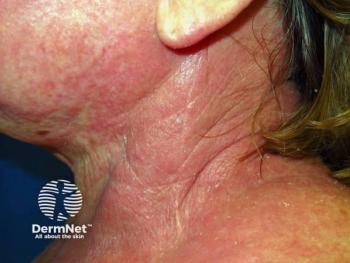
Data show that upadacitinib reduces systemic inflammatory burden in AD, including hs-CRP, a biomarker validated as an independent predictor of major cardiovascular events.

In this episode, Renata Block, DMSc, MMS, PA-C, and Zachary Rubin, MD, discuss the overlapping worlds of allergy and dermatology—and how better cross-specialty understanding can dramatically improve patient outcomes.
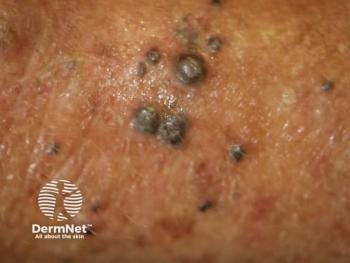
A phase 1/2 trial enrolling patients with refractory melanoma is now actively recruiting.

In this episode, Liza O'Dowd, MD, discusses the 52-week data from the ICONIC clinical program of icotrokinra, the most recently approved oral peptide agent for psoriasis.

At the 2026 AAD Annual Meeting, dermatologists shared their go-to strategies for managing stress, including laughter yoga, relationships, and mindset shifts
At the 2026 AAD Annual Meeting, dermatologists shared their go-to strategies for managing stress — from family time and fitness to emotional intelligence training and even Botox.

Allergist and bestselling author Zachary Rubin, MD, joins host Renata Block, DMSc, MMS, PA-C, to debunk common allergy and atopic dermatitis myths and explore the immunology of the atopic march, cross-specialty collaboration, and more.

The application is based on phase 3 UP-AA trial data showing significant hair regrowth in patients with severe alopecia areata.

Even nonadvanced forms of systemic mastocytosis can significantly impact patients’ quality of life, though new treatments are improving outcomes.
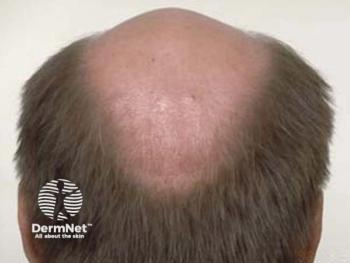
Part A of Study '302' demonstrated statistically significant and clinically meaningful hair growth in men with androgenetic alopecia, with a favorable safety profile and no cardiac adverse events.

Gain exclusive insights from AAD on rapid-onset topicals, durable biologic control, and a growing emphasis on stringent, patient-centered targets shaping atopic dermatitis care.
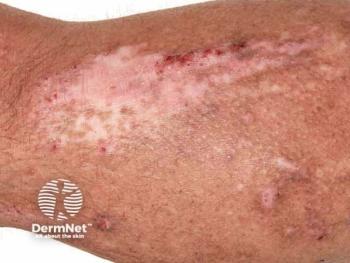
A new gene expression profiling (GEP) test may transform how clinicians select systemic treatments for moderate to severe atopic dermatitis (AD).

A retrospective claims analysis found that nearly half of patients newly diagnosed with vitiligo by a dermatologist did not initiate therapy, and those who did showed low persistence across treatment categories.
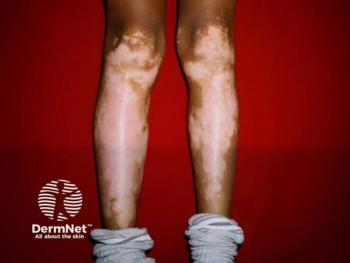
Late-breaking data presented at AAD 2026 showed that upadacitinib 15 mg produced statistically significant, progressively improving repigmentation in adults and adolescents with non-segmental vitiligo through 48 weeks.

Applications are now open for Allergan Aesthetics' women's entrepreneurship initiative, which provides coaching, community, and grants of up to $20,000 to qualifying business owners.
At AAD 2026, Lauren Madigan, MD, presented long-term PIONEER trial extension data and urged clinicians to sharpen their recognition of 2 clonally driven inflammatory diseases: indolent systemic mastocytosis and VEXAS syndrome.
Christopher Bunick, MD, PhD, and Kristian Reich, MD, PhD, discuss phase 3 data presented at AAD showing patients moving from very severe disease at baseline to absent or mild disease by week 40.
At AAD 2026, Diego Ruiz Dasilva, MD, makes the case that the black box warning on JAK inhibitors shouldn't deter appropriate prescribing.

Hope Mitchell, MD, shared practical strategies for protecting and cultivating an online presence at the 2026 American Academy of Dermatology Annual Meeting.
Steven Daveluy, MD, reviews long-term trial data for bimekizumab in psoriasis and hidradenitis suppurativa presented at the 2026 AAD Annual Meeting.
At AAD 2026, Andrew Blauvelt, MD, presented robust PASI responses and favorable safety from ONWARD1 and ONWARD2 trials of envudeucitinib, a next-generation TYK2 inhibitor.