

News|Articles|January 26, 2026
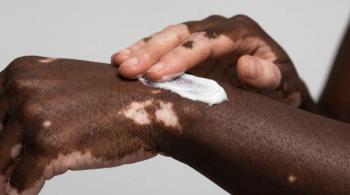
Modern, Multimodal Approaches to Repigmentation in Patients With Vitiligo
Author(s)Marie Bosslett, Assistant Editor
Listen
0:00 / 0:00
Key Takeaways
- Pediatric vitiligo management benefits from aggressive treatment with tacrolimus and corticosteroids, achieving repigmentation and maintaining safety.
- Adult vitiligo treatment often involves topical ruxolitinib and phototherapy, though cost and insurance barriers persist.
Christopher Bunick, MD, PhD, led a vital discussion on innovative vitiligo treatments, emphasizing combination therapies and psychosocial support for effective management.
Advertisement
“Vitiligo is really hard to treat. There’s no right or wrong. I think the best is yet to come…. There’s still a lot more that needs to be done,” Christopher Bunick, MD, PhD, said at a recent
Bunick, associate professor of dermatology at Yale School of Medicine and editor-in-chief of Dermatology Times, led an interactive discussion on vitiligo management in New Haven, Connecticut. The program’s 3 real-world cases focused on topical therapies, integration with phototherapy, psychosocial burden, and real-world barriers such as access and adherence.
Case 1: Periocular Vitiligo in a 7-Year-Old Boy
The first case involved a 7-year-old boy with a 4- to 5-month history of new-onset periocular depigmentation at the right lateral canthus and a family history of vitiligo. Audience polling showed a near-unanimous preference for topical calcineurin inhibitors (tacrolimus 0.1%) as initial therapy in pediatric facial disease.
“Many attendees utilize tacrolimus in combination with topical corticosteroids, and this combination is a valid cost-effective approach for patients who may not have access to, afford, or must pass through step therapy to get to ruxolitinib,” Bunick said. This case presented in Bunick’s clinic before topical ruxolitinib (Opzelura; Incyte) was available, so he utilized a combination approach:
- Tacrolimus 0.1% ointment twice daily, Monday to Friday
- Triamcinolone acetonide 0.1% cream once daily, Saturday to Sunday
- Ten to 15 minutes of natural sunlight, 3 times weekly (as feasible in Connecticut)
The clinicians promoted pulsed topical corticosteroids to balance efficacy and long-term safety around the eyes, noting potential risks of glaucoma and cataracts with prolonged use. At 18 months, the periocular lesion had fully repigmented, and the patient remained clear on a prolonged maintenance regimen with pulsed weekend steroid use without significant safety concerns.
“Not all depigmented patches will have the melanocytes completely dead…but the longer you go, the greater the chance it goes from quiescent to gone. I think that's why I'm aggressive with kids—they do better,” Bunick said at the event.
Case 2: A 24-Year-Old Man With Facial and Forearm Vitiligo
The second case highlighted an adult with progressive nonsegmental vitiligo involving the cheeks, chin, and forearms over 12 months, with significant psychosocial distress related to head and neck involvement. This higher body surface area (BSA) raised questions about topical feasibility and durability of response, prompting a discussion of when to add phototherapy vs relying on topicals alone.
Many attendees favored topical ruxolitinib cream 1.5% as a first-line or early-line facial therapy, when insurance permitted, citing simplicity of use, safety, and tolerability. Phase 3 data from the TRuE-V1/V2 trials (NCT04052425; NCT04057573) showed that approximately 30% of patients achieved at least a 75% improvement in the Facial Vitiligo Area Scoring Index at 24 weeks on the face, as well as gradual gains out to 104 weeks, with approximately half of patients achieving clinically meaningful facial responses at 2 years.
For larger BSA and extremity disease, attendees commonly combined topical ruxolitinib, calcineurin inhibitors, and/or topical steroids (often pulsed) with narrowband UVB or excimer laser, when access allowed. However, cost and insurance denials were considered major barriers to newer agents.
The group also discussed societal awareness—from historical depigmentation therapy (eg, monobenzone) to evolving representation in media and advertising—and its impact on patient perception, stigma, and willingness to pursue treatment. “How to properly counsel on the psychosocial impact of vitiligo was identified as a practice gap, and clinicians need to have the proper resources to help patients deal with the psychosocial impacts,” Bunick said.
Expectations must always be set regarding clearance and stabilization, particularly in notoriously refractory areas such as the hands and feet. “I never promise I'll get 100%. I like the underpromise, overdeliver approach,” Bunick told attendees. “Our goal is to keep things stable. That's the first victory. If we get repigmentation, that's a great bonus.”
Case 3: Truncal and Elbow Vitiligo in a 29-Year-Old Woman
The third case was a 29-year-old woman with rapidly spreading vitiligo of the back and elbows, involving approximately 8% BSA and an underlying autoimmune thyroiditis. She had tried topical corticosteroids but discontinued due to difficulty applying them to the back and achieving minimal repigmentation. Given the nonfacial location, BSA approaching 10%, and the practical challenges of self-application, the group favored phototherapy, particularly excimer laser or narrowband UVB. In this case, twice-weekly excimer laser (approximately 308 nm UVB) was selected to deliver targeted therapy to depigmented patches, spare normal skin, and achieve responses comparable to narrowband UVB in some studies, especially when combined with topical calcineurin inhibitors.
However, attendees emphasized several practical barriers, including co-pays per session, multiple weekly visits, travel distance, and limited phototherapy availability. “I love phototherapy…combining everything together—topical plus phototherapy—is just superior,” one clinician said. “The problem is there are a lot of logistical challenges: co-pays, time, work schedules.”
Photographic documentation is important to demonstrate incremental gains along with regular follow-up to sustain adherence. Home phototherapy units could also be considered in selected, motivated patients.
Conclusion
Across all 3 cases, the clinicians repeatedly returned to core principles: early and aggressive treatment in children, realistic timelines, combination topical-phototherapy strategies, and robust psychosocial support and education to sustain long-term management in a chronic, stigmatizing disease. Bunick praised the tremendous educational value in getting multiple providers together to hear about their approaches to vitiligo in this case-based setting.
“There is no better way to learn than through the collective experience of your colleagues, and round tables offer a unique way to hear from and discuss with your peers exactly how they currently manage skin disease, but also how they anticipate changing with forthcoming innovation. I certainly found it very educational and helpful for my future vitiligo care,” he concluded.
Advertisement
Related Content
Advertisement





Advertisement
Advertisement
Trending on Dermatology Times
1
Genetic Study Links Higher BMI to Perceived Facial Aging, but Causality Remains Unproven
2
FDA Grants Priority Review to Zasocitinib for Moderate-to-Severe Plaque Psoriasis
3
FDA Accepts Bezuclastinib NDA for Advanced Systemic Mastocytosis
4
Sun Protection in Beauty Routines: Is SPF Makeup Enough?
5