The FDA clearance allows Edesa to expand an ongoing placebo-controlled study of the CXCL10 antibody EB06 to US sites, with topline data expected in the fourth quarter of 2027.
In part 2 of this Case-Based Roundtable supplement, Seemal Desai, MD, FAAD; Ted Lain, MD, MBA, FAAD; and Pearl Grimes, MD, FAAD, discuss real-world vitiligo scenarios, offering diagnostic insights, therapeutic strategies, and practical pearls from their own experiences.
Across a trio of Dermatology Times Case-Based Roundtable events held nationwide, 3 board-certified dermatologists joined peers in Texas and California to dissect the clinical challenges and treatment nuances of vitiligo. Through lively, in-depth conversations, participants tackled real-world patient scenarios, offering diagnostic insights, therapeutic strategies, and practical pearls from their own experiences.
The roundtables were moderated by Seemal Desai, MD, FAAD; Ted Lain, MD, MBA, FAAD; and Pearl Grimes, MD, FAAD. Desai, founder of Innovative Dermatology in Plano, Texas, and a clinical assistant professor at The University of Texas Southwestern, led the Dallas-based session. Lain, chief medical officer at Sanova Dermatology in Austin, facilitated the Austin event, while Grimes, founder and director of the Vitiligo & Pigmentation Institute of Southern California, hosted the discussion in Los Angeles.
Each clinician guided peers through 3 complex patient cases, highlighting differences in disease severity, comorbidities, psychosocial impact, and treatment history.
In the second scenario, the dermatologists explored how to manage rapidly progressing vitiligo in a woman with moderate body surface area (BSA) involvement and underlying autoimmune disease. Across all 3 roundtables, the case sparked conversation about systemic and combination therapy approaches, the role of phototherapy, and how to guide patients through a long-term management plan grounded in disease stabilization.
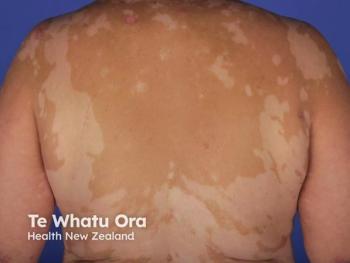
In Dallas, Desai described the case of a 35-year-old White woman with approximately 8% BSA involvement, affecting the back and elbows. She had a known history of autoimmune thyroiditis and discontinued topical corticosteroids due to difficulty applying them and limited improvement.
“The need for stabilizing these patients—they have very active disease—the need for making sure the disease isn’t worsening, and then how to incorporate topicals, phototherapy, and others into that treatment regimen [are all important to discuss],” Desai said.
Excimer laser phototherapy was selected as the primary intervention, with twice-weekly sessions targeting affected areas. Attendees highlighted its utility in patients with under 10% BSA involvement and discussed synergy with topical calcineurin inhibitors.
“Knowing how to treat long term, really emphasizing counseling patients, also screening for comorbidities, and talking about psychological impact,” are essential, Desai said, emphasizing the need for holistic care that includes autoimmune workups and patient education.
In Los Angeles, Grimes led a parallel case discussion of a 33-year-old White woman with similar disease characteristics: approximately 8% BSA involvement and a pattern of ongoing spread despite prior topical corticosteroid use.
Grimes recommended a 6-week course of oral dexamethasone to stabilize disease activity, though she acknowledged that some clinicians extend treatment up to 12 weeks. Topical corticosteroids remained part of the discussion for localized lesions, but Grimes strongly advocated for combination therapy with narrowband UVB (NB-UVB) phototherapy to enhance outcomes. She cited clinical studies showing improved repigmentation rates with NB-UVB plus topicals vs monotherapy and referenced emerging data from a phase 2b trial (
Access and insurance remained a recurring theme. “This case really showed how essential it is to secure timely access to effective therapy,” Grimes said, adding that consistent follow-up and early combination therapy can improve disease trajectory in patients with rapid progression.
In Austin, Lain walked attendees through a comparable case, again underscoring the difficulty of treatment when vitiligo spreads quickly and affects high-friction or hard-to-reach areas like the elbows and back.
“This kind of patient rang a bell with many of us,” Lain said. “Without the use of full-body narrowband [UVB], we started thinking about what we would do systemically in addition to topical therapy.”
Potential systemic options discussed included pulse oral corticosteroids, Janus kinase (JAK) inhibitors, and other immunosuppressants aimed at halting disease activity.
“The treatment is a marathon and not a sprint,” Lain said. “It will—and possibly could—take many, many months to years for her to see repigmentation to the point that she’s kind of content with the results.”
The attendees also considered the psychological toll of lesions on visible or friction-prone areas and how both clinical and quality-of-life considerations must shape treatment conversations.
Part 3 coming soon
References
3. A study to evaluate the safety and efficacy of ruxolitinib cream with phototherapy in participants with vitiligo. Clinicaltrials.gov. Updated February 20, 2025. Accessed July 23, 2025.
about 1 year ago
Vitiligo Management in Practice: Expert Case Reviews