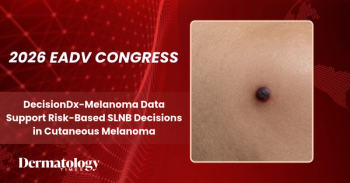
Prospective data suggest DecisionDx-Melanoma may help refine SLNB decisions and identify recurrence risk beyond conventional staging.
Jennelle Daly, MPAS, PA-C, reveals essential winter sunscreen insights, emphasizing UVA risks and patient education for effective photoprotection against melanoma.
In this interview with Dermatology Times, Jennelle Daly, MPAS, PA-C, board-certified physician assistant and owner of Limitless Aesthetics and Wellness in Phoenix, Arizona, discusses patient education strategies and real-world adherence challenges related to photoprotection. Speaking from a clinical and preventive perspective, Daly emphasizes that a major gap in patient understanding is the distinction between UVA and UVB radiation, particularly the misconception that sunscreen is unnecessary during winter months or indoor exposure.
Daly explains that UVA radiation, characterized by longer wavelengths, penetrates deeply into the dermis and is a primary driver of cumulative photoaging, including dyspigmentation and long-term structural skin damage. Unlike UVB, which is associated with visible sunburn and more immediate photodamage, UVA exposure is less perceptible but persistent throughout the year and capable of penetrating windows. As a result, patients who do not experience erythema often underestimate their risk. Daly notes that this educational challenge is especially pronounced among male patients, who frequently believe sunscreen is unnecessary if they are not in direct sunlight.
“Men don't think that they need sunscreen at all,” Daly said. “I feel like male patients are the hardest people to keep up with compliance when it comes to sun exposure and sunscreen protection.”
Compliance with sunscreen use presents multiple barriers. The first is perceived lack of need, followed by cosmetic acceptability. Many patients dislike the texture, tackiness, or white cast associated with mineral-based sunscreens containing zinc oxide or titanium dioxide, despite their favorable safety and broad-spectrum profiles. Reapplication is another significant hurdle; although reapplication every 4 to 6 hours is recommended, most patients apply sunscreen only once daily, if at all.
Daly highlighted the role of formulation in improving adherence. She reports greater compliance when recommending cosmetically elegant or convenient delivery systems, such as
Ultimately, Daly framed sunscreen as a foundational, cost-effective intervention in anti-aging and skin cancer prevention. She emphasized that patient education should link photoprotection to outcomes patients already value—cosmetic procedures, pigment control, and long-term skin quality—thereby reinforcing sunscreen as an essential component of both medical and aesthetic skin health.