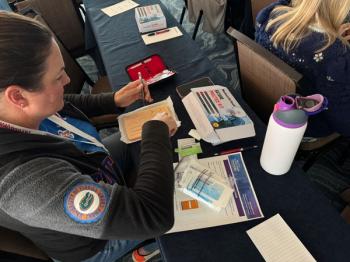
Alexandra Charrow, MD, discussed biologic selection, deroofing, and emerging procedural approaches to hidradenitis suppurativa at Maui Derm NP+PA Fall 2026.
According to a poster at the 2025 EADV Congress, barzolvolimab achieved comparable improvements in weekly Urticaria Activity Scores across immunoglobulin E (lgE) subgroups.
Celldex Therapeutics recently announced new data showing that barzolvolimab demonstrated rapid and sustained efficacy in patients with chronic spontaneous urticaria (CSU), regardless of baseline immunoglobulin E (IgE) levels. The results were presented in an oral e-poster session at the
Across both IgE subgroups (< 40 and > 40), barzolvolimab achieved comparable improvements in weekly Urticaria Activity Scores (UAS7), with consistent mean changes from baseline at weeks 12 and 52. Rates of well-controlled disease (UAS7 < 6) and complete disease control (UAS7 = 0) were similar in both subgroups. Comparable outcomes were also observed with Urticaria Control Test (UCT7) assessments, including well-controlled disease (UCT7 > 12) and complete disease control (UCT7 = 16) at weeks 12 and 52.
The findings build on earlier phase 2 trial results, in which barzolvolimab met its primary end point of significant UAS7 improvement vs placebo at 12 weeks across all dose groups. Complete response rates (UAS7 = 0; no itch/no hives) were observed in up to 51% of patients by week 12, increasing to 71% after 52 weeks of active therapy. Notably, sustained benefit persisted well beyond dosing: At week 76, up to 41% of patients maintained a complete response, and 48% reported no quality-of-life impact from CSU.
“These data reinforce that mast cells are important drivers of CSU and that barzolvolimab, with its novel mechanism of action, has significant potential to be a meaningful treatment for all patients with CSU, regardless of underlying disease endotype,” Diane C. Young, MD, senior vice president and chief medical officer of Celldex, said in the news release. “This is especially important for patients with low IgE levels, who typically have more severe disease and are less likely to respond to IgE-targeted therapies, including omalizumab.”
Barzolvolimab was well tolerated, with a favorable safety profile across treatment durations. No new safety concerns emerged during the study.
Celldex is now advancing barzolvolimab into phase 3 evaluation through the global EMBARQ-CSU1 (
Barzolvolimab, a humanized monoclonal antibody targeting KIT, represents a novel approach in CSU management by directly inhibiting mast cell function and survival. The investigational agent is also being studied in cold urticaria, symptomatic dermographism, prurigo nodularis, and atopic dermatitis.
In May 2025, a study published in the
Researchers conducted a phase 1b, double-blinded, randomized study (
Barzolvolimab demonstrated robust and sustained suppression of serum tryptase. Within days of the initial dose, tryptase levels dropped by more than 90% in the 1.5-mg/kg and higher-dose cohorts and remained suppressed throughout the 12-week dosing period.2
Clinically meaningful reductions in disease severity were observed in barzolvolimab-treated patients across all cohorts. By week 12, average UAS7 scores declined substantially, with the 3.0-mg/kg and 4.5-mg/kg groups experiencing reductions of 30 to 35 points compared with baseline. In contrast, placebo-treated patients showed minimal change.2
References