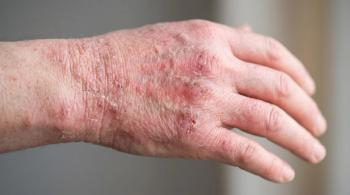
Patients with plaque psoriasis treated with roflumilast cream or foam reported greater improvements in sexual function and relationships vs vehicle, including those with genital involvement at baseline.
At Fall Clinical 2026, Shannon Trotter, DO, reviews locally advanced and metastatic cutaneous squamous cell carcinoma, immune checkpoint inhibitors, and proposed Medicare cuts affecting skin cancer care.
Shannon Trotter, DO, a board-certified dermatologist with DOCS Dermatology in Central Ohio and a clinical assistant professor at Ohio University, recently shared key highlights from her
Trotter said dermatologists should pay attention to locally advanced and metastatic cutaneous squamous cell carcinoma (cSCC). About 95% of cases are treatable, but roughly 5% become more difficult to treat. Dermatologists can be part of treating those patients.
“We need to care about locally advanced cutaneous SCC as well as metastatic squamous cell carcinoma of the skin,” Trotter said.
Locally advanced and metastatic disease may seem far off to dermatologists, Trotter said, but dermatologists remain central to skin cancer care. They may be the first to detect disease, whether on the skin or by palpating for a lymph node.
“We’re really the quarterbacks in skin cancer,” Trotter said. She added dermatologists should stay involved in patient care even after referral to oncology.
Trotter highlighted 3 immune checkpoint inhibitors approved for locally advanced and metastatic cSCC: pembrolizumab (Keytruda; Merck), cemiplimab (Libtayo; Regeneron), and cosibelimab (Unloxcyt; Sun Pharma). Each works a little differently, she said, but all offer an advantage for patients.
“They are an advantage for our patients, and we need to know about these as tools as dermatologists,” Trotter said.
Treatment may be relinquished to oncology. Additional research is studying intralesional use, however, which might serve a purpose for dermatologists in the office.
Last month, Trotter and colleagues traveled to Washington DC to the
Trotter said the proposed Medicare cuts come down to a patient access issue. Medicare covers an older population, and older patients are disproportionately affected by skin cancer. She said the cuts would mean delayed access to care for these patients.
“What it boils down to essentially is a patient access issue,” Trotter said.
Survival rates are almost 100% when skin cancer is caught early, particularly melanoma, she noted. Without access to early diagnosis and treatment, she said, those rates drop.
Trotter called on the dermatology community to get active on the issue. She directed fellow clinicians to
Reference
1) Take action: call on Congress to reverse Medicare cuts. American Academy of Dermatology. Accessed October 10, 2026.