


Feature|Videos|November 6, 2025
Highlighting Ruxolitinib’s Role in Sustained Vitiligo Management
Marc Serota, MD, discusses using ruxolitinib cream to safely maintain repigmentation, minimize steroid-related adverse effects, and enhance outcomes when combined with phototherapy.
Advertisement
Episodes in this series





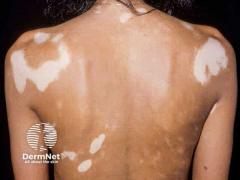
In a recent Expert Perspectives custom video series, Marc Serota, MD, a practicing dermatologist board-certified in pediatrics, allergy and immunology, and obesity medicine, recently discussed his key considerations for treating vitiligo and the evolving role of topical agents.
Serota first emphasized that certain anatomical sites remain more challenging to repigment, particularly those with few or absent hair follicles, such as the palms, dorsal hands, and specific facial regions. Because melanocyte stem cells originate within hair follicles, these areas lack the regenerative capacity seen elsewhere, often limiting therapeutic response. He noted that traditional topical corticosteroids, while effective, are limited by adverse effects such as skin atrophy, striae, and telangiectasia—concerns that often deter both patients and clinicians from prolonged use, especially on sensitive facial skin.
Ruxolitinib cream (Opzelura; Incyte), a topical JAK inhibitor approved for nonsegmental vitiligo in patients 12 years and older, offers a well-tolerated alternative for long-term disease control. Serota highlighted that ruxolitinib’s safety profile allows for more flexible and confident use without the structural skin damage associated with corticosteroids. He often integrates it into broader treatment strategies such as a “kitchen sink” approach—initiating combination therapies to induce repigmentation, then maintaining results with ruxolitinib cream for sustained control.
“If you want to jumpstart someone's journey with a potent topical steroid, I wouldn't fault you for that,” Serota said. “But I think having something on board like Opzelura...you can maintain [patients] and have the more long-term treatment,” Serota said.
Combination therapy with phototherapy remains a cornerstone of his approach, leveraging complementary mechanisms: ruxolitinib’s modulation of local immune activity alongside phototherapy’s melanocyte stimulation. Serota anticipates that future regimens may pair topical JAK inhibition with systemic immunomodulators to enhance durability and extent of repigmentation.
Beyond its labeled indications of atopic dermatitis down to 2 years and nonsegmental vitiligo in patients aged 12 years and older, Serota observed off-label interest in ruxolitinib cream for younger children and other inflammatory dermatoses, including perioral dermatitis and non-atopic eczematous variants. Drawing on his pediatric background, he emphasized the importance of advocating for equitable access when evidence and clinical need support such use.
Overall, Serota views ruxolitinib cream as a pivotal advance in vitiligo therapy—supporting long-term maintenance and enhancing patient comfort and clinician confidence in topical management.
Advertisement
Related Content
Advertisement





Latest CME


Advertisement
Advertisement
Trending on Dermatology Times
1
How Emerging Androgenetic Alopecia Therapies Target DHT at the Scalp Level
2
Social Media Mythbusters: Beef Tallow
3
Dermatology Times Inaugural NP/PA Connect Cutaneous Oncology Workshop Kicks Off in Tampa
4
25 Years Later: Remembering September 11 Through the Lens of Dermatologic and Burn Care
5