


News|Videos|October 30, 2025
Lindsay Ackerman, MD, FAAD, Discusses Practical Tips for Ruxolitinib Application
The Phoenix-based dermatologist encourages innovative and patient-tailored strategies to optimize pigment restoration.
Advertisement
Episodes in this series



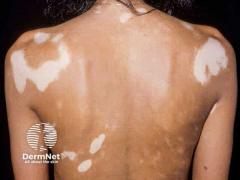
In a recent discussion with Dermatology Times, Lindsay Ackerman, MD, FAAD, shared her clinical experience and insights on optimizing outcomes for patients using ruxolitinib cream (Opzelura; Incyte) in the treatment of vitiligo. Ackerman, a medical dermatologist at Medical Dermatology Specialists in Phoenix—now part of US Dermatology Partners—serves as the site’s president, medical director of clinical research, chief of inpatient dermatology at Banner University Medical Center, and associate professor at the University of Arizona College of Medicine.
Ackerman highlighted an important gap between clinical trial data and real-world application of ruxolitinib cream. “We study the drug as monotherapy—that’s the FDA requirement,” she explained. “But really, looking at this drug on the ground level, many of us are using it in an off-label fashion, in combination with other therapies.”
While ruxolitinib cream has demonstrated efficacy as a topical Janus kinase (JAK) inhibitor for repigmentation in nonsegmental vitiligo, Ackerman and other clinicians have observed enhanced outcomes when combining it with narrowband UVB phototherapy. “Combination with narrowband UVB seems to enhance, experientially, the response to ruxolitinib cream for repigmentation,” she said.
In her clinical practice, Ackerman has seen more robust results when pairing the two modalities compared with either treatment alone. “Getting patients on ruxolitinib plus narrowband UVB in my hands works better than either one of those therapies alone,” she noted.
When discussing practical strategies for clinicians, Ackerman emphasized the importance of treatment sequencing and patient education. She advises patients to complete their narrowband UVB sessions before applying the cream. “We like to grease them up with Vaseline ahead of time and then they wipe it off afterward,” she explained. “We don’t want them wiping off their therapy.” Since the recommended dosing for ruxolitinib cream is twice daily, She suggests applying it several hours before phototherapy to allow for optimal absorption without interference.
Ackerman’s approach underscores the evolving nature of dermatologic therapeutics, where real-world experience can help refine evidence-based practices. As research continues to explore combination regimens, she hopes to see formal studies examining the synergistic effects of ruxolitinib with narrowband UVB. “There are a lot of ways we should be creative in utilizing this cream and optimizing patient outcomes,” she concluded. “That’s a gap I’d like to see filled.”
Advertisement
Related to this article
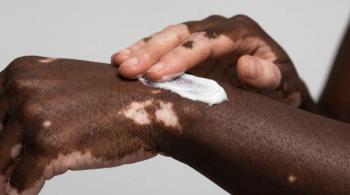
Longer treatment duration was independently associated with VASI improvement, while publicly insured patients experienced higher topical JAK inhibitor denial rates.

The merger, backed by an oversubscribed $180 million private placement, will fund development of NOR-101, an IL-13 x IL-18 bispecific antibody entering phase 1 trials in atopic dermatitis in early 2027.
Maui Derm NP+PA Fall 2026 brought APPs together for updates spanning inflammatory disease, oncology, emerging therapies, and diagnostic challenges.
LEO Pharma has closed its acquisition of dersimelagon from Tanabe Pharma after the FDA accepted the drug's NDA for filing and granted Priority Review, with a PDUFA date expected by the end of February 2027.
Sol-Gel Technologies has completed patient follow-up in its pivotal phase 3 trial of SGT-610 (patidegib gel, 2%) for Gorlin syndrome, with top-line results expected in late November 2026.
Two small clinical studies evaluated skincare and dermabrasion for changes in skin quality among individuals taking medical weight loss medications.

Two-year POETYK PsA-2 data showed sustained ACR and minimal disease activity responses with deucravacitinib and no new safety signals.

Faculty from the Cutaneous Oncology Workshop answer practical questions spanning skin cancer prevention, diagnosis, treatment, and follow-up.
Advertisement
Advertisement
Trending on Dermatology Times
1
Clascoterone 5% Topical Solution Shows Long-Term Promise for Male Pattern Hair Loss
2
Dersimelagon NDA Accepted by FDA with Priority Review for EPP, XLP
3
Neutrogena Launches New Sunscreens With Newly Permitted UV Filter Bemotrizinol
4
Two-Year POETYK PsA-2 Data Show Durable Deucravacitinib Responses in Psoriatic Arthritis
5