


News|Videos|November 18, 2025
Lewitt Shares Strategies for Treating Vitiligo in Difficult Areas
Key Takeaways
- Vitiligo management is challenging in high-use areas; nighttime application and barrier products can enhance treatment efficacy.
- Two FDA-approved treatments, topical ruxolitinib and 308-nm excimer laser therapy, are available, with combination therapy often yielding better outcomes.
Using multiple treatment modalities often achieves superior repigmentation compared with monotherapy, according to Michael Lewitt, MD.
Advertisement
Episodes in this series




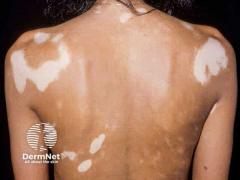
In a recent conversation with Dermatology Times at the
Vitiligo management remains complex, especially in regions prone to frequent moisture or friction such as the perioral area, hands, and other high-use anatomic sites. According to Lewitt, nighttime application of topical agents may offer a practical advantage by reducing inadvertent removal of medication from routine activities such as eating, brushing teeth, or handwashing. He also described using barrier products, such as zinc oxide, to protect areas where medication should not migrate. While not formally studied, this approach aims to minimize unwanted spread of topical therapy.
Currently, there are 2 FDA-approved treatments for vitiligo: topical ruxolitinib and 308-nm excimer laser therapy. Lewitt emphasized that targeted phototherapy can be especially useful in regions where topical therapy is less practical, provided proper eye protection is used when treating near the face. In many cases, he finds that combination therapy offers superior benefit compared with single-modality treatment.
Before the approval of ruxolitinib, treatment options were limited to topical corticosteroids, calcineurin inhibitors, and phototherapy, all of which had inconsistent results for many patients. Participation in clinical trials, including those investigating topical and systemic JAK inhibitors, has expanded therapeutic possibilities and enhanced understanding of vitiligo pathophysiology. Ongoing trials are evaluating systemic JAK inhibitors down to age 12 and topical agents down to age 2.
Lewitt highlighted the importance of early intervention, noting parallels with other autoimmune dermatologic conditions such as alopecia areata. More recent disease onset may respond more readily, although individuals with long-standing vitiligo can still experience improvement. Anatomic variation also influences treatment response; for example, facial areas often repigment more quickly, while acral sites remain challenging. Hair follicle density may contribute to these differences.
Finally, Lewitt stressed the value of maintaining patient engagement, especially when progress feels slow. Reinforcing incremental improvements, such as reduced lesion size, can help patients stay encouraged and adhere to therapy, which is critical for long-term success.
As new therapies continue to emerge, personalized, combination-based, and patient-centered approaches remain central to optimizing vitiligo care.
Advertisement
Related to this article

Longer treatment duration was independently associated with VASI improvement, while publicly insured patients experienced higher topical JAK inhibitor denial rates.

The merger, backed by an oversubscribed $180 million private placement, will fund development of NOR-101, an IL-13 x IL-18 bispecific antibody entering phase 1 trials in atopic dermatitis in early 2027.

Maui Derm NP+PA Fall 2026 brought APPs together for updates spanning inflammatory disease, oncology, emerging therapies, and diagnostic challenges.

LEO Pharma has closed its acquisition of dersimelagon from Tanabe Pharma after the FDA accepted the drug's NDA for filing and granted Priority Review, with a PDUFA date expected by the end of February 2027.

Sol-Gel Technologies has completed patient follow-up in its pivotal phase 3 trial of SGT-610 (patidegib gel, 2%) for Gorlin syndrome, with top-line results expected in late November 2026.
Two small clinical studies evaluated skincare and dermabrasion for changes in skin quality among individuals taking medical weight loss medications.

Two-year POETYK PsA-2 data showed sustained ACR and minimal disease activity responses with deucravacitinib and no new safety signals.

Faculty from the Cutaneous Oncology Workshop answer practical questions spanning skin cancer prevention, diagnosis, treatment, and follow-up.
Advertisement
Advertisement
Trending on Dermatology Times
1
Clascoterone 5% Topical Solution Shows Long-Term Promise for Male Pattern Hair Loss
2
Dersimelagon NDA Accepted by FDA with Priority Review for EPP, XLP
3
Neutrogena Launches New Sunscreens With Newly Permitted UV Filter Bemotrizinol
4
Two-Year POETYK PsA-2 Data Show Durable Deucravacitinib Responses in Psoriatic Arthritis
5