Falk G. Bechara, MD, discusses long-term tunnel control, structural damage, and the evolving role of biologics and surgery in HS care.
At Elevate-Derm 2025, Lisa Weiss, MMSc, PA-C, outlined the multifactorial approach to CHE, the clinical utility of delgocitinib, and her expanding educational and leadership priorities heading into 2026.
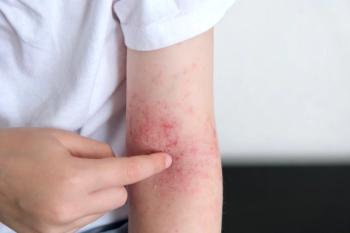
“Hand eczema isn't just putting topical steroid cream on patient's hands. It's really getting to the bottom of the diagnosis, honing in on the history, and not just what the patient comes in and tells you, but putting all those pieces together,” said Lisa Weiss, MMSc, PA-C, in an interview at the
Weiss, a physician assistant at Goodman Dermatology in Georgia, presented “Optimizing Outcomes in Chronic Hand Eczema,” and reviewed the multifactorial nature of chronic hand eczema (CHE). Weiss also discussed her role as the medical director of the RAPIDS conference and what she is looking forward to in 2026.
Weiss first highlighted the diagnostic and therapeutic complexity of CHE, emphasizing that effective management extends far beyond the application of topical corticosteroids. She noted that hand eczema is fundamentally multifactorial, requiring clinicians to understand patient history, exposure patterns, morphology, and chronicity to determinethe drivers of disease for each patient. Weiss stressed that the initialnarrative offered in the exam room rarely reflects the full picture, making detailed questioning and pattern recognition central to accurateclassification and durable control.
She has incorporated delgocitinib (Anzupgo; LEO Pharma) into her treatment rotation already and reported consistently positive feedback from patients, particularly regarding the vehicle. She contrasted the formulation with traditional high-potency steroid ointments, which often hinder adherence due to residue, tackiness, and poor tolerability during repeated daytime application. In contrast, she described delgocitinib as cosmetically elegant and well-suited for patients needing a non-steroidal option compatible with work routines. She also highlighted its relevance as a pan-JAK inhibitor capable of addressing the multifactorial inflammatory pathways that drive CHE, enabling clinicians to aim not only for clearance but sustained disease control.
Regarding upcoming events, Weiss discussed her broader role in dermatology education as the director of
Looking to 2026, Weiss is excited for the continued growth of Elevate conferences and the second year of RAPIDS, which she anticipates will expand both attendance and curriculum depth. She is also collaborating on CME agendas for the Georgia Derm PA Society and the Texas PA Society, alongside monitoring the arrival of new therapeutic agents expected to shape the next cycle of clinical practice.