In a retrospective study of 393 patients, 51.9% had at least 1 abnormal LFT during follow-up, but only 1.1% had elevations above 3 times the upper limit of normal.

Lisa Swanson, MD, joins Don't Be Rash host Andrew C. Krakowski, MD, for Psoriasis Awareness Month to discuss how pediatric psoriasis is often misdiagnosed and when it signals a heightened risk of psoriatic arthritis in kids.
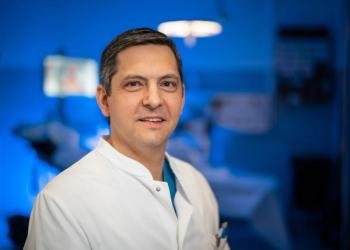
Lisa Swanson, MD, a board-certified pediatric dermatologist in private practice with Ada West Dermatology and affiliated with St. Luke's Children's Hospital in Boise, Idaho, recently joined Don't Be Rash host Andrew C. Krakowski, MD, to discuss recognizing pediatric psoriasis for Psoriasis Awareness Month. Swanson also addressed how psoriatic arthritis (PsA) can develop before, alongside, or after skin disease in children.
Disclosure: Don’t Be Rash is the official podcast of the Society for Pediatric Dermatology, hosted by Dermatology Times. This episode is supported in part by an unrestricted grant from Arcutis Biotherapeutics.
Many children with psoriasis arrive already carrying a diagnosis of eczema, yeast, pityriasis rosea, or fungus.
"I feel like every kiddo I see with psoriasis has been misdiagnosed and has been told they have something else," Swanson said.
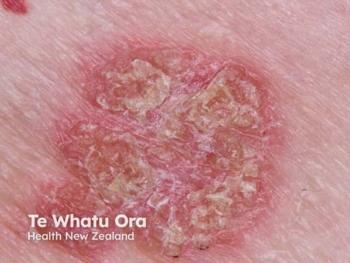
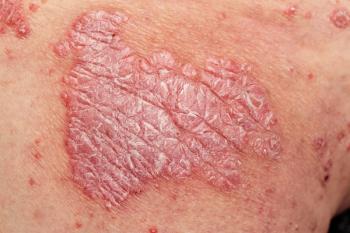
Psoriasis in children favors the scalp, face, and intertriginous areas, including the axillae, groin, umbilicus, and gluteal cleft, all atypical sites in adults. One supporting clue is the Koebner phenomenon, in which psoriasis appears at sites of childhood scrapes and falls.
Guttate psoriasis, with its raindrop-shaped lesions, is common in Swanson's practice; she routinely orders a strep test, since even asymptomatic streptococcal infection is the most frequent trigger.
"If you don't identify and treat the strep, and you just try to treat the psoriasis, it's not going to go away," Swanson said.
To satisfy payer requirements, Swanson documents plaque psoriasis, since biologics and systemic therapies are approved only for the plaque subtype. She also records body surface area and an Investigator's Global Assessment score, ranging from 0 (clear) to 4 (severe), along with the affected body regions.
"I always make sure it's called plaque psoriasis, because that's what all of our medicines are approved for," Swanson said.
In clinic, Swanson asks about functional and social impact instead of formal quality-of-life scores; one patient with nail involvement stopped playing with LEGO sets altogether.
"Does your psoriasis interfere with any activities? Is there anything you're not doing because of your psoriasis?" Swanson said.
Even minor nail pitting a family has not noticed raises suspicion for concurrent PsA, and Swanson asks children about joint pain, since families often assume a rash and joint symptoms are unrelated.
"It's especially important to me because I find that nail psoriasis elevates the risk for psoriatic arthritis," Swanson said.
Krakowski noted an estimated 3% to 10% of children with psoriasis may also have PsA, well below the nearly one-third of adults found to have rheumatologist-diagnosed PsA in a multicenter dermatology-clinic study.1 PsA sometimes precedes skin disease entirely, with no consistent order between the 2. Swanson screens for morning stiffness, joint pain, swollen or tender joints, and enthesitis at the Achilles insertion, along with fatigue, which patients with PsA rank as their second most important symptom, after pain and before skin complaints.2
Swanson and Krakowski also noted psoriasis' systemic reach, including added risk of diabetes, hypertension, hyperlipidemia, cardiovascular disease, anxiety, and depression, plus a growing uveitis link driving more ophthalmology referrals.
Swanson said the expanding treatment landscape lets her deliver a hopeful message to newly diagnosed families.
"There is so much hope. There are so many wonderful treatments for this," Swanson said. "Everything's gonna be okay. We got this," she added.
References