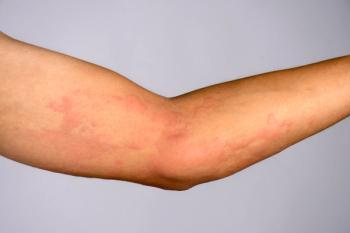
A scoping review published in Cureus found dietary modification may play an adjunctive role in managing chronic idiopathic urticaria (CIU), with several dietary approaches associated with improvements in disease activity, disease control, or quality of life.1
Although the review focuses on CIU, the condition is also commonly referred to as chronic spontaneous urticaria (CSU), and the terms are often used interchangeably in the literature. Both describe recurrent wheals, angioedema, or both lasting longer than 6 weeks without an identifiable external trigger. The terminology reflects the same central clinical feature: symptoms arise without a specific external stimulus that consistently explains their occurrence.1
The distinction is largely one of terminology and emphasis. “Idiopathic” historically emphasizes that no identifiable cause can be determined, whereas “spontaneous” describes the unprompted occurrence of symptoms and is commonly used in contemporary literature. The authors of the scoping review used CIU and CSU interchangeably to remain consistent with terminology across the included studies.1
Review Examines Diet as an Adjunct to CIU/CSU Management
Investigators from Nova Southeastern University Dr. Kiran C. Patel College of Osteopathic Medicine screened 121 records and ultimately included 8 studies published from 2015 through 2025. Six of the 8 studies reported measurable improvements in disease activity or quality of life, or favorable associations between dietary factors and clinical outcomes.1
The findings point to a potential role for nutritional strategies—particularly diets limiting histamine or pseudoallergens—as an adjunct to conventional CIU/CSU management. However, the authors emphasized that the available evidence remains limited by small study populations, short intervention periods, and a lack of mechanistic research.1
Diet Emerges as a Potential Adjunctive Strategy
Current CIU/CSU management generally follows a stepwise approach beginning with second-generation H1-antihistamines, with dose escalation and biologic therapy considered for patients whose disease remains inadequately controlled. However, suboptimal symptom control and concerns about long-term medication use have contributed to interest in complementary strategies, including dietary modification.1
The investigators conducted the scoping review using PRISMA-guided methodology and searched EMBASE, Ovid MEDLINE, Web of Science, and PubMed for studies published between January 1, 2015, and April 8, 2025. Nine studies remained after full-text screening, and 8 were ultimately included following Joanna Briggs Institute critical appraisal.1
The studies were conducted in Turkey, Germany, Korea, Japan, India, and the United Kingdom. Sample sizes ranged from 22 to 282 participants, and the research evaluated Mediterranean, low-histamine, histamine-free, and pseudoallergen-free diets, as well as dietary habits, micronutrient levels, and inflammatory markers.1
Mediterranean Diet Associated With Better Disease Control
In a cross-sectional study of 100 patients with CSU and 100 age- and sex-matched healthy controls, greater adherence to the Mediterranean diet was associated with lower disease activity and better disease control.2
Among patients with CSU, Urticaria Activity Score over 7 days (UAS7) was negatively correlated with Mediterranean Diet Score, whereas Urticaria Control Test (UCT) scores were positively correlated with Mediterranean diet adherence.2
The authors of the scoping review noted that the Mediterranean diet differs from more restrictive dietary approaches evaluated in other included studies. Foods such as certain fruits and vegetables, wine, and aged cheese may be included in a Mediterranean dietary pattern but restricted in low-histamine or pseudoallergen-free diets.1
Despite these differences, several of the dietary approaches shared an emphasis on whole foods and limiting processed foods or additives. The review authors suggested that the nutritional adequacy and long-term sustainability of the Mediterranean diet could make it a potentially feasible baseline dietary framework, although further research is needed.1
Frequently Asked Questions
Does diet affect chronic idiopathic urticaria?
Emerging evidence suggests dietary modification may improve disease activity or quality of life in some patients with CIU/CSU. Six of the 8 studies included in the scoping review reported improvements or favorable associations, but current evidence is insufficient to establish standardized dietary recommendations.1
Which diets showed benefit for chronic urticaria?
Mediterranean, low-histamine, histamine-free, and pseudoallergen-free dietary approaches were associated with improved disease control, disease activity, or quality of life in at least 1 included study.1
What are the main limitations of the current evidence on diet and CIU?
Studies generally had small sample sizes and short intervention periods, with limited mechanistic or provocation testing. None of the included studies were conducted in the United States, and potential confounding factors were inconsistently controlled.1
Pseudoallergen-Free Diets Show Benefits in Some Patients
Other studies evaluated whether restricting pseudoallergens could improve CIU/CSU activity.
In a prospective pilot study of 23 patients with poorly controlled CSU, participants followed a pseudoallergen-free diet for 3 weeks. Six patients (26.1%) achieved a strong response, defined as a reduction in Urticaria Activity Score of at least 8 points, while another 6 patients (26.1%) achieved a partial response.1
Antihistamine use decreased in 43.5% of participants, and 39.1% experienced significant improvement in quality of life.1
A separate prospective study involving 157 patients with moderate-to-severe CSU evaluated a 31-day histamine-free, low-pseudoallergen diet. Following the intervention, 46% of patients experienced a reduction of at least 7 points in UAS7.1
However, subsequent oral histamine provocation complicated the interpretation of those improvements. Although 34% of participants reported a history of histamine intolerance, oral histamine provocation produced a positive wheal response in only 17%. Just 2 of the 157 participants were positive across patient history, dietary response, and provocation testing.1
The findings suggested that improvement associated with the avoidance diet was probably not attributable solely to eliminating dietary histamine.1
Low-Histamine Diets Reduce Urticaria Activity
Low-histamine dietary interventions were also associated with reductions in disease activity in several studies.
In a 3-week study of 56 patients with CSU and gastrointestinal symptoms, mean Urticaria Activity Score over 4 days (UAS4) decreased from 9.05 to 4.23 following a low-histamine diet (P = .004).³ Overall, 75% of participants benefited from the intervention, and 61% achieved the study's primary end point of at least a 3-point improvement in UAS4.1,3
Quality-of-life measures also improved following the intervention. However, the study lacked blinding and a control group, meaning a placebo effect could not be excluded.1
A separate 4-week study of 22 adults with chronic urticaria found a histamine-free diet reduced mean UAS7 from 10.3 ± 9.2 to 4.1 ± 4.1 (P = .006). Plasma histamine concentrations also decreased significantly (P = .010).1
Diamine oxidase activity, however, did not significantly change (P = .165), and participants continued antihistamine therapy during the study.1
Micronutrient and Inflammatory Findings Offer Mechanistic Clues
The review also identified potential associations between CIU/CSU and micronutrient or inflammatory markers, although the findings do not establish that nutrient deficiencies cause disease or that supplementation improves urticaria.1
A retrospective analysis of 282 patients with CSU found significantly lower mean vitamin B12 levels compared with age-matched United Kingdom population data (284 ± 108.4 ng/L vs 359 ± 131.2 ng/L; P < .001).1
Ferritin levels were significantly lower among men with CSU compared with male controls (P = .009), but the difference was not significant among women. Mean vitamin D levels were higher among patients with CSU than the general population (51.4 ± 27.03 nmol/L vs 45.4 ± 24.84 nmol/L; P = .001), although 54.6% of patients with CSU had concentrations below 50 nmol/L.1
Because dietary and medication histories were not recorded, investigators could not determine whether differences in diet or supplementation contributed to the observed micronutrient levels.1
Inflammatory markers were similarly understudied. A case-control study of 60 adults with CSU and 60 age- and sex-matched controls found significantly elevated interleukin-6 and interferon-gamma levels among patients with CSU. Interferon-gamma levels were also significantly higher among patients with greater UAS7 scores.1
Overall, only 4 of the 8 studies examined biological or inflammatory markers, leaving the mechanisms through which diet might influence CIU/CSU largely unresolved.1
Specific Foods and BMI Also Linked to CSU
Beyond structured dietary interventions, the review identified associations between individual dietary habits and CSU.
A case-control study of 70 adults with CSU and 70 age- and sex-matched controls in Japan found CSU was associated with higher egg intake and higher body mass index. Patients with CSU had a mean BMI of 23.8 kg/m² compared with 20.9 kg/m² among controls.1
Among patients with uncontrolled CSU, defined as a UCT score of 11 or lower, higher beverage intake was also observed. Coffee, caffeine-rich beverages, and nonalcoholic beverage consumption were higher among patients with uncontrolled disease.1
The investigators cautioned that these were associations rather than evidence that individual foods or beverages cause or worsen CSU. Further research is needed to determine whether these factors influence disease development or progression.1
Short Trials and Small Samples Limit Clinical Guidance
Despite generally favorable findings across several studies, substantial limitations prevent the evidence from supporting standardized dietary recommendations.
Several studies enrolled fewer than 100 participants, with some including only 22 or 23 patients. Most dietary interventions also lasted only approximately 3 to 4 weeks, leaving the durability of any improvement unknown.1
Potential confounding variables were inconsistently controlled. Some studies did not account for physical activity or psychological stress, whereas others did not fully document or control micronutrient supplementation, antihistamine use, nonsteroidal anti-inflammatory drugs, or aspirin.1
None of the included studies were conducted in the United States, potentially limiting the generalizability of the findings beyond the 6 countries represented in the review. Study populations also skewed heavily female. Although CIU/CSU is more prevalent among women, the imbalance leaves potential sex-specific differences in dietary response largely unexplored.1
Another significant limitation was the lack of objective testing to confirm suspected dietary triggers. Only 1 of the 8 studies incorporated oral histamine provocation testing.1
Dietary Recommendations Remain Individualized
Taken together, the findings suggest dietary modification may have a role as an adjunctive strategy for selected patients with CIU/CSU, but the current evidence does not support a standardized diet for disease management.
Six of the 8 included studies reported improvements in disease activity or quality of life or favorable associations between dietary factors and clinical outcomes. The most consistent improvements were observed in studies evaluating diets that limited histamine or pseudoallergens.1
Still, the authors emphasized that the literature remains limited in scope, methodological quality, and mechanistic depth. Larger studies with longer follow-up, better control of confounding factors, and greater use of provocation testing are needed to determine which dietary components meaningfully influence disease and which patients are most likely to benefit.1
Until stronger evidence is available, the authors suggested clinicians may consider individualized dietary counseling for selected patients as part of a broader CIU/CSU management strategy, balancing potential improvements in symptoms and quality of life against the burden of dietary restriction.1
References
- D'Alessio O, Huber E, LeMaire J, Camacho B, Rodriguez J. The role of diet in the management of chronic idiopathic urticaria: a scoping review. Cureus. 2026;18(8):e115321. doi:10.7759/cureus.115321
- Ayvaz HH, Kuyumcu A. Effect of the Mediterranean diet in patients with chronic spontaneous urticaria. Rev Assoc Med Bras (1992). 2021;67:675-680. doi:10.1590/1806-9282.20201076
- Wagner N, Dirk D, Peveling-Oberhag A, Reese I, Rady-Pizarro U, Mitzel H, Staubach P. A popular myth: low-histamine diet improves chronic spontaneous urticaria, fact or fiction? J Eur Acad Dermatol Venereol. 2017;31:650-655. doi:10.1111/jdv.13966