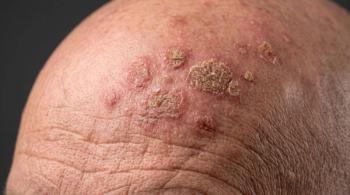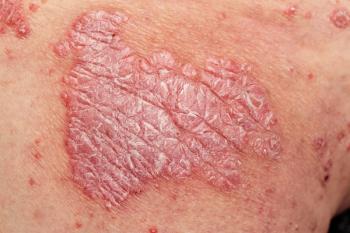
By week 36, combination therapy altered 482 proteins and 467 genes vs 140 and 16 with ixekizumab alone in exploratory TOGETHER-PsO data.
Heather Woolery-Lloyd, MD, reviews a new clinical study quantifying linear hair growth rate across 4 Nutrafol formulations.
Heather Woolery-Lloyd, MD, dermatologist, director of the Skin of Color Division for the University of Miami Department of Dermatology, and Chief Medical Advisor of Nutrafol, recently discussed findings from a
Woolery-Lloyd noted LHGR is difficult to capture and is not commonly assessed in hair research. "Quantifying linear hair growth rate is actually not something that's typically done in clinical studies when it comes to hair," she said. Across the 4 formulations tested, the study found increases in growth rate ranging from 19% to 37%.
"We found a 19 to 37% increase in the rate of growth, which is really quite remarkable and exciting," Woolery-Lloyd said.
Measuring LHGR required an intensive protocol. At baseline, a small area behind the ear was shaved, and participants returned 48 hours later so investigators could measure growth over that window. Participants then began their assigned supplement and repeated the shave-and-measure process at 3 and 6 months.1,2
"It's not the most straightforward trial, it involves the patient coming in twice at each time point, and also having a little area shaved so we could actually measure the rate of growth," Woolery-Lloyd said.
Woolery-Lloyd emphasized formulation strategy depends on the underlying driver of thinning. "The ‘why’ makes a huge difference because the type of hair thinning that you can see in a woman who's experiencing postpartum hair thinning is very different than the hair thinning that an older gentleman might be having from aging," she said.
In postpartum women, hormonal shifts push hair out of the active growth phase and into a resting phase, with shedding typically appearing 3 to 6 months later, compounded by the physiological stress of pregnancy and childbirth. In older patients, thinning more often stems from metabolic changes and a thinning dermis.
"I always explain to people that the hair grows out of the scalp, and the scalp is kind of the scaffold, the structure that the hair grows out of," Woolery-Lloyd said. As the skin ages and thins, she explained, the scalp structure changes along with it, producing thinner, less healthy hair.
Woolery-Lloyd said these differing root causes are why formulations need ingredients targeted to the specific population and mechanism driving hair thinning, rather than a single universal approach.
References