

Feature|Videos|September 12, 2026
Tristan Hasbargen, PA-C, on Launching a Workshop Preparing Providers To Diagnose and Manage Skin Cancer
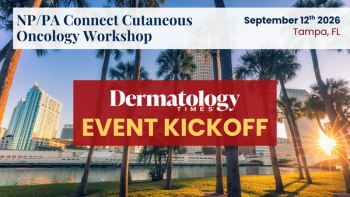
As chair of the new Dermatology Times NP/PA Connect Cutaneous Oncology Workshop, Tristan Hasbargen, PA-C, discusses the program's curriculum and goals live in Tampa, Florida.
Advertisement
Tristan Hasbargen, PA-C, a physician assistant at Dermatology Associates of Tallahassee in Florida, chairs the inaugural
Cutaneous Oncology Workshop Curriculum
The program covers the basic workflow of a skin exam and the questions patients commonly raise, including photoprotection. Sessions also address diagnosing and treating skin cancers along with the range of treatment options available to providers, plus recognition of genetic syndromes signaling risk for later disease and guidance on when to refer those patients. Hands-on surgical workshops round out the curriculum, since Hasbargen said this is an area many attendees want to develop.
Long-term management of high-risk cancer patients is also covered, including when referral to an oncologist or radiation oncologist becomes the appropriate next step in care.
A Career Built Around Early Skin Cancer Detection
Hasbargen has spent 14 years in dermatology, starting as a medical assistant in a Mohs surgery practice before attending PA school and continuing to work alongside a Mohs surgeon throughout his career. "This has been a strong passion of mine since the beginning of my dermatologic career," Hasbargen said. He described skin cancer as a condition providers can catch in patients who are unaware they have it.
"Identifying skin cancers people don't even know they have, and then being able to treat them, is very rewarding," Hasbargen said. "It's a cancer we can readily treat, especially if detected early," he said. Fourteen years of clinical exposure, he said, have shaped how he approaches every stage of care, from initial screening through definitive treatment.
Building Confidence To Co-Manage High-Risk Patients
Working alongside a Mohs surgeon has given Hasbargen hands-on experience with complex closures, flaps, and grafts for skin cancer patients. This surgical background, he said, has allowed him to co-manage high-risk cancer patients confidently. He wants the workshop to build the same confidence in other providers who see these patients in their own practices.
"I want other providers to feel the same way," Hasbargen said.
Hasbargen framed the workshop as a direct extension of his own clinical path, aimed at giving providers the surgical exposure and referral judgment he built over 14 years alongside a Mohs surgeon.
Keep informed on all news from the
Advertisement
Related Content
Advertisement



Advertisement
Advertisement
Trending on Dermatology Times
1
How Emerging Androgenetic Alopecia Therapies Target DHT at the Scalp Level
2
25 Years Later: Remembering September 11 Through the Lens of Dermatologic and Burn Care
3
Isotretinoin Use in Adolescence Not Linked to Reduced Adult Height
4
Q&A: Steve Yoelin, MD, on the Evolving Regulatory Landscape for Masseter Toxin
5