

News|Articles|September 13, 2026
Field-Directed Therapy Favored for Actinic Keratosis Management
Listen
0:00 / 0:00
Key Takeaways
- Field cancerization reframes AK as diffuse keratinocyte dysplasia within chronically sun-exposed skin, making spot-treatment biologically incomplete for many patients with photodamage.
- Reported per-lesion SCC progression risk is heterogeneous, and lesion-level prediction is unreliable; >60% of SCC specimens demonstrate adjacent AK on histologic review.
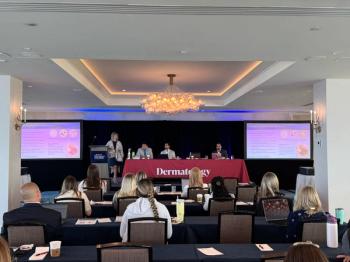
At the Dermatology Times NP/PA Cutaneous Oncology Workshop in Tampa, Florida, Amit Om, MD, outlined why field-directed therapy is increasingly favored over lesion-directed treatment for actinic keratosis.
Advertisement
Field-directed therapy is emerging as the preferred approach for managing actinic keratosis (AK), according to Amit Om, MD, who presented clinical pearls on AK management at the
Guidelines from the American Academy of Dermatology increasingly favor field-directed treatment over lesion-directed monotherapy given the difficulty of predicting which individual AK will progress to invasive disease.¹ Om's presentation focused on translating this guidance into clinical decision-making around treatment selection and patient adherence, two areas where practice gaps commonly persist.
Om explained visible AKs represent only the most advanced portion of a much larger field of sun-damaged skin, terming it the field cancerization concept.² Chronic ultraviolet exposure induces genetic and epigenetic alteration across an entire sun-exposed area, not solely at sites of clinically apparent lesions, so subclinical keratinocyte abnormalities often surround every visible AK.² Treating only the lesions a clinician can see leaves this surrounding field untreated, allowing new AKs and skin cancers to continue emerging from it, Om said.
On malignant transformation risk, Om cited an average estimated 8% risk of progression from a single AK to invasive squamous cell carcinoma (SCC) in immunocompetent patients, with individual lesion risk ranging from 0.025% to 16% per year.³ More than 60% of SCC cases show adjacent, contiguous AK on histologic review, and spontaneously regressed AKs carry up to a 50% recurrence rate within the first year.³ Because transformation risk cannot be predicted lesion by lesion, Om said the field, not the visible spot, should be the target of therapy.
Field-Directed vs Lesion-Directed Therapy and Patient Adherence Strategies
Field-directed options Om reviewed include topical 5-fluorouracil, imiquimod, and diclofenac 3%, along with photodynamic therapy and chemical peels.¹ These modalities suit patients with multiple lesions, diffuse photodamage, or high-risk and immunosuppressed fields, reducing new AK formation and limiting recurrence, though they carry more diffuse side effects, higher cost, and greater dependence on patient adherence.¹ Lesion-directed options, primarily cryosurgery and curettage with or without electrodesiccation, work best for a few isolated AKs and can be completed in a single visit, but leave subclinical field disease untreated.¹
Because efficacy in trials means little if patients discontinue treatment early, Om outlined counseling strategies to support adherence.⁴ Clinicians should set expectations using photos of expected local skin reactions, such as erythema and crusting, keep regimens as simple and short as possible, and frame field therapy explicitly as cancer prevention rather than a cosmetic intervention.⁴ Om also emphasized anchoring every regimen in daily broad-spectrum sunscreen and sun-protective behavior, calling adherence the limiting factor most likely to determine treatment success.⁴
"We know these are pre-cancers, meaning they could eventually turn into cancer. Why let it go and 5 years later say, I wish we had treated all those. That's kind of my approach to it,” Om said.
The shift toward field-directed therapy aligns with 2021 American Academy of Dermatology guidance, which favors treating the entire cancerization field over isolated lesions when feasible.¹ For NPs and PAs managing high sun-exposure patient populations, incorporating structured adherence counseling alongside modality selection may meaningfully affect long-term AK and SCC outcomes.
For more content from Dermatology Times NP/PA Connect Cutaneous Oncology Workshop
References
- Eisen DB, Asgari MM, Bennett DD, et al. Guidelines of care for the management of actinic keratosis. J Am Acad Dermatol. 2021;85(4):e209-e233.
- Willenbrink TJ, Ruiz ES, Cornejo CM, Schmults CD, Arron ST, Jambusaria-Pahlajani A. Field cancerization: definition, epidemiology, risk factors, and outcomes. J Am Acad Dermatol. 2020;83(3):709-717.
- Marques E, Chen TM. Actinic keratosis. In: StatPearls [Internet]. Treasure Island, FL: StatPearls Publishing; updated August 17, 2023.
- Stockfleth E, Peris K, Guillen C, et al. A consensus approach to improving patient adherence and persistence with topical treatment for actinic keratosis. Int J Dermatol. 2015;54(5):509-515.
Frequently Asked Questions
What is field cancerization in actinic keratosis?
Field cancerization describes widespread genetic and epigenetic damage across an entire chronically sun-exposed area of skin, not just at the site of visible actinic keratosis lesions, driven by cumulative ultraviolet exposure.
What is the risk an actinic keratosis progresses to squamous cell carcinoma?
Individual lesion risk ranges from 0.025% to 16% per year, with an average estimated risk around 8% in immunocompetent patients, and progression cannot be predicted lesion by lesion.
Which actinic keratosis treatments are considered field-directed?
Field-directed options include topical 5-fluorouracil, imiquimod, diclofenac 3%, photodynamic therapy, and chemical peels, all of which treat the broader sun-damaged field rather than a single lesion.
Advertisement
Related Content
Advertisement

Latest CME


Advertisement
Advertisement
Trending on Dermatology Times
1
How Emerging Androgenetic Alopecia Therapies Target DHT at the Scalp Level
2
Social Media Mythbusters: Beef Tallow
3
Dermatology Times Inaugural NP/PA Connect Cutaneous Oncology Workshop Kicks Off in Tampa
4
The Value of Clinician Collaboration for Skin Cancer Care
5