

News|Articles|September 12, 2026
Q&A: Practical Pearls on Atypical Nevi, Photoprotection, and Field Cancerization
Listen
0:00 / 0:00
Key Takeaways
- Systematic evaluation of numerous atypical nevi relies on full-skin examination, lesion marking, and longitudinal comparison, with mole mapping considered for very high burdens or diagnostic uncertainty.
- Clinical information provided with biopsy specimens materially affects dermatopathology interpretation, particularly when “most atypical” lesions are sampled among many similar-appearing nevi.
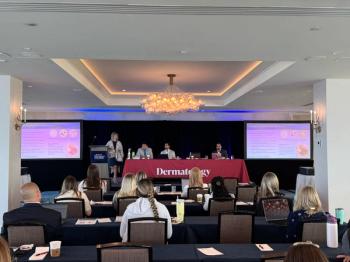
Faculty at the Dermatology Times Cutaneous Oncology Workshop addressed real-world questions on mole mapping, biopsy decisions, oral photoprotection, and actinic keratosis treatment.
Advertisement
During the morning Q&A at the inaugural Dermatology Times Cutaneous Oncology Workshop: Empowering Advanced Practice Providers in Cutaneous Oncology, faculty expanded on
Amit Om, MD, FACMS; Tristan Hasbargen, PA-C; Amy Spizuoco, DO, FAOCD; and Angad Chadha, MD, discussed management of patients with numerous atypical nevi, communication with dermatopathologists, hereditary melanoma risk, oral photoprotection, and selection of field-directed therapies for actinic keratoses (AKs).
The following responses have been edited for clarity and length.
Attendee:
How do you approach a patient who has numerous atypical nevi, particularly when many lesions appear asymmetric?
Hasbargen:
I zoom out first and start looking at the broader picture and what is jumping out at me. Then I focus my dermatoscope on those specific areas. I take a lot of clinical photographs of specific lesions and measure them, so when patients come back for follow-up, I have a clearer sense of whether something has changed.
It can get overwhelming when people have so many moles and solar lentigines. Stepping back and looking for the “
One thing I will say specifically is that I've talked myself out of biopsies using a dermatoscope because I thought, “This actually looks really okay.” Then I look at it clinically and think, “This looks awful.” Go with your first instinct and the clinical gestalt. I've biopsied early melanoma in situs where dermoscopically I had almost convinced myself they were okay. If it looks worrisome clinically, biopsy it.
Chadha:
You also have to be comfortable spending 20 or 25 minutes on that appointment. If there are lesions that look unusual, I'll mark them, finish the entire examination, and then come back to them. Sometimes you realize the patient has 20 other lesions that look exactly the same.
For patients with a very high nevus burden,
Om:
Those visits are difficult. One thing I try to do is take a good biopsy—thin enough that you're not unnecessarily disfiguring the patient, but sufficient to get the
If it's my first time seeing someone with hundreds of moles and we biopsy the few that look worst, that also gives me a baseline. If the pathology comes back only mildly dysplastic, that information can help contextualize the other lesions.
Attendee:
How important is the information sent to the dermatopathologist with the biopsy specimen?
Spizuoco:
As a dermatopathologist, if you give a good description, it helps tremendously. If you biopsy 2 or 3 lesions out of 20 atypical-appearing nevi, tell us that. Say, “These 2 looked the most atypical on a background of approximately 20 similarly appearing atypical nevi.”
It helps the dermatopathologist gauge how atypical those lesions are and compare them with one another. Some patients may naturally have nevi that look atypical to us but are essentially their normal pattern.
“Tell your dermatopathologist everything that you can, because the point of it is to communicate.”
When you don't know the answer, we're there to help you get it. But if we don't know what you're seeing clinically, it makes that more difficult.
Attendee:
When should melanoma raise concern for an inherited syndrome or pancreatic cancer risk?
Hasbargen:
For me, it isn't one melanoma alone. I'm looking for multiple melanomas along with family history of melanoma or another internal malignancy. Those are the things that would start making me think about a
Om:
There are criteria that consider the number of primary melanomas in an individual or family as well as pancreatic cancer history. The family history and the overall pattern matter. It isn't simply that every patient diagnosed with one melanoma needs a GI referral.
Attendee:
Which patients do you recommend oral photoprotection to in clinical practice?
Om:
For over-the-counter options such as Polypodium leucotomos and
These aren't replacements for sunscreen or protective behavior. They're another tool.
Spizuoco:
I also talk about them for people who are going to have significant outdoor exposure. That could be a high school student spending all summer at tennis camp or someone who knows they're going to be on a boat or at the beach all day. In those situations, it may provide another layer of protection when consistent sunscreen application can be difficult.
Hasbargen:
Cost matters too. Not everybody can afford some of the branded supplements. Nicotinamide can be relatively accessible.
You do need to make sure patients aren't confusing nicotinamide or niacinamide with niacin, which can cause flushing and gastrointestinal effects.
I also review medications that may increase photosensitivity. Hydrochlorothiazide is one example where I may discuss whether another option is appropriate with the patient's prescribing clinician.
And I still prefer sun-protective clothing whenever possible. Oral supplementation is supplementary—it doesn't replace good photoprotection.
Attendee:
For field cancerization, do you prefer standard 5-fluorouracil or compounded 5-fluorouracil plus calcipotriene?
Om:
I still like good old-fashioned 5-fluorouracil. Typically, I use it for about 2 weeks. But it depends on the patient.
If somebody is client-facing or can't tolerate that degree of downtime, I'll start talking about
Hasbargen:
Insurance also affects what we can actually use. In Florida, we've had situations where Medicare patients have difficulty obtaining 5-fluorouracil without first trying another treatment.
With any of these medications, counseling matters. Patients need to know what they're applying, where they're applying it, and what reaction to expect.
Attendee:
Does your treatment approach change for patients who prioritize shorter downtime?
Chadha:
I've moved toward the 5-fluorouracil plus calcipotriene combination. For AKs, I may use a short course, and I extend treatment for more borderline lesions.
There can be an additional cost through compounding pharmacies, but many patients are willing to accept that for a shorter treatment and recovery period compared with a longer 5-fluorouracil course.
Ultimately, you have to fit the therapy to the patient.
Spizuoco:
My patient population in New York often isn't going to tolerate 2 weeks of downtime, so I use more
Attendee:
Why is treating the entire field important rather than applying therapy only to individual AKs?
Hasbargen:
We can't identify every AK that's there, and we can't predict which individual AK will progress to squamous cell carcinoma.
If patients only put medication where they can feel a lesion today, they're going to miss the lesions that become apparent 6 months or a year later.
I explain that treating the entire area isn't just about the AKs we see today. We're trying to treat the ones we see, the ones that will appear tomorrow, and the subclinical lesions that aren't yet visible.
For some patients, treating the entire face at once may be difficult, so you can break it into sections. Whatever improves long-term compliance is worth considering.
Attendee:
Where does photodynamic therapy fit into field treatment?
Hasbargen:
Photodynamic therapy remains useful, particularly for patients with more extensive field disease. The choice of photosensitizer and light source may depend on availability, reimbursement, treatment area, and the patient.
You also have to prepare patients for the treatment experience. Certain approaches can be quite painful during illumination, so patient selection and expectation-setting are important.
Chadha:
I've personally moved away from PDT because I find 5-fluorouracil, alone or in combination, more effective for my practice.
Spizuoco:
I'm almost the opposite. I use a lot of PDT because of the population I treat and their ability to tolerate downtime. Cost and coverage also influence which formulation I'll use.
That difference in approaches underscored a recurring theme of the morning discussion: there is rarely one field-directed therapy that is right for every patient. Clinical efficacy must be balanced against treatment duration, expected reaction, cost, insurance coverage, lifestyle, and the likelihood that the patient will actually complete therapy.
For more content from Dermatology Times NP/PA Connect Cutaneous Oncology Workshop
Advertisement
Related Content
Advertisement




Advertisement
Advertisement
Trending on Dermatology Times
1
How Emerging Androgenetic Alopecia Therapies Target DHT at the Scalp Level
2
25 Years Later: Remembering September 11 Through the Lens of Dermatologic and Burn Care
3
Isotretinoin Use in Adolescence Not Linked to Reduced Adult Height
4
Dermatology Times Inaugural NP/PA Connect Cutaneous Oncology Workshop Kicks Off in Tampa
5