Prospective data suggest DecisionDx-Melanoma may help refine SLNB decisions and identify recurrence risk beyond conventional staging.
Shawn Demehri, MD, PhD, discusses a calcipotriene/5-FU combination immunotherapy for field cancerization and its potential in organ transplant recipients.
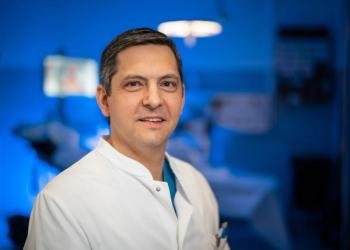
Shawn Demehri, MD, PhD, is a physician-scientist and dermatologist at Massachusetts General Hospital and Harvard Medical School, where he directs the high-risk skin cancer clinic and leads a laboratory studying how the immune system can be leveraged for cancer prevention in the skin and other organs.
His clinical practice focuses on patients who develop multiple nonmelanoma skin cancers, including organ transplant recipients on immunosuppression and individuals with genetic predispositions such as
In this interview, Demehri discusses the patient populations he treats, the immunologic rationale behind combining calcipotriene with 5-fluorouracil (5-FU), and clinical research evaluating the approach, including its potential use in organ transplant recipients.
Can you describe the patient population you see in your high-risk skin cancer clinic?
I see high-risk skin cancer patients. I'm the director of the high-risk skin cancer clinic at Mass General Hospital, where we mostly see patients who are developing multiple nonmelanoma skin cancers, mostly squamous cell cancers and basal cell cancers, and we try to take care of them. Some of these patients are immunosuppressed, such as organ transplant recipients. Some of them are genetically predisposed to developing skin cancers, such as those with xeroderma pigmentosum and Gorlin syndrome.
How do genetic conditions such as xeroderma pigmentosum affect the way you counsel patients about their long-term skin cancer risk?
Many times, you have to take it from the viewpoint of the patients and their experience. Some of these rare genetic disorders predispose patients to skin cancer, and with xeroderma pigmentosum, the patient has really been dealing with the consequences of that genetic disorder from early life. They're born with it, and they start developing symptoms on their skin very early, including sunburns and, unfortunately, a very quick turnaround to skin cancer development.
They have an understanding of the basics of the skin cancer phenotype they're experiencing, but having that conversation to put into perspective how their genetic makeup contributes to these rare phenotypes of multiple skin cancers is something we do. We have a good cohort of these patients in our clinic, and we commonly have this conversation, trying to explain how their genetic background contributes to their susceptibility over time.
What is the concept of
One of the areas we're very interested in, and our laboratory has been leading that effort for the last 15 years, is the question of cancer prevention, specifically how we can better prevent nonmelanoma skin cancers.
This stems from understanding that sun-exposed skin, as the patient grows older and is exposed to the sun over time, is susceptible to forming multiple new skin cancers. The preventive approach we'd like to implement is what's called field treatment: How can we address the whole field of skin that's susceptible to cancer and prevent that whole tissue or organ from developing skin cancer over time?
Historically, there have been field treatments that dermatologists use to address this question of cancer prevention, namely 5-FU,
How did your lab's immunology background lead to the calcipotriene and 5-FU combination approach?
We came into this topic with a focus and interest in immunology: How can we use the immune system to prevent cancer development in the skin?
One of our earliest efforts was understanding that certain cytokines, which are molecules released by keratinocytes in the skin, stimulate T-cell responses that then protect the skin. One of these molecules is thymic stromal lymphopoietin, or TSLP, and it's induced by an already existing medication called calcipotriene, which is used for psoriasis treatment.
This medication induces the cytokine that generates a cancer-protective effect in experimental models. Based on that understanding, and knowing that
You're not only inducing a T-cell response but also tagging those target cells for killing by promoting what we call immunogenic cell death through the use of 5-FU.
What did the initial trial of this combination therapy show?
The initial trial was done at Washington University, where I was prior to moving to Boston, and that's where we discovered that the effect is quite potent in terms of T-cell induction.
Not only were we able to clear actinic keratoses much faster and more effectively with this combination therapy compared with 5-FU monotherapy, but we also looked at the durability of the benefit and one of the main questions in the field: Can you actually prevent squamous cell cancers from developing?
That's something we achieved much more effectively with this combination therapy compared with 5-FU. We were able to see that 3 years after treatment, patients in the trial were still protected from developing new squamous cell cancers compared with the control arm that had received 5-FU monotherapy in the randomized trial.
What makes this approach potentially suitable for immunosuppressed patients, such as
Since then, we've also described its mechanism of action and looked at how it works in human skin and what type of immune response this immunotherapy induces.
We found that it's very safe for use in, for example, organ transplant recipients. It's an immunotherapy, but the type of immune response it induces is very distinct from immune responses that could harm transplanted organs. That makes it a very safe topical medication for organ transplant recipients in terms of cancer prevention, where the need for cancer prevention is tremendous.
What is the status of your current multicenter trial in organ transplant recipients?
One of the studies we've done, and hopefully will be analyzing the results of soon, was a multicenter trial using this topical immunotherapy in organ transplant recipients across 4 sites in the US.
We're looking at the amount of T-cell immune induction after topical treatment. That's the work we're about to wrap up, and hopefully we'll be able to report the results soon.