

News|Videos|September 12, 2026
Hands-On Suturing Workshop Brings Procedural Practice to Cutaneous Oncology Training
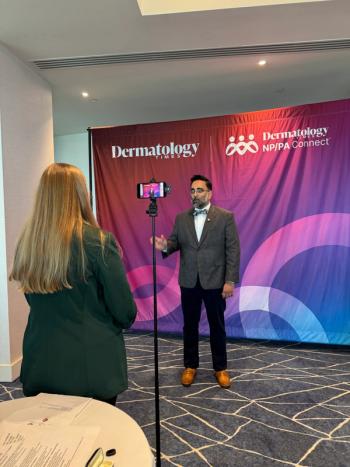
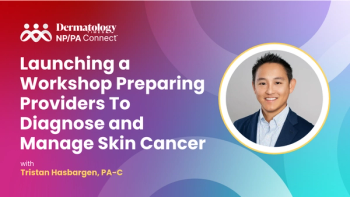
Attendees put technique into practice during an interactive suturing session led by Tristan Hasbargen, PA-C, using individual kits and real-world clinical examples.
Advertisement
The Dermatology Times
Each attendee received an individual suturing kit and practice materials, allowing participants to follow along as
From Demonstration to Practice
Hasbargen first demonstrated each technique for the group before attendees practiced the movements themselves.
Participants worked through the process in real time, from needle positioning and tissue handling to approximating wound edges and securing the
The workshop was designed to make procedural concepts immediately applicable. Instead of viewing suturing as a series of isolated technical steps, Hasbargen incorporated examples from clinical practice to explain how clinicians can think through closure selection in different situations.
Connecting Technique With Clinical Scenarios
Throughout the demonstration, Hasbargen used real-world examples to illustrate how wound characteristics can influence a clinician's approach.
The discussion emphasized that successful closure involves more than simply bringing wound edges together. Technique selection can depend on factors such as the size and shape of the defect, anatomic location, tension, and the type of procedure that created the wound.
By working through those scenarios alongside the demonstration, attendees were able to see how procedural technique fits into the broader management of patients undergoing
Building Procedural Confidence
The interactive structure also gave participants something difficult to replicate in a traditional lecture: the opportunity to practice immediately after seeing a technique demonstrated.
Attendees could work through unfamiliar hand movements, repeat individual steps, and compare their technique with Hasbargen's demonstration while the instruction was still fresh.
That format was particularly relevant for
Hands-On Education Within Cutaneous Oncology
The suturing workshop complemented the day's earlier discussions of skin cancer prevention, diagnosis, staging, and treatment by bringing the procedural component of care directly to attendees.
As participants worked through the different techniques with their individual kits, the session reinforced one of the broader goals of the Cutaneous Oncology Workshop: pairing evidence-based education with practical skills that clinicians can bring back to their own practices.
For Hasbargen, the emphasis remained on translating demonstration into something attendees could actually perform themselves—using repetition, clinical examples, and direct instruction to make suturing techniques more approachable and applicable to everyday dermatologic care.
For more content from Dermatology Times NP/PA Connect Cutaneous Oncology Workshop
Advertisement
Related Content
Advertisement

Advertisement
Advertisement
Trending on Dermatology Times
1
How Emerging Androgenetic Alopecia Therapies Target DHT at the Scalp Level
2
25 Years Later: Remembering September 11 Through the Lens of Dermatologic and Burn Care
3
Dermatology Times Inaugural NP/PA Connect Cutaneous Oncology Workshop Kicks Off in Tampa
4
Ultrapulse CO2 Laser Therapy Shows Promise for Chronic Acne Conglobata Sequelae
5