


A new commentary argues primary or acute care experience should be a prerequisite for clinicians entering aesthetic medicine to improve patient safety and clinical decision-making.

Shannon Heaning is a content associate for Dermatology Times® and joined the MJH Life Sciences team in June 2026. She graduated summa cum laude from Loyola University Maryland with a Bachelor of Arts in sociology and earned the top GPA in her major. Before joining Dermatology Times®, Shannon gained experience in clinical research, patient advocacy, and health communications. She is particularly passionate about rare disease awareness and patient-centered storytelling. Outside of work, she enjoys reading, drawing, and spending time with her dogs.
You can reach her at: [email protected]
A new commentary argues primary or acute care experience should be a prerequisite for clinicians entering aesthetic medicine to improve patient safety and clinical decision-making.

A JAMA Dermatology study found expert dermatologists achieved the highest multiclass diagnostic accuracy when tested against AI across a realistic spectrum of skin lesions.
Christopher Bunick, MD, PhD, discussed new data suggesting emergency departments continue to rely on outdated therapies for pediatric atopic dermatitis flares despite evolving dermatology guidelines.

Konika Patel Schallen, MD, discussed how nanofractional laser treatments may support regenerative skin health beyond cosmetic improvement and outlined the next research priorities in a recent Dermatology Times interview

Every week, we cut through the noise to bring clinicians the trial results, approvals, and emerging therapies that are actually moving the needle.

Eugene R. Semenov, MD, MA, FAAD, discussed AI models that combine pathology and clinical data to better predict recurrence in early-stage melanoma

New York has extended independent practice authority for qualified nurse practitioners through July 1, 2030, preserving the current framework and collaboration requirements.

Konika Patel Schallen, MD, senior vice president and medical director of global clinical operations at Candela Medical, discussed epigenetic changes linked to laser skin resurfacing in a recent Dermatology Times interview.
Christopher Bunick, MD, PhD, discussed the scientific advances still needed before precision medicine can guide individualized therapy selection in atopic dermatitis during a recent Dermatology Times interview.

Extended-release oral minoxidil candidate VDPHL01 improved hair counts and patient-reported outcomes in women with pattern hair loss in a phase 2 study.

Peter Lio, MD, discussed how stress, sleep disruption, and patient-centered communication can influence pediatric atopic dermatitis management during a recent Skin and Psych podcast interview.

New JCI research identifies succinate/SUCNR1 signaling as a potential mechanistic link between hyperglycemia and worsening vitiligo.

The FDA accepted an sNDA for roflumilast cream 0.05% in infants, potentially expanding steroid-free treatment options for atopic dermatitis.

Konika Patel Schallen, MD, discussed new findings showing the Nordlys 1940 nm non-ablative fractional laser may reverse epigenetic markers of skin aging in a recent Dermatology Times interview.

Roman Bronfenbrener, MD, discussed changing exit strategies, private equity, and why peer support may be one of the most valuable resources for independent dermatologists.

Bradley Burnam, founder and CEO of Turn Therapeutics, discussed GX-03's encouraging interim safety profile, regulatory strategy, and next steps in clinical development.

A new real-world study found CSU was linked to stress-related disorders, but not a broad increase in new-onset psychiatric disease.
Every week, we cut through the noise to bring clinicians the trial results, approvals, and emerging therapies that are actually moving the needle.
Christopher Bunick, MD, PhD, shared practical guidance on sun protection, swimming, and preserving the skin barrier in patients with atopic dermatitis.
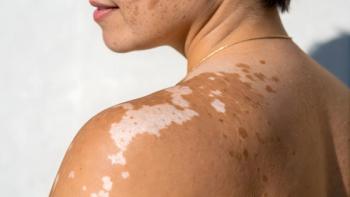
Lynk Pharmaceuticals has dosed the first patient in a phase 2 trial evaluating investigational topical pan-JAK inhibitor LNK01004 for vitiligo.

A JAMA Dermatology study suggests higher cumulative isotretinoin doses, not higher daily doses, may help reduce acne relapse.

Roman Bronfenbrener, MD, discussed how dermatologists are using AI to streamline documentation, summarize patient records, support clinical decision-making, and improve practice operations.

The FDA accepted Arcutis' supplemental NDA seeking to expand roflumilast cream 0.05% to infants aged 3 months to younger than 2 years with mild to moderate AD.
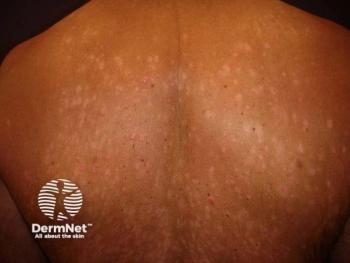
A recent JAAD study identified a dual Th17/Type 2 immune signature in psoriasis that may help explain why biologic responses vary among patients.

Teva Pharmaceuticals will advance TEV-'408 into phase 2b after encouraging phase 1b vitiligo data showed repigmentation, favorable safety, and quarterly dosing potential.
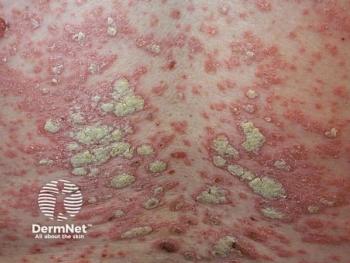
Can-Fite completed interim enrollment for its pivotal phase 3 trial of first-in-class oral A3AR agonist piclidenoson, a potential new mechanism for plaque psoriasis.

Roman Bronfenbrener, MD, discusses how AI-generated patient diagnoses are reshaping dermatology visits and creating new challenges.

One-year phase 3 VELA data showed durable clinical responses, quality-of-life improvements, and no new safety signals for investigational sonelokimab in hidradenitis suppurativa.
AbbVie's upadacitinib received a positive CHMP opinion for severe alopecia areata as FDA review continues in the US.

A national survey examines the pressures facing independent dermatologists and strategies to strengthen practice performance.