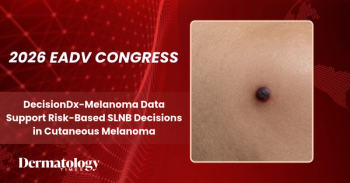
Prospective data suggest DecisionDx-Melanoma may help refine SLNB decisions and identify recurrence risk beyond conventional staging.
Stephanie Kauffman, chief executive officer of the Melanoma Research Alliance, discussed funding strategy, early career researcher support, and melanoma prevention in a recent Dermatology Times interview.
Stephanie Kauffman serves as chief executive officer of the Melanoma Research Alliance (MRA).
MRA's funding model also gives researchers flexibility as their work evolves. Kauffman said investigators are not required to reapply for a grant if emerging data point them toward a different scientific direction, provided the new direction remains scientifically meritorious.
"We're a big believer in giving you the freedom and flexibility to pursue that idea," said Kauffman.
Kauffman said pressure on the pipeline of
Kauffman said MRA sees a role in creating pathways, funding support, and stability that can help keep dermatologist-scientists and other investigators working in melanoma research. She described support for young investigators as an area where organizations such as MRA can have a particularly catalytic effect.
Kauffman said patients with rare melanoma subtypes are not benefiting from available treatments to the same extent as patients with broader
"Those patients are simply not benefiting from the treatments available to the broader cutaneous melanoma population," said Kauffman.
Kauffman said prevention and
Kauffman said even a 6-month interval between spotting a suspicious mole and receiving a diagnosis can potentially make the difference between an early-stage diagnosis and stage 3 or stage 4 disease. Improving early detection, she said, could help identify melanoma when it is highly treatable and survival outcomes are better.
Kauffman said MRA evaluates impact across the full research continuum, from an initial laboratory idea through validation, clinical trials, and ultimately patient care. The organization's role, she said, extends beyond issuing grants to bringing together patients, researchers, dermatologists, clinicians, foundations, and other partners to identify and help remove bottlenecks that can prevent promising science from advancing.
MRA also considers whether its funding generates new knowledge, attracts additional capital and follow-on funding, produces new collaborations, or leads to new intellectual property. For Kauffman, the broader question is how each investment can help move promising research closer to patients.
"How do we make every research dollar work harder to move that science closer to the patients?" said Kauffman.
Kauffman pointed to the expansion of melanoma treatment options as evidence of the progress research investment can help produce.
Twenty years ago we had two treatment options for patients, and today we have 20, — Stephanie Kauffman, Chief Executive Officer, Melanoma Research Alliance