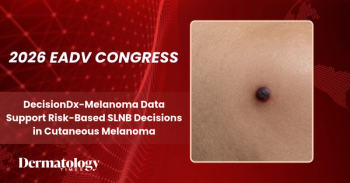
Prospective data suggest DecisionDx-Melanoma may help refine SLNB decisions and identify recurrence risk beyond conventional staging.
A meta-analysis found significantly lower SCC risk in patients with vitiligo, offering useful context for skin cancer and phototherapy counseling.
Patients with vitiligo may have a lower risk of certain skin cancers than
For nurse practitioners (NPs) and physician assistants (PAs), the findings offer useful context when discussing skin cancer risk with patients—particularly those concerned that vitiligo itself or
Researchers conducted a PRISMA-based systematic review of PubMed, Embase, Scopus, and ClinicalTrials.gov through January 2026. Fourteen studies involving 454,307 patients with vitiligo and more than 3.5 million controls were included in the systematic review, with 9 studies contributing to the quantitative meta-analysis.1
The clearest finding involved SCC. Patients with vitiligo had significantly lower odds of SCC compared with controls:
Only the SCC finding reached statistical significance. However, the direction of the estimates across the other skin cancer categories generally favored neutral or reduced risk.1
For melanoma specifically, sensitivity analyses continued to produce odds ratios below 1.0. When researchers removed the largest heterogeneous study, the association became statistically significant, with an OR of 0.33 (95% CI, 0.13-0.84).1
At first glance, lower skin cancer risk may seem counterintuitive. Melanin helps protect the skin from UV radiation, and patients with vitiligo have areas of melanocyte loss.
One possible explanation lies in the
Vitiligo involves melanocyte-specific CD8+ T-cell activity, interferon signaling, and a proinflammatory immune environment. Some of the melanocyte antigens targeted by the immune system in vitiligo are also expressed by melanoma cells, raising the possibility that heightened immune surveillance could contribute to antitumor activity.1,2
Melanocyte depletion itself may also help explain lower melanoma susceptibility, although it would not account for the observed reduction in SCC.
For clinicians, the important distinction is that the findings show an association, not proof that vitiligo itself protects against skin cancer.
Phototherapy remains an important consideration because narrowband UVB and other light-based therapies are commonly used to manage vitiligo.
Among patients exposed to phototherapy, pooled estimates were higher for melanoma (OR, 1.87; 95% CI, 0.53-6.54) and NMSC (OR, 1.46; 95% CI, 0.37-5.69). Neither increase was statistically significant.1
Individual studies also produced inconsistent findings, and differences in treatment modality, cumulative UV exposure, and treatment duration made it difficult for investigators to establish a clear relationship between phototherapy and skin cancer risk.
That distinction matters when discussing the findings with patients: the analysis does not establish that phototherapy increases skin cancer risk in vitiligo.
These results can help clinicians provide more nuanced counseling when patients ask whether vitiligo automatically puts them at greater risk for skin cancer.
Current evidence does not suggest that patients with vitiligo have an overall increased risk of melanoma or NMSC, and SCC risk was significantly lower in this analysis. At the same time, these findings should not be interpreted as a reason to reduce routine skin cancer prevention or surveillance.1
Patients should still be counseled on
The findings may be particularly useful when discussing phototherapy. Rather than presenting UV-based treatment as either completely risk-free or inherently dangerous, clinicians can explain that available evidence remains mixed and that this meta-analysis did not demonstrate a statistically significant increase in melanoma or NMSC among phototherapy-treated patients.
Vitiligo does not appear to translate into higher skin cancer risk simply because melanocytes are lost.
In this meta-analysis, SCC risk was significantly lower, while melanoma, BCC, and overall NMSC also showed lower point estimates without reaching statistical significance.1
For NPs and PAs, the practical message is not to change routine skin cancer surveillance based on these findings alone. Instead, the data provide additional evidence for more individualized conversations about vitiligo, phototherapy, sun protection, and long-term skin health.
References