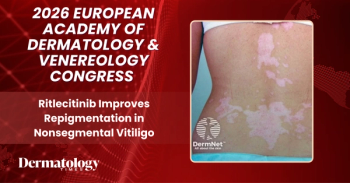
In TRANQUILLO 2, 21.86% of patients taking ritlecitinib 100 mg achieved F-VASI75 at week 52 vs 2.40% with placebo, according to data presented at EADV 2026.
Meta-analysis suggests vitiligo links to lower skin cancer rates, with significantly reduced squamous cell carcinoma; phototherapy shows higher estimates but remains inconclusive.
Vitiligo may be associated with a lower risk of melanoma and non-melanoma skin cancer (NMSC), despite the loss of melanin protection and frequent use of ultraviolet-based phototherapy, according to an updated systematic review and meta-analysis.1 The review found a statistically significant reduction in squamous cell carcinoma (SCC), while associations with melanoma and overall NMSC were directionally lower but did not reach statistical significance.
Researchers conducted a PRISMA-compliant literature search of PubMed, Embase, Scopus, and ClinicalTrials.gov through January 2026. Fourteen studies involving 454,307 patients with vitiligo and 3,583,147 controls met the criteria for the systematic review. Nine studies with appropriate control populations were included in the quantitative meta-analysis. The investigators evaluated melanoma, overall NMSC, SCC, basal cell carcinoma (BCC), and the potential effect of phototherapy exposure.
Across the included studies, findings generally pointed toward a neutral or reduced incidence of skin cancer among patients with vitiligo. Several large population-based studies reported inverse associations. For example, a United Kingdom cohort found significantly lower risks of melanoma, SCC, and BCC among patients with vitiligo. A Swedish registry study similarly reported nearly 50% lower incidence of melanoma and melanoma in situ, along with reduced SCC and SCC in situ. Other studies from Israel, Italy, Taiwan, and the Netherlands also reported lower risks of melanoma or NMSC.
The pooled analysis found lower odds of melanoma among patients with vitiligo compared with controls (OR, 0.43; 95% CI, 0.16–1.13), although the association was not statistically significant. Sensitivity analyses consistently produced odds ratios below 1.0, and removal of the largest heterogeneous study resulted in a statistically significant association (OR, 0.33; 95% CI, 0.13–0.84). However, substantial between-study heterogeneity was observed.
Overall NMSC also showed lower pooled odds among patients with vitiligo (OR, 0.29; 95% CI, 0.06–1.49), although this finding was not statistically significant. When individual NMSC subtypes were examined, SCC was significantly reduced (OR, 0.76; 95% CI, 0.57–0.99; P = .045), with no observed heterogeneity among the 3 studies included in that analysis. BCC demonstrated a similar direction of association but did not reach statistical significance (OR, 0.54; 95% CI, 0.26–1.11).
The researchers also evaluated whether phototherapy altered skin cancer risk. Among phototherapy-exposed patients with vitiligo, pooled estimates were higher for both melanoma (OR, 1.87; 95% CI, 0.53–6.54) and NMSC (OR, 1.46; 95% CI, 0.37–5.69), but neither association reached statistical significance. Findings across individual studies were heterogeneous. Some studies reported increased risks associated with phototherapy, while others found no increased risk, including studies evaluating narrowband UVB and excimer laser therapy.
The authors proposed that enhanced immune surveillance may contribute to the lower skin cancer risk observed in vitiligo. The condition is characterized by melanocyte-specific CD8+ T-cell activity, interferon signaling, and a pro-inflammatory immune environment. Because some melanocyte antigens targeted in vitiligo are also expressed by melanoma cells, heightened immune activity could potentially contribute to tumor control.2 The authors also noted that melanocyte depletion itself may contribute to reduced melanoma susceptibility, although this mechanism would not explain the findings for NMSC.
The study had several limitations, including substantial heterogeneity in some analyses, differences in study populations and outcome definitions, and limited numbers of studies for several cancer subtypes and phototherapy analyses. Variability in phototherapy modality, cumulative exposure, and treatment duration also limited interpretation of treatment-specific risks.
Overall, the findings suggest that vitiligo is associated with a predominantly neutral or reduced risk of melanoma and NMSC, with a statistically significant reduction observed for SCC. Phototherapy was associated with higher point estimates for skin cancer, but these findings were not statistically significant. The results provide a baseline for assessing skin cancer risk in vitiligo and for evaluating the long-term safety of emerging immunomodulatory therapies.
References
1. Gaumond SI, Andrade LF, Warp PV, et al. Vitiligo and Skin Cancer Risk: A Systematic Review and Meta-Analysis With Subtype and Phototherapy Stratification. JEADV Clinical Practice 0 (2026): 1-12. doi:10.1002/jvc2.70418
2. Jin Y, Birlea SA, Fain PR, et al. Genome-wide association analyses identify 13 new susceptibility loci for generalized vitiligo. Nat Genet. 2012;44(6):676-680. Published 2012 May 6. doi:10.1038/ng.2272