This review of the latest dermatological studies includes insights on ruxolitinib for lichen planus, early vitiligo treatment, psoriasis response, AD disease control, and PFB management.
This week’s review highlights pediatric oral minoxidil guidance, alopecia areata imaging, inherited skin disorder growth patterns, total-body photography, and radiofrequency microneedling for rosacea.
An international modified Delphi study developed recommendations for off-label low-dose oral minoxidil use in children younger than 12 years. Fifty experts from 9 countries participated in the first 2 rounds, and 49 completed the third. Of 127 initial items, 84 reached the threshold of at least 70% agreement.
Experts supported use in children aged 4 to younger than 12 years for follicular miniaturization, hair cycle abnormalities, and hair shaft disorders, with adjunctive use in selected scarring alopecias. Weight-based and mg/kg dosing approaches reached consensus, as did reassessment every 3 to 6 months.
For clinicians, the statement offers a pediatric framework for patient selection, dosing, and monitoring. Its recommendations reflect expert consensus rather than prospective trial evidence and should be interpreted within the context of off-label prescribing.1
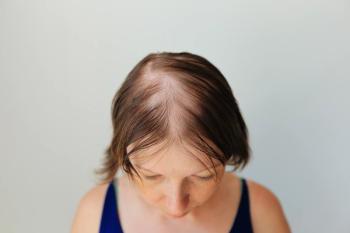
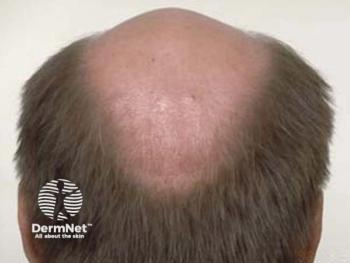
A 60-week observational study followed 20 patients with alopecia areata receiving upadacitinib or baricitinib, combining clinical assessments with videotrichoscopy and reflectance confocal microscopy (RCM). Mean Severity of Alopecia Tool scores decreased from 84.2 at baseline to 16.9 at week 60.
Trichoscopy showed declining disease activity markers and progressive hair regrowth. However, RCM identified persistent subclinical follicular and perifollicular inflammation in some patients despite visible improvement.
For clinicians, the findings suggest that hair regrowth may not fully capture underlying inflammatory activity. The small, nonrandomized cohort does not establish comparative drug efficacy, and whether residual RCM findings predict relapse remains unproven. The study supports further investigation of imaging as a complementary monitoring tool.2
A registry-based cohort study evaluated growth trajectories in 135 individuals with confirmed epidermal differentiation disorders, incorporating pediatric measurements through age 18 years. Mean weight and height were below the population median during the first 24 months, with important differences by genotype.
Participants with SPINK5 variants had persistent deficits; at ages 25 to 48 months, mean weight and height were at the 17.7th and 6.8th percentiles, respectively. Early deficits associated with ABCA12 and KRT10 variants became less pronounced over time.
For dermatology clinicians, the results reinforce the value of routine growth surveillance in children with inherited disorders of epidermal differentiation. Genotype may help identify patients needing closer monitoring and coordinated pediatric care, although the observational design cannot determine which interventions best improve growth.3
A systematic review examined 36 studies describing how total-body photography (TBP) is used and integrated into skin cancer surveillance. Investigators mapped imaging technologies, staff roles, workflows, and factors affecting implementation across clinical settings.
Despite technological advances, including 3-dimensional imaging and artificial intelligence, workflow processes were broadly consistent but differed in sequencing. Only 6 studies specifically reported implementation aspects or related outcomes, and none incorporated a formal implementation framework.
For clinicians considering TBP, the review highlights the importance of planning how imaging fits into existing care rather than focusing solely on equipment. Its heterogeneous evidence base and limited implementation reporting leave questions about which staffing and workflow models translate most effectively into routine practice.4
A retrospective study evaluated radiofrequency microneedling in 50 adults with rosacea at a dermatology center in Seoul. Mean Rosacea Area and Severity Index scores decreased from 11.9 to 9.08, while mean erythema index decreased from 2.48 to 1.58; both changes were statistically significant (P < .001).
Lesion fading was reported in 80% of patients and texture improvement in 72%. Three patients experienced mild adverse events that resolved within 96 hours.
For clinicians, these findings suggest a potential adjunctive procedural role, but 68% of participants also received oral antibiotics. Concomitant treatment, retrospective photographic scoring, missing follow-up data, and the absence of a control group prevent attributing improvement specifically to microneedling. Prospective controlled studies are needed to clarify its incremental benefit.5
References