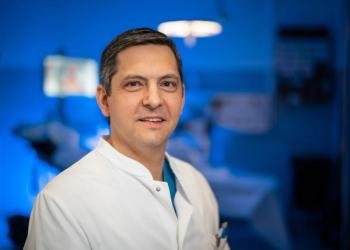
Falk G. Bechara, MD, discusses long-term tunnel control, structural damage, and the evolving role of biologics and surgery in HS care.
Kimberly Madison, DNP, discussed how dermatology education can help nurses strengthen documentation, patient education, triage, and access to care.
Kimberly Madison, DNP, is founder of Mahogany Dermatology Nursing Education and Research, an organization focused on increasing access to dermatology nursing education, particularly in skin of color, business acumen, and
She emphasized that nurses already routinely encounter patients' skin concerns but receive limited dermatology-specific education during their training.
Madison said nursing education typically approaches the skin through the integumentary system rather than dermatology, with much of the training focused on areas such as wound care and incontinence.
Yet nurses regularly observe patients' skin, particularly in acute care settings, positioning them to contribute valuable information to the broader care team.
“No matter what setting you work in, particularly in the acute care setting, the skin is actually the nurse's job,” Madison said.
For Madison, additional
One immediate opportunity is documentation. Madison said additional education in dermatologic terminology could help nurses move beyond nonspecific descriptions such as “red spots” and provide clinicians with more useful information about what they observe.
She also emphasized the importance of nurses serving as the eyes and ears of providers during the periods when clinicians are not directly with the patient.
“I'm only with them for such a little bit of time. I need their nurses' input,” Madison said.
Improving nurses' ability to recognize and document skin findings could strengthen the information available to providers when evaluating patients, according to Madison.
Madison also sees opportunities for nurses to educate patients with milder skin concerns, including providing information about available treatments, potential adverse effects, finding an appropriate provider, and preparing for a dermatology appointment.
Digital fluency is increasingly part of that role, she said, particularly as patients turn to artificial intelligence tools for health information before seeing a clinician.
“I can educate you how to use
Rather than simply providing information, nurses can help patients evaluate what they encounter and better prepare to discuss their concerns with a dermatology provider.
Madison said
For some NPs, that could mean helping initiate oral or topical treatment for a patient with a milder condition while the patient waits several weeks for a dermatology appointment. Others may choose to expand their dermatology knowledge through conferences, reading, continued education, and mentorship.
With additional education, NPs may become more comfortable managing moderate disease, while appropriate mentorship could help some eventually develop the skills needed to care for more severe cases, Madison said.
As an example of nurse-led innovation, Madison highlighted AfriDam AI, a dermatology platform developed by Nigerian nurse Obey Ezekiel. She said the system was trained using approximately 40,000 images representing diverse skin tones to help identify potential skin conditions before connecting patients with a dermatologist for evaluation.⁴
“That's a nurse doing that. That's a nurse helping triage, decrease wait times, and get you access to a dermatologist who is the most educated when it comes to dermatology,” Madison said.
For Madison, the example illustrates how nurses can contribute to triage and patient education while helping patients reach clinicians with specialized dermatology training more efficiently.
Overall, Madison emphasized that expanding nurses' dermatology knowledge does not mean replacing specialist care. Rather, nurses can use education, documentation, digital tools, and patient communication to help patients navigate the care pathway and reach appropriately trained dermatology clinicians more efficiently.