Prospective data suggest DecisionDx-Melanoma may help refine SLNB decisions and identify recurrence risk beyond conventional staging.
Daniel Butler, MD, discusses the 5Ms of geriatric care, shared decision-making, deprescribing, and emerging approaches to chronic itch.
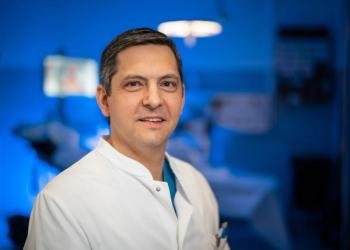
Daniel Butler, MD, vice chair of education at the University of Arizona and leader of the Inflammatory and Aging Skin Research Program, studies aging as a risk factor for inflammatory skin disease. In a
For Butler, shared decision-making begins with understanding what the patient actually wants from treatment. A patient's priority may be clearing skin lesions, relieving itch, addressing joint pain, or simply resolving bothersome scalp flaking.
"It's really understanding the patient. And then the other side of
Rather than approaching the visit with a predetermined treatment plan, Butler encourages clinicians to present patients with what he calls a "menu of options" and explain the reasoning behind those choices.
The approach extends beyond psoriasis and other inflammatory skin diseases. In
By clearly communicating those options, clinicians can better align treatment decisions with what matters most to the individual patient.
Butler highlighted the 5Ms of geriatric care after attending a lecture by a geriatrician at the Elevate conference. The framework provides clinicians with 5 checkpoints to consider when caring for older adults: mobility, what matters most, medications, mentation, and multicomplexity.
"Mobility, what matters most, medications, mentation, and multi-complexity. Those are the five," Butler said.
The framework does not require clinicians to address every component during every encounter. Instead, Butler described the 5Ms as checkpoints clinicians can return to when evaluating whether treatment decisions and conversations reflect the broader needs of an older patient.
"Not that we have to use them on every patient, but we can always sort of use those checkpoints to make sure that the decisions that we're making and the conversations we're having are focused on those really five key points of
Butler said he plans to incorporate the framework into his own approach to caring for older adults.
Another area Butler is watching closely is the evolving understanding of pruritus.
Despite itch being among the most common symptoms bringing adults over age 50 to dermatologists, Butler noted that there are still no FDA-approved medications specifically for itch itself. At the same time, advances in understanding the mechanisms driving pruritus are creating opportunities to target the symptom more precisely.
"This trend of us understanding
For Butler, the convergence of therapeutic development, basic science, and patient needs represents an important shift for a population that has historically had limited targeted options for relief.
Butler also highlighted
Deprescribing involves identifying and removing medications that are unnecessary or redundant. In dermatology, Butler said patients may arrive after receiving several therapies from other clinicians before the underlying dermatologic condition is addressed.
"We're trying to take medications or we should be thinking about our ability in dermatology of taking redundant medications away," Butler said.
He pointed to a patient with hives or another pruritic condition who arrives taking several antihistamines and prednisone. Once dermatologists introduce more targeted treatment, Butler said they should also consider whether some of those existing medications can be removed to reduce patient risk and simplify the regimen.
Dermatologists themselves can contribute to polypharmacy, Butler acknowledged, making deprescribing an important part of responsible prescribing.
"We have in our skill set the ability to take some of those low-hanging fruits away and simplify our approach," Butler said.
For clinicians caring for a growing population of older adults, Butler's message is not simply to add more treatments. Understanding patient goals, considering the broader factors captured by the 5Ms, and recognizing opportunities to simplify existing regimens may be equally important parts of individualized dermatologic care.