In a retrospective study of 393 patients, 51.9% had at least 1 abnormal LFT during follow-up, but only 1.1% had elevations above 3 times the upper limit of normal.
Jennifer Soung, MD, discusses whole patient care for psoriasis and alopecia areata and why setting realistic expectations matters for hair regrowth.
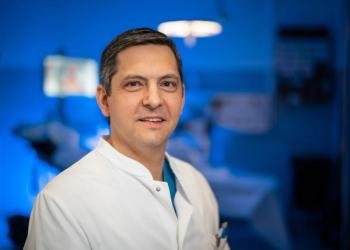
Jennifer Song, MD, joined the Skin & Psych podcast at the Integrative Dermatology Symposium (IDS) in Palm Springs, California, where she presented on 2 topics: treatment of psoriasis with risankizumab (Skyrizi) and an integrative approach to alopecia areata.
In this conversation with host Patricia Delgado, DNP, AGPCNP, DCNP, PMHNP, Soung discusses how a whole person approach applies to chronic autoimmune skin conditions, why alopecia areata carries a significant psychosocial burden that clinicians should not overlook, and what she is taking home from the conference to apply in her own practice.
What's been your favorite part of the conference so far?
My favorite part is really the whole person approach at this conference, because in chronic autoimmune diseases like psoriasis or atopic dermatitis, it's really about treating the patient as a whole. A lot of times, we don't have time in our routine visits to address everything, and it's great to learn from others about how they're doing that.
I've found that it's useful to share a tidbit with the patient at each visit. Giving them everything at one visit can be overwhelming. I'll assign homework, like, "I'd love for you to read more about this." Many patients come to us with questions: What should I be eating? What peptides or supplements should I be taking? When you empower the patient with more information and get them involved, those are the situations where you have the best outcomes.
What did you present on at the conference this weekend?
I presented on 2 topics. One was on psoriasis, my favorite topic, specifically treatment with Skyrizi. My other topic was the integrative approach to patients with alopecia areata, and that one is near and dear to my heart because…the health care community [often] tells these patients, "It's just hair."
When you really think about it and delve deeper, it's a condition that affects your confidence, your emotional well-being, and your identity. It's not just what we see on the outside, and that's why I think it fits into the theme of this conference. With an integrative approach, you also need to address the psychosocial component.
On top of that, helping patients grow hair is so slow, so setting expectations is very important. Your patient is thinking, "I'm going to get some sort of magical pill, and I'm going to grow hair." Except when you look at yourself in the mirror every day, it's a slow process. I tell patients I'm hoping we see visible results somewhere between 6 months and a year.
What is one thing you've gleaned from IDS that you'll implement on Monday?
That's a great one. Honestly, a lot of the things I learned this weekend. I'm wondering which one I'm going to adopt and stick to myself, because all of these things are really about treating yourself and your health as a whole.
Today, I heard that if you drink regular coffee, the benefits are greater than decaf. However, I'm a person who can't drink regular coffee because the caffeine is too much for me, so I'm wondering if that means having a little bit of regular coffee without having too much caffeine. I do love the aroma of coffee, so that would probably be No. 1.
I also listened to the talk on skin aging and menopause. I feel like that's a really hot topic this year, and many of my patients ask me about it. I want to learn more and understand the science and how to guide my patients. There's no doubt that estrogen plays a huge role in skin aging, so does that mean topical estrogen or hormone replacement? Again, that's another area of women's health that truly requires an integrative approach.
The longer I practice, the more I dream of a center that has multiple disciplines under one roof to take care of patients—almost like a wellness hub.