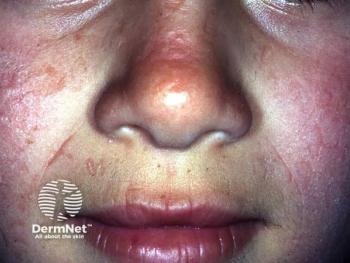
Quoin Pharmaceuticals Ltd. reported positive interim results from CL-QRX003-004, its ongoing phase 2/3 study of QRX003 4% lotion in patients with Netherton syndrome, according to a company announcement. Four of 6 participants who completed 12 weeks of treatment achieved a 1-grade or greater improvement in Investigator Global Assessment (IGA) across the treatment area, meeting the prespecified alpha-adjusted primary endpoint (66.7% [4/6]; P = .0087 vs α = .0215). The key secondary endpoint, the Global Statistical Test–Global Impression of Change (GIC), also reached statistical significance at week 12 (mean change, –1.5 [SD, 0.82]; P = .0070 vs α = .0215).1
There are currently no FDA-approved therapies specifically indicated for Netherton syndrome. QRX003 has received Orphan Drug, Rare Pediatric Disease, and Fast Track designations from the FDA. The interim analysis included the first 6 of approximately 20 evaluable participants planned for CL-QRX003-004. Participants were required to discontinue standard-of-care therapies, including topical and systemic prescription treatments, for the duration of the study. Quoin expects to complete enrollment by the end of 2026 and report topline results in the second quarter of 2027.
CL-QRX003-004 is a phase 2/3, multicenter, baseline-controlled, open-label study evaluating the safety, tolerability, and efficacy of QRX003 4% lotion applied twice daily to the whole body, excluding the scalp, in patients with Netherton syndrome. The study is enrolling participants aged 4 years and older at sites in the US and UK. Treatment continues for 12 weeks, followed by a 4-week post-treatment end-of-study visit.
The interim analysis included the first 6 participants to complete 12 weeks of treatment. The cohort included 3 male and 3 female participants ranging in age from 11 to 52 years.1
QRX003 Demonstrates Improvements Across Clinician-Assessed Endpoints
For the primary endpoint, 4 of 6 participants (66.7%; 95% CI, 22.28%-95.67%) achieved a 1-grade or greater improvement in IGA across the treatment area at week 12.¹ The result was statistically significant compared with a prespecified null hypothesis of 1 responder (P = .0087 vs α = .0215). Two of the 4 responders achieved a 2-grade or greater improvement in IGA.