The merger, backed by an oversubscribed $180 million private placement, will fund development of NOR-101, an IL-13 x IL-18 bispecific antibody entering phase 1 trials in atopic dermatitis in early 2027.
At a Dermatology Times Case-Based Roundtable in Las Vegas, Nevada, clinicians compared topical corticosteroids, newer nonsteroidal agents, and systemic therapy across adult and adolescent AD cases.
James Q. Del Rosso, DO, board-certified dermatologist, Mohs micrographic surgeon, and research director at JDR Dermatology Research in Las Vegas, Nevada, recently led a
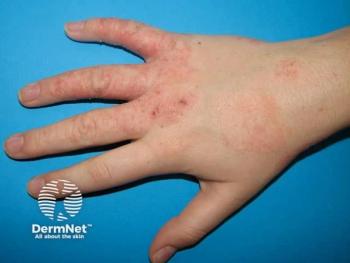
The first case involved a 36-year-old man who has had AD since he was 11 years old, with eczematous lesions covering approximately 10% of his body surface area on his neck, trunk, and legs. His symptoms worsened after a move to a drier climate, and his previous regimen, including triamcinolone and tacrolimus, no longer controlled his disease.
Attendees weighed how adherence and access shape topical selection ahead of systemic therapy. One attendee raised concern about applying medication to hard-to-reach areas such as the back, whereas another described starting with ruxolitinib cream given its itch relief. Del Rosso pressed the group on how much weight they give needle aversion when considering injectable options.
"I've never had somebody I can't talk into taking a needle—ever," Del Rosso said. He argued that reported needle phobia is overstated relative to real adherence concerns with oral and topical regimens.
Several attendees favored hitting hard with a short course of higher-potency topical corticosteroid before transitioning to a nonsteroidal agent, arguing that patients want fast relief. "They're itchy, and they can't function," an attendee said.
Del Rosso pushed back on an assumption in the group's approach to systemic therapy. "There's no systemic that keeps people 100% clear," he said. Attendees agreed that most patients keep a topical on hand even after starting a biologic or a Janus kinase inhibitor for breakthrough areas.
The group also discussed proactive maintenance dosing once a patient clears, noting mixed data across ruxolitinib, roflumilast, and tapinarof. Several attendees reported success maintaining clearance with twice-weekly or 3-times-weekly application once patients reach clear or almost clear status, though few could point to published data supporting the practice. The patient was ultimately started on twice-daily ruxolitinib cream 1.5% and experienced rapid itch relief with continued skin clearance.
The second case centered on a 15-year-old boy who has had AD since he was 4 years old, with persistent flares on his neck and arms despite hydrocortisone, triamcinolone, mometasone, and tacrolimus. He was self-conscious about visible involvement and reported worsening symptoms since starting high school.
Attendees discussed how quality of life and mental health assessment differ in adolescent patients compared with adults. One attendee described a low threshold for offering systemic therapy given the visibility of his involvement. "I can't get them better, so why not?" the attendee said. The patient was hesitant to start an injectable and opted to try 1 more topical option before dupilumab. He was started on once-daily tapinarof cream.
Attendees compared experience across the 3 newer nonsteroidal topicals. Several described ruxolitinib as the most consistently effective for itch and clearance, whereas views on tapinarof were more mixed. "Tapinarof in AD seems to be the least predictable of these 3 medicines for me," an attendee said, adding that the drug either performs very well or does little.
Others favored roflumilast for adolescent patients, citing once-daily dosing and a vehicle attendees described as pleasant to apply. Discussion turned to considerations for patients with skin of color, including caution with potent topical corticosteroids due to dyspigmentation risk and the tendency for postinflammatory hyperpigmentation to linger well after inflammation resolves. Attendees said patients often need repeated counseling, as pigmentation changes can take months to a year to fade and, in deep dermal cases, may never fully resolve.
The discussion then turned to the youngest patients seen in practice, with attendees expressing interest in nonsteroidal topicals eventually gaining approval down to age 3 months. Several also raised interest in additional safety data in patients who are pregnant or nursing.
Del Rosso closed by asking what leads a patient to stay with a particular clinician when treatment options look similar across practices. The clinicians described personalizing handouts for each patient and checking in directly on mood and daily functioning rather than relying only on disease severity scores.
An attendee closed the evening by praising the format of the discussion. "I think it's always beneficial to hear how other people are approaching similar cases," they said.
Want to attend an upcoming Dermatology Times event?