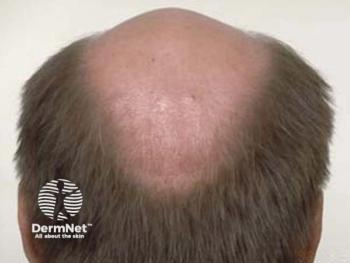
The FDA has approved baricitinib (Olumiant; Eli Lilly and Company) for pediatric patients 12 years of age and older with severe alopecia areata (AA), Lilly announced September 25, 2026. The approval expands the drug's existing US label, which already covers adults with moderately to severely active rheumatoid arthritis and severe AA (BRAVE-AA1 and BRAVE-AA2).¹ Approval rests on 36-week data from the adolescent cohort of BRAVE-AA-PEDS (NCT05723198), the first and largest phase 3 trial designed specifically for pediatric patients with severe AA.1,2
Severe, early-onset AA often proves more extensive and harder to manage over the long term, and few systemic options had previously been available for this age group. The approval follows an April 2026 European Commission authorization of baricitinib for adolescents 12 to under 18 years old with severe AA, extending the drug's international pediatric footprint.¹
“FDA approval of baricitinib for treatment of patients with alopecia areata as young as 12 years of age is an important advance for patients and dermatology providers. While there are currently 3 FDA-approved JAK inhibitors for adults over age 18 with alopecia areata, only ritlecitinib and now baricitinib are approved for younger patients,” said Christopher Bunick, MD, PhD, associate professor of dermatology at Yale School of Medicine and Dermatology Times’ editor in chief, in an exclusive statement.
BRAVE-AA-PEDS enrolled adolescents 12 to under 18 years old, weighing 30 kg or more, with a Severity of Alopecia Tool (SALT) score of 50 or higher and a current AA episode lasting 6 months to 8 years. The first cohort randomized 257 participants 1:1:1 to once-daily placebo, baricitinib 4 mg, or baricitinib 2 mg, with the primary end point defined as a SALT score of 20 or lower at week 36. A second cohort of 166 adolescents was randomized 1:1 to the 2 active doses to accumulate additional safety data. At baseline, the median SALT score was 100, indicating complete scalp hair loss, and patients had lived with AA for a mean of 6.4 years. At week 36, 80% or more scalp hair coverage (SALT score ≤20) was achieved by 42% of patients on baricitinib 4 mg and 27% on baricitinib 2 mg, compared with 5% on placebo.¹
Secondary End Points and Safety Profile
Frequently Asked Questions
What is baricitinib approved for in adolescents?
Baricitinib (Olumiant) is FDA-approved for pediatric patients 12 years of age and older with severe alopecia areata, in addition to its existing adult indications.
How does baricitinib work in alopecia areata?
Baricitinib is an oral Janus kinase (JAK) inhibitor that blocks inflammatory signaling pathways implicated in the autoimmune hair follicle attack seen in alopecia areata.
What did the BRAVE-AA-PEDS trial show?
At week 36, 42% of adolescents on baricitinib 4 mg and 27% on baricitinib 2 mg reached 80% or more scalp hair coverage, compared with 5% on placebo.
Ninety percent or more scalp hair coverage, defined as a SALT score of 10 or lower, was reported in 37% of patients treated with baricitinib 4 mg and 21% treated with baricitinib 2 mg at week 36, compared with 2% on placebo. Among patients with substantial eyebrow and eyelash hair loss at baseline, those treated with baricitinib 4 mg showed improved coverage at both sites. Lilly characterized the overall safety profile in this pediatric population as consistent with the established safety profile in adults with severe AA.¹
The FDA-approved labeling for baricitinib carries a boxed warning for serious infections, mortality, malignancy, major adverse cardiovascular events, and thrombosis. Dosing starts at 2 mg once daily, with an increase to 4 mg once daily permitted for an inadequate response; once an adequate response is reached on the 4-mg dose, the label calls for a step-down to 2 mg once daily. For patients with nearly complete or complete scalp hair loss, with or without substantial eyebrow or eyelash involvement, the label allows clinicians to consider starting at 4 mg once daily. Baricitinib is supplied as 1 mg, 2 mg, and 4 mg tablets.¹
"Severe alopecia areata that starts early in life can be more extensive and harder to treat over time, making it important to consider all available treatment options early in the course of disease. The evidence supporting Olumiant's approval is particularly meaningful because it comes from a phase 3 study specifically designed for pediatric patients, helping clinicians and families make more informed decisions when considering advanced therapies,” said Brittany Craiglow, MD, adjunct associate professor of dermatology at Yale School of Medicine, in the news release.¹
George Gondo, chief mission officer, National Alopecia Areata Foundation, added, "More treatment choices mean more families have the opportunity to find the option right for their child, together with their doctor."¹
According to Lilly, baricitinib has been prescribed to more than 33,000 patients in the US since 2017 and became the first FDA-approved systemic treatment for adult severe AA in 2022.¹ Lilly noted the drug now has coverage at three of the largest US pharmacy benefit managers for adults with severe AA, and the company offers copay assistance for eligible commercially insured patients through its support program.¹ For dermatology practices, the pediatric approval adds a labeled systemic option for an age group where treatment decisions previously relied largely on off-label extrapolation from adult data.
“Managing alopecia areata of the scalp, eyebrows, and eyelashes is not always one size fits all. Having multiple targeted non-steroidal systemic options is critical to elevating the care for patients with alopecia areata. Baricitinib’s adolescent approval expands our toolbox in a positive way,” Bunick concluded.
References
- FDA approves Lilly's Olumiant (baricitinib) for pediatric patients 12 years of age and older with severe alopecia areata. News release. Eli Lilly and Company. September 25, 2026. Accessed September 25, 2026. https://investor.lilly.com/news-releases/news-release-details/fda-approves-lillys-olumiant-baricitinib-pediatric-patients-12
- A study of baricitinib (LY3009104) in pediatric participants with severe alopecia areata (BRAVE-AA-PEDS). ClinicalTrials.gov identifier: NCT05723198. Accessed September 25, 2026. https://clinicaltrials.gov/study/NCT03899259