Banner - NPPA Connect
News|Articles|August 11, 2026

Breakout Bulletin: August 3-August 7

Listen
0:00 / 0:00

Key Takeaways

  • AI-assisted teledermatology and structured nurse-led melanoma triage can safely shift select front-end assessment, potentially accelerating high-risk lesion routing amid persistent dermatologist workforce shortages.
  • Extended-release oral minoxidil VDPHL01 demonstrated early gains in density and shaft caliber in female AGA, leveraging steadier exposure to mitigate peak-related cardiotoxicity concerns versus immediate-release formulations.
SHOW MORE

Every week, we cut through the noise to bring clinicians the trial results, approvals, and emerging therapies that are actually moving the needle.

You’re busy. Between patients, prior authorizations, inbox messages, and everything else on your plate, keeping up with the literature is the first thing that slips. Dermatology Times NP/PA Connect is here to make sure it doesn’t. Each week, we pull the most clinically relevant news from across dermatology and bring it straight to your inbox — what’s new, what it means, and what’s worth watching. This week: nurse-led triage models aim to shrink derm wait times, an oral minoxidil shows hair growth gains in under 2 months, the evidence on probiotics for HS turns out thinner than the hype, your NPI carries more liability than most practices let on, and an investigational ECM injectable looks past fillers to rebuild post-GLP-1 skin.

Nursing Owns the Skin, and That Could Ease the Access Crisis

Dermatology's workforce shortage keeps patients waiting weeks to months for an appointment, and a new systematic review of 32 studies published from 2019 to 2024 found AI-assisted teledermatology platforms consistently cut those waits to fewer than 30 days while supporting safe task shifting to nondermatologist clinicians.1,2

In an interview with Dermatology Times, review authors Kimberly Madison, DNP, AGPCNP-BC, WCC, and Jade Trevino, BSN, RN, described nurse-led melanoma triage programs already running in Australia and New Zealand, where trained nurses independently evaluate suspicious lesions before directing patients to dermatology.1 Trevino pointed to a domestic parallel already familiar to most practices: registered nurses delivering botulinum toxin and filler under physician oversight. Madison argued nursing is a natural fit for this expanded role because skin assessment already runs through nursing training, even if dermatology-specific education has lagged. The authors stressed that AI tools should support, not replace, clinician judgment, and that nurses are meant to extend dermatologist capacity, not substitute for it.

Nursing owns the skin— Kimberly Madison, DNP, AGPCNP-BC, WCC, founder, Mahogany Dermatology Nursing Education and Research

▶ Why it matters: If your practice is drowning in referral backlog, structured nurse triage and AI-assisted screening may be the fastest lever you have to get high-risk patients seen sooner.

MORE ON AI IN DERMATOLOGY

An Oral Minoxidil That Works in Under 2 Months

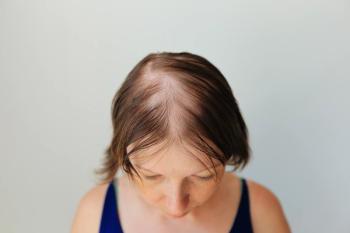
Extended-release oral minoxidil VDPHL01 produced visible hair growth in female androgenetic alopecia within 2 months, a speed no other oral therapy currently available can match, according to phase 2 data discussed by Jerry Shapiro, MD, director of the Hair and Scalp Disorders program at NYU Langone Health.3 Shapiro reported gains in both hair density and hair shaft width alongside the rapid response.

Unlike spironolactone and finasteride, VDPHL01 carries no hormonal activity, meaning it will not disrupt menstrual cycles or build up the uterine lining the way spironolactone can when periods stop. Shapiro also noted spironolactone's tendency to raise potassium and lower sodium, effects he has not observed with VDPHL01. The extended-release formulation is designed to hold steady blood levels rather than the sharp peaks seen with immediate-release minoxidil, which clears the bloodstream in 2 to 4 hours and raises cardiotoxicity concerns. A phase 2/3 trial, Study 306, is expected to read out next.4

There is nothing available that I can give a female who has androgenetic alopecia that will work within 2 months.— Jerry Shapiro, MD, NYU Langone Health

▶ Why it matters: For patients who've cycled through spironolactone side effects or want to avoid hormonal therapy altogether, an oral option with early, visible results could change how you counsel female pattern hair loss.

MORE ON HORMONE THERAPY

Don't Reach for Probiotics in HS Yet

Growing interest in the HS microbiome has fueled enthusiasm for probiotics as an adjunct therapy, but a new narrative review concludes the evidence does not yet support recommending them for routine use.5 Skin studies consistently show a shift away from commensal organisms like Cutibacterium acnes and Staphylococcus epidermidis toward anaerobic bacteria including Porphyromonas, Prevotella, Peptoniphilus, and Fusobacterium, with biofilm formation in HS tunnels potentially driving chronic inflammation and antibiotic resistance.

Small, observational gut studies report reduced microbial diversity and disrupted tryptophan metabolism, but the authors caution these findings cannot establish whether gut dysbiosis causes HS or simply reflects it. Because no randomized controlled trials have tested probiotics specifically in HS, the review leans on evidence from atopic dermatitis, psoriasis, and rosacea, where multistrain formulations have shown modest benefit. The authors were explicit that those results do not extrapolate cleanly given HS's distinct disease biology, and they cite inconsistent study methods and unclear dosing as key barriers to clinical use.6

LEARN MORE ABOUT HS

▶ Why it matters: Patients asking about probiotics for HS deserve an honest answer. The biologic rationale is real, but the clinical evidence isn't there yet, so frame it as investigational rather than a treatment recommendation.

The Billing Department Doesn't Own Your NPI, You Do

A recent FBI raid on a multisite dermatology practice, its second run-in with federal enforcement after a $6.6 million False Claims Act settlement, is a reminder that the National Provider Identifier on a claim belongs to the clinician who rendered the service, not the billing department.7,8 Joseph Gatti, DMSc, MPAS, MBA, PA-C, writing in The Practice Playbook, walked through where NPs and PAs most often get exposed.

Incident-to billing requires that a physician personally saw the patient for that specific condition, made the diagnosis, and set the plan of care before an NP or PA can bill follow-up visits under the physician's NPI at 100% of the fee schedule instead of 85%. A Memphis practice paid $341,690 after physicians were found to be out of the office, including abroad, while incident-to visits continued. Mohs micrographic surgery carries a similar rule: the physician who excises the tissue must also read the pathology, a distinction that cost one Southeast practice $6.6 million.7

The supervising physician must be immediately available via 2-way audio-video throughout the encounter. — Faith C. McNicholas, RHIT, CPC, CPCD, PCS, CDC, American Academy of Dermatology

▶ Why it matters: Before you sign off on another incident-to visit, confirm the physician actually performed the initiating encounter for that condition. Your NPI carries the liability even if you didn't set the billing rules.

Beyond Fillers, an ECM Scaffold Aims to Rebuild Post-GLP-1 Skin

An investigational extracellular matrix (ECM)-based injectable is aiming to restore tissue scaffold rather than simply add volume, a distinction executives say could eventually extend beyond wound care into aesthetics.9 Miles Harrison, president and CEO of Conexeu Sciences, and Brian Pilcher, PhD, the company's chief medical officer, described a thermosensitive ECM material that is reconstituted at the point of care, injected as a liquid, and gels at body temperature to support cellular migration and tissue remodeling.

Conexeu is pursuing wound care first through the FDA's 510(k) pathway for Class II devices, with Mohs surgery cited as a natural clinical touchpoint given its reliance on tissue regeneration. Harrison connected the technology to a growing aesthetic problem: rapid weight loss from GLP-1 receptor agonists that depletes facial volume and degrades ECM quality in ways conventional fillers do not fully address. A 12-month proof-of-concept study evaluating remodeling, persistence, and inflammatory response has been completed, though full findings await peer review.9

▶ Why it matters: Watch this space if you're fielding post-GLP-1 skin-quality complaints that fillers alone aren't solving. Regenerative ECM approaches are still investigational, but they're aimed squarely at that gap.

References
  1. Madison K, Trevino J, Heaning S. Nurse-led triage, education could expand dermatology access. Dermatology Times. Accessed August 10, 2026. https://www.dermatologytimes.com/view/nurse-led-triage-education-could-expand-dermatology-access
  2. Madison K, Trevino J. AI-assisted dermatology in provider shortage areas: a systematic review of access and wait time outcomes. J Clin Aesthet Dermatol. 2026;19(5-6 Suppl 1):S16-S23. Accessed July 27, 2026. https://jcadonline.com/ai-assisted-dermatology-in-provider-shortage-areas-a-systematic-review-of-access-and-wait-time-outcomes/
  3. Shapiro J, Bader K. Extended-release oral minoxidil shows rapid onset of hair growth in female androgenetic alopecia. Dermatology Times. Accessed August 10, 2026. https://www.dermatologytimes.com/view/extended-release-oral-minoxidil-shows-rapid-onset-of-hair-growth-in-female-androgenetic-alopecia
  4. Veradermics' oral VDPHL01 delivers positive Study '207' phase 2 clinical trial results in female pattern hair loss ahead of upcoming phase 2/3 Study '306' readout. News release. Veradermics. July 15, 2026. Accessed August 6, 2026. https://ir.veradermics.com/news-releases/news-release-details/veradermics-oral-vdphl01-delivers-positive-study-207-phase-2
  5. Bosslett M. Probiotics in hidradenitis suppurativa: biologic rationale vs clinical evidence. Dermatology Times. Accessed August 10, 2026. https://www.dermatologytimes.com/view/probiotics-in-hidradenitis-suppurativa-biologic-rationale-vs-clinical-evidence
  6. Semaani JMA, Abbas O, Kurban M. Gut dysbiosis in inflammatory skin diseases: lessons from atopic dermatitis, psoriasis, and rosacea with potential implications for hidradenitis suppurativa. Dermatologic Therapy. 2026;5815717. https://doi.org/10.1155/dth/5815717Digital Object Identifier (DOI)
  7. Gatti J. Your name is on the claim: billing compliance, federal enforcement, and why the provider always pays. Dermatology Times. Accessed August 10, 2026. https://www.dermatologytimes.com/view/your-name-is-on-the-claim-billing-compliance-federal-enforcement-and-why-the-provider-always-pays
  8. False Claims Act, 31 USC §3729-3733.
  9. Harrison M, Pilcher B, Bosslett M. The cutaneous connection: rebuilding the extracellular matrix in wound healing and aesthetics. Dermatology Times. August 10, 2026. Accessed August 10, 2026. https://www.dermatologytimes.com/view/the-cutaneous-connection-rebuilding-the-extracellular-matrix-in-wound-healing-and-aesthetics

Dermatology Times NP/PA Connect | The Breakout Bulletin