Though convenient, SPF-infused cosmetics rarely deliver their labeled protection level in real-world use, underscoring the continued need for a dedicated broad-spectrum sunscreen as the foundation of any routine.
Conexeu is developing an injectable, thermosensitive ECM scaffold to remodel skin after rapid weight loss, aiming beyond fillers to restore tissue structure.
At the intersection of regenerative medicine and aesthetic dermatology, a new approach to tissue restoration is being developed by
Harrison brings extensive leadership experience in dermatology and aesthetics, while Pilcher is a cell and molecular biologist whose career has focused on wound healing, dermal fillers, and injectable aesthetics. Both said they were drawn to Conexeu by the potential of its technology to address a limitation of traditional aesthetic treatments: replacing lost volume without necessarily restoring the underlying tissue framework.
The opportunity has become increasingly relevant with the widespread adoption of glucagon-like peptide-1 (GLP-1) receptor agonists and associated weight loss. Harrison noted that rapid and substantial weight reduction can produce facial volume loss, skin laxity, and changes in tissue quality. While commonly referred to as “Ozempic face,” the phenomenon is not simply a matter of lost volume, according to the executives. Depletion of adipose tissue may also accelerate degradation of the ECM, which provides the structural framework supporting healthy tissue.
Traditional hyaluronic acid fillers and biostimulators are primarily designed for contour correction, wrinkle reduction, or relatively limited volume augmentation. Conexeu is instead developing what the company describes as a bio-regenerative approach intended to provide a structural scaffold that supports the body’s own tissue-remodeling processes.
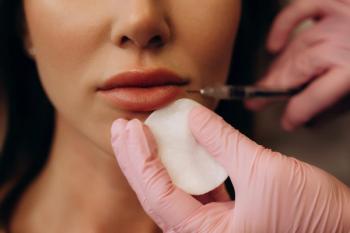
The technology is a thermosensitive ECM material that is being developed in a lyophilized format for reconstitution at the point of care. Once reconstituted at room temperature, the material remains liquid, allowing delivery through a syringe and fine-gauge needle. After injection into tissue at approximately body temperature, the material begins to gel within about 10 minutes, creating a localized matrix designed to remain in place and provide a framework for cellular migration and tissue remodeling.
The company recently completed a
Harrison and Pilcher said the early findings are encouraging but are not yet being publicly disclosed pending abstract submission and peer review. They emphasized that the technology is supported by more than a decade of research originating at the University of British Columbia and a body of peer-reviewed research spanning regenerative medicine, wound healing, tissue engineering, transplantation, and dermatology.