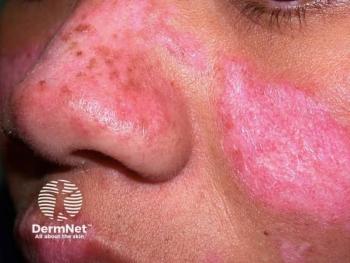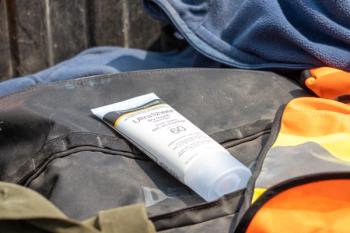
Two new Neutrogena facial sunscreens incorporate bemotrizinol, the first new sunscreen active ingredient added to the US OTC monograph in decades.
Around 80% of clinical trials face enrollment delays, and for rare genodermatoses with small patient pools, AI-generated synthetic control arms may offer a practical path to adequately powered studies.
A newly published framework paper in Discover Artificial Intelligence, co-authored by dermatologists from Harvard Medical School, Yale School of Medicine, Oregon Health and Science University, and Texas Tech University Health Sciences Center, offers what may be the most clinically grounded analysis yet of how generative artificial intelligence (AI) and digital twins are converging to reshape precision medicine — with explicit implications for skin disease.1
The paper, authored by Akbarialiabad and colleagues, goes beyond reviewing the technology. It proposes a clinical-grade evaluation framework for deploying these systems safely, covering validation strategies, uncertainty calibration, safety monitoring, and governance of synthetic data. For dermatologists, the timing is significant.
The authors are direct about dermatology's position in this landscape. Digital twins in dermatology, they write, simulate patient responses to treatments by integrating genetic, environmental, and lifestyle data to personalize therapies for conditions like psoriasis — with the goal of enhancing efficacy and minimizing risks. This is not a hypothetical. The infrastructure to begin building these models exists now, and the specialty's rich phenotypic and genomic data make it a natural proving ground.2
The clinical case is straightforward: dermatology treats some of the most heterogeneous patient populations in medicine. Whether selecting between IL-17, IL-23, or IL-4/13 blockade in moderate-to-severe atopic dermatitis, or determining who is likely to sustain a PASI 90 response versus who will cycle through biologics, the specialty has long needed better tools for predicting individual treatment trajectories. A generative AI-powered digital twin — initialized with a patient's baseline disease characteristics, comorbidities, genomic profile, and prior treatment history — could simulate those trajectories before a prescription is written.
One of the paper's most pointed observations concerns rare conditions. Approximately 80% of clinical trials encounter enrollment delays, with 20% failing to meet recruitment targets altogether.2 For orphan skin diseases — including severe subtypes of epidermolysis bullosa, ichthyoses, and rare autoinflammatory dermatoses — the patient pool is simply too small to power conventional trials on meaningful timelines.
The authors, including a prior publication specifically addressing digital twins in orphan dermatologic diseases, frame AI-generated synthetic control arms as a practical solution.1 By computationally replicating enrolled patients to serve as the comparator group, trials for rare conditions could reach statistical adequacy without waiting years for sufficient recruitment. The European Medicines Agency has already endorsed this approach in principle: the PROCOVA framework, qualified by the EMA, enables synthetic control arm generation using digital twins in prospective trials — a regulatory signal the field should not overlook.
For dermatopathologists and clinicians who rely heavily on tissue-level diagnosis, the paper's discussion of generative AI in histopathology is directly relevant. Models such as PathologyGAN have demonstrated that AI-generated cancer tissue images can be produced at a fidelity high enough to challenge pathologists' ability to distinguish them from real slides. While still in research stages, these tissue digital twins could eventually support training, augment small biopsy datasets from rare tumors, and enable virtual drug experiments on synthetic representations of a patient's own tumor microenvironment.
The authors are candid — and the dermatology community should be equally so — about the failure modes of these systems. Three deserve particular attention.
First, hallucinations. Generative AI models, including large language models increasingly embedded in clinical decision support tools, can fabricate plausible-sounding outputs, including fictitious citations and invalid clinical rationale. The authors recommend retrieval-augmented generation and uncertainty thresholding as mitigation strategies, but the core message is that clinicians should not treat AI-generated outputs as ground truth without verification infrastructure in place.
Second, bias. Training datasets frequently underrepresent racial, gender, and socioeconomic subgroups. In dermatology — a specialty where diagnostic accuracy on darker skin tones has already been documented as a weakness of AI image classifiers — this is not an abstract concern. The authors flag that synthetic cohorts generated from biased training data can inherit and amplify those biases, potentially widening rather than closing disparities in care.
Third, the validation gap. Fewer than 10% of AI-driven clinical prediction models have undergone any form of external or temporal validation. Before any digital twin system influences prescribing or trial design in dermatology, prospective validation across diverse patient populations is non-negotiable.
The global market for human digital twins is projected to reach approximately $530 billion by 2032. The technology is not waiting for regulatory clarity or clinical consensus to catch up. For a specialty with the patient heterogeneity, genomic complexity, and rare disease burden that dermatology carries, the promise of AI-powered virtual patients is real — but so are the risks of deploying them prematurely. The framework Akbarialiabad and colleagues propose offers a responsible path forward, and the specialty's own clinician-researchers are already helping to shape it.
References