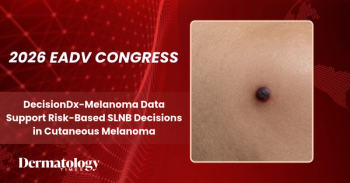
Prospective data suggest DecisionDx-Melanoma may help refine SLNB decisions and identify recurrence risk beyond conventional staging.
Eugene R. Semenov, MD, MA, FAAD, discussed AI models that combine pathology and clinical data to better predict recurrence in early-stage melanoma
Semenov explained that histologic slides contain substantially more prognostic information than is currently incorporated into melanoma staging. As adjuvant immunotherapy becomes increasingly available for stage IIB and IIC melanoma, clinicians face difficult decisions about balancing the potential benefits of treatment against the risk of immune-related toxicities.2
We risk either over-treating and exposing a majority of patients to serious immune-related toxicity, or under-treating a sizeable minority who otherwise experience recurrence, - Eugene R. Semenov, MD, MA, FAAD,
To address this gap, Semenov's laboratory is developing deep learning models that extract prognostic signals directly from H&E whole-slide images and combine those findings with clinical and pathologic information from the electronic health record. The resulting multimodal models are designed to predict recurrence and metastatic progression on an individual patient basis, providing personalized risk estimates that could eventually support routine clinical decision-making.2
Beyond risk prediction, Semenov's group is integrating spatial proteomics and spatial transcriptomics to better understand why the AI models identify certain regions of tumors as high risk. He said the ultimate goal is to create a prognostic tool that is not only accurate but also biologically interpretable and clinically actionable.
Clinicians interested in contributing to MRF webinars can contact the organization at
References: