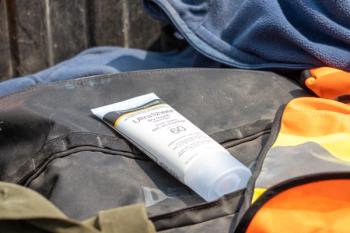
Two new Neutrogena facial sunscreens incorporate bemotrizinol, the first new sunscreen active ingredient added to the US OTC monograph in decades.
Explore the transformative role of AI in dermatology with Nawar Shara, PhD, focusing on personalized skin care and patient safety.
Artificial intelligence (AI) is increasingly positioned as a transformative tool in dermatology, particularly in the development of customized skin care and clinical decision support. In this Derm Dispatch discussion, host Renata Block, DMSc, MMS, PA-C, speaks with Nawar Shara, PhD, a leader in health data science and AI research, about where these technologies add value, where gaps remain, and what is required to ensure patient safety.
AI’s strength lies in its ability to process large volumes of data quickly and consistently. As Shara explains, machine learning models can evaluate thousands or even millions of images simultaneously, identify subtle patterns over time, and avoid human limitations such as fatigue. When appropriately designed and deployed, these tools can shift the clinician’s focus away from repetitive visual comparisons and toward higher-level clinical judgment, patient communication, and care planning.
In the context of customized skin care, AI platforms often integrate clinical images, patient-reported data, environmental factors, and product information to generate individualized recommendations. For clinicians already familiar with acne, pigmentary disorders, inflammatory dermatoses, and photoaging, the appeal is clear: AI has the potential to support more tailored interventions at scale. However, both speakers emphasize that not all AI solutions are created equal, and clinical utility depends heavily on how these systems are built and validated.
A central theme of the conversation is transparency. Trust in AI begins with understanding how a model was trained, what data sources were used, and whether outcomes were clinically validated. Shara highlights the importance of clinician involvement throughout development, not just at the point of deployment. Tools designed in isolation by technologists, without dermatology expertise, risk being misaligned with real-world clinical needs.
Bias remains a critical concern, particularly in dermatology where skin tone, texture, and disease presentation vary widely. AI systems trained on narrow or non-representative datasets may perform well in limited populations while underperforming in patients with skin of color or less common conditions. Addressing these gaps requires intentional inclusion of diverse data and ongoing performance monitoring, rather than assuming that algorithms are inherently objective.
Importantly, AI is framed not as a replacement for clinicians, but as an augmentative tool. Education is key: dermatology providers must understand both the capabilities and limitations of AI to use it responsibly. Regulatory oversight, clear validation standards, and post-market surveillance are also necessary to ensure patient safety as these tools move from consumer-facing skincare platforms into more clinically adjacent spaces.
Ultimately, the interview underscores a balanced message. AI holds meaningful promise for customized skin care and dermatologic care, but its success depends on transparency, diversity of data, clinician engagement, and thoughtful integration into clinical workflows. For a field that relies so heavily on visual assessment and longitudinal change, AI may become a powerful ally if developed and used with care.