

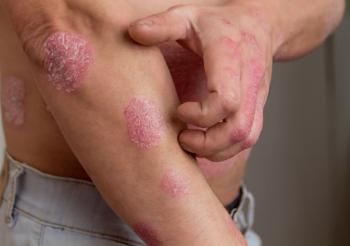
Feature|Articles|December 24, 2025
Dermatology Times 2025 Year in Review: Vitiligo
Listen
0:00 / 0:00
Key Takeaways
- Ruxolitinib cream is the sole FDA-approved therapy for nonsegmental vitiligo, showing significant repigmentation efficacy and a tolerable safety profile in phase 3 studies.
- Upadacitinib, an oral JAK1 inhibitor, achieved positive phase 3 results, indicating potential for broader body surface area treatment beyond facial regions.
As 2025 comes to a close, Dermatology Times is taking a look back at the studies, therapies, and advances in vitiligo this year.
Advertisement
In 2025, regulatory activity in vitiligo remained largely focused on optimizing use and broadening access to existing therapies while preparing for potential new systemic options.
Ruxolitinib cream remains the only FDA–approved therapy specifically indicated for repigmentation in nonsegmental vitiligo in patients 12 years and older, applied topically twice daily with demonstrated improvements in facial and total body Vitiligo Area Scoring Index outcomes at 24 and 52 weeks. This approval derives from TRuE-V1 and TRuE-V2 phase 3 studies that showed approximately
Late-Phase Clinical Trial Results
Upadacitinib, an oral selective JAK1 inhibitor widely used in inflammatory diseases, generated
Clinuvel’s
VYNE Therapeutics’ repibresib (VYN201), a BET inhibitor topical gel, completed phase 2b enrollment in localized nonsegmental vitiligo. This agent was designed to modulate inflammatory gene expression with low systemic exposure, offering a novel mechanism divergent from JAK blockade. However, in mid 2025, Vyne announced that the trial
Emerging Therapies
Several oral JAK inhibitors, including
Other pipeline efforts include
Updated Treatment Framework
In clinical practice, first-line management continues to emphasize topical therapy and phototherapy, especially in localized disease. Ruxolitinib cream is a cornerstone for patients aged 12 years and older with nonsegmental vitiligo involving the face or limited body areas. Where extensive body surface area is involved, systemic options such as oral upadacitinib and future JAK inhibitors may offer broader repigmentation efficacy with careful risk assessment for infection and laboratory abnormalities.
Future Directions
Despite advances, durable repigmentation across all body sites and long-term safety with systemic immunomodulation remain unmet needs. Novel mechanisms beyond JAK inhibition, including chemokine targeting and melanocyte activation, are necessary to broaden therapeutic benefit while minimizing systemic risks. Regulatory acceptance of patient-reported quality-of-life outcomes—beyond repigmentation indices—will be critical for access decisions globally.
Expert Insights
"Most attendees prefer to use ruxolitinib cream first line due to its efficacy both for facial and non-facial vitiligo. However, insurance access remains an issue with TCS and TCI’s typically being required first,” Erik Domingues, MD, said while moderating a recent
“Vitiligo is a disfiguring and life-altering disease, so while clinical photos may show measurable improvement, the patient’s perception of progress can differ. I integrate both objective and subjective measures—what we see clinically and how patients feel about those changes—to guide decisions about whether treatment is worthwhile to continue or adjust,” Lindsay Ackerman, MD, said in a
She added: “There’s still a significant gap between the data we have and what we observe in practice. The drug was studied as monotherapy for FDA approval, but many clinicians, myself included, are using it off-label in combination with other treatments. For example, combining topical ruxolitinib with narrowband UVB phototherapy appears to enhance repigmentation outcomes. In my practice, applying ruxolitinib hours before UVB treatment, rather than immediately after, optimizes absorption without interference from emollients like petrolatum. I’d like to see more structured studies evaluating such combination regimens, since they reflect real-world management and may optimize results.”
“It’s an exciting time to be treating vitiligo, and certainly we're on the cusp of having a wealth of oral systemic therapies to supplement our topical therapies,” George Martin, MD, said in a
Overall, the 2025 vitiligo landscape demonstrates significant momentum, with multiple late-phase programs nearing readouts and several innovative mechanisms advancing. As data milestones continue, dermatology clinicians will need to balance efficacy, safety, and patient preferences in an increasingly advanced treatment era.
References
- Cristallo M, Zaza I, Daddato MF, et al. Effectiveness and safety of ruxolitinib cream 15 mg/g in patients with non-segmental vitiligo: a real-life study. Int J Dermatol. 2025 Sep 1. doi: 10.1111/ijd.70049
- AbbVie announces positive topline results from phase 3 pivotal studies evaluating upadacitinib (RINVOQ) in adults and adolescents with vitiligo. News release. AbbVie. October 29, 2025. Accessed December 23, 2025.
https://news.abbvie.com/2025-10-29-AbbVie-Announces-Positive-Topline-Results-from-Phase-3-Pivotal-Studies-Evaluating-Upadacitinib-RINVOQ-R-in-Adults-and-Adolescents-with-Vitiligo - Clinuvel recruits 200 patients in phase III vitiligo trial CUV105. News release. Global Newswire. May 7, 2025. Accessed December 23, 2025.
https://www.globenewswire.com/news-release/2025/05/07/3075714/0/en/CLINUVEL-recruits-200-patients-in-Phase-III-vitiligo-trial-CUV105.html - VYNE Therapeutics completes enrollment in phase 2b trial evaluating VYN201 for the treatment of nonsegmental vitiligo. News release. VYNE Therapeutics. January 6, 2025. Accessed December 23, 2025.
https://vynetherapeutics.com/uncategorized/vyne-therapeutics-completes-enrollment-in-phase-2b-trial-evaluating-vyn201-for-the-treatment-of-nonsegmental-vitiligo/ - VYNE Therapeutics announces topline results from phase 2b trial with repibresib gel in nonsegmental vitiligo. News release. VYNE Therapeutics. July 30, 2025. Accessed December 23, 2025.
https://vynetherapeutics.com/press-releases/vyne-therapeutics-announces-topline-results-from-phase-2b-trial-with-repibresib-gel-in-nonsegmental-vitiligo/ - Utama A, Wijesinghe R, Thng S. Janus kinase inhibitors and the changing landscape of vitiligo management: a scoping review. Int J Dermatol. April 12, 2024. Accessed May 1, 2024. doi:10.1111/ijd.17157
- Guttman-Yassky E. Oral ritlecitinib plus nbUV-B accelerates repigmentation in nonsegmental vitiligo. Dermatology Times. June 17, 2025. Accessed December 23, 2025.
https://www.dermatologytimes.com/view/oral-ritlecitinib-plus-nbuv-b-accelerates-repigmentation-in-nonsegmental-vitiligo - Palermo B, Campanelli R, Garbelli S, et al. Specific cytotoxic T lymphocyte responses against Melan-A/MART1, tyrosinase and gp100 in vitiligo by the use of major histocompatibility complex/peptide tetramers: the role of cellular immunity in the etiopathogenesis of vitiligo. J Invest Dermatol. 2001;117(2):326-332. doi:10.1046/j.1523-1747.2001.01408.x
- Hebebrand M. Combining phototherapy and topicals to maximize repigmentation success. Dermatology Times. December 23, 2025. Accessed December 23, 2025.
https://www.dermatologytimes.com/view/combining-phototherapy-and-topicals-to-maximize-repigmentation-success
Advertisement
Related Content
Advertisement



Advertisement
Advertisement
Trending on Dermatology Times
1
How Emerging Androgenetic Alopecia Therapies Target DHT at the Scalp Level
2
Tildrakizumab Partially Reverses Epigenetic Aging in Psoriasis, Pilot Study Shows
3
Field-Directed Therapy Favored for Actinic Keratosis Management
4
Diet Linked to Improved Chronic Idiopathic Urticaria Control
5