


Feature|Videos|February 11, 2026
Red Light Photodynamic Therapy Sets Evidence-Based Standard for sBCC
Fact checked by: Yasmeen Qahwash
Todd Schlesinger, MD, reviews emerging randomized trial data supporting red light–activated photodynamic therapy with 10% aminolevulinic acid gel and outlines key considerations for patient selection in superficial basal cell carcinoma (sBCC).
Advertisement
Episodes in this series

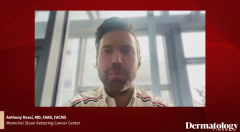

In a recent Dermatology Times Expert Perspectives custom video series, Todd Schlesinger, MD, a dermatologist, Mohs surgeon, and clinical trialist at Epiphany Dermatology in South Carolina, discussed the evolving evidence base supporting red light–activated photodynamic therapy (PDT) with 10% aminolevulinic acid (ALA) gel and how clinicians should interpret these data in practice.
Schlesinger emphasized that although blue light PDT has been widely used in dermatology, particularly for actinic keratosis, robust data supporting its use in superficial basal cell carcinoma (sBCC) are limited. “We don’t really have as much data for blue light,” he said, noting that much of the existing experience is anecdotal. In contrast, red light PDT now has support from a randomized, double-blind, placebo-controlled study evaluating red light plus 10% ALA gel in a sufficiently large population of patients with sBCC.
“I think that really is going to have to define and set the standard for the data,” Schlesinger said. He explained that red light was selected primarily because of its depth of penetration, which allows energy delivery beyond the epidermis and into the dermis. “That depth being able to penetrate through the epidermis, the dermis, and a little bit into the subcutaneous tissue would make sure that there’s enough energy at the dermal-epidermal junction to effectively treat [sBCC],” he said.
When asked how he advises colleagues choosing between light sources, Schlesinger was direct. “I’m going to say red light because the data [are] there,” he said. “We’ve got the data to support that now.” Although future studies could potentially expand the role of blue light, Schlesinger stressed that current decision-making should be guided by available evidence rather than theoretical considerations.
Patient selection also plays a critical role. Based on existing data, appropriate candidates include patients with biopsy-confirmed sBCC located on the trunk or extremities, including lesions up to 2 to 3 cm in size. These are cases that might otherwise be treated surgically but where patients prefer a nonsurgical approach. Practical considerations include access to the treatment site, availability of red light, and absence of contraindications such as significant photosensitivity.
Finally, Schlesinger highlighted the importance of biopsy confirmation before treatment. “We want to make sure that it is [sBCC], because that’s where we have the data,” he said, adding that more aggressive subtypes or recurrent tumors are not appropriate candidates for PDT.
Watch more from the series
Advertisement
Related to this article

SYX-5219 improved disease severity and itch in a Phase 1b trial of adults with moderate to severe atopic dermatitis.

In a survey of 301 employed adults, overall work impairment attributable to CHE was 31.8%, and quality of life worsened in step with self-reported disease severity.

An analysis of 633 skincare brands found gaps in evidence, safety information, and claim support, raising questions about what patients can verify online.

Can “Botox in a bottle” really rival injectable neuromodulators? We examine the evidence behind topical peptide serums and Argireline.

Dermatology clinicians at a Case-Based Roundtable in Austin, Texas, discussed real-world strategies for sequencing topical therapy, phototherapy, and ruxolitinib cream across pediatric and adult vitiligo cases.
Christophe Piketty discusses 3-year ARCADIA data demonstrating sustained efficacy and long-term safety of nemolizumab in atopic dermatitis.

Two claims analyses of hidradenitis suppurativa showed similar symptom prevalence in males and females and lower dermatologist access among rural patients than urban patients.
Day 3 of Fall Clinical 2026 featured roflumilast data in genital psoriasis, long-term JAK inhibitor safety in atopic dermatitis, and expert insights on setting expectations in HS, treating advanced cSCC, and screening aesthetic patients.
Advertisement
Advertisement
Trending on Dermatology Times
1
First-in-Class Oral PKM2 Modulator Shows Early Efficacy in Atopic Dermatitis
2
Hidradenitis Suppurativa Claims Data: Sex Parity and Rural Care Gaps
3
No Observed Skin Lesion Flares After Switching to Upadacitinib in Atopic Dermatitis
4
JAK Inhibitor Safety in Atopic Dermatitis: Long-Term Epidemiology Data
5