Dermatitis-related adverse events vary widely across atopic dermatitis systemic trials, driven by disease fluctuation and reporting differences, informing patient counseling and flare definitions.
The consensus summarizes contemporary real-world data showing that nearly 1 in 5 adolescents and adults with atopic dermatitis receive systemic corticosteroids.
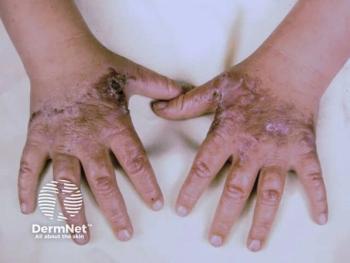
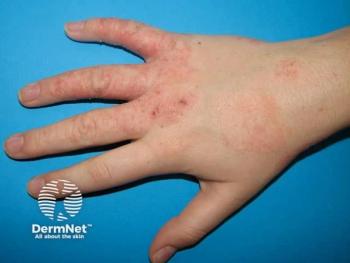
Every dermatology clinician who treats atopic dermatitis (AD) has faced the same uncomfortable trade-off. A patient arrives in a full flare, not sleeping, scratching relentlessly, and needing relief now. You can intensify topical therapy and optimize skin care, but you also know that systemic corticosteroids (SCS) can shut down inflammation quickly. A prednisone taper, a methylprednisolone dose pack, or an intramuscular injection given elsewhere can look like the fastest path back to function.
The problem is what happens next. Too often, “quick relief” becomes “repeat relief.” A burst turns into another burst, then another. A temporary bridge becomes a pattern of care. In a chronic disease, that pattern matters.
A newly published expert consensus on the role and risks of SCS in AD was designed for this exact real-world scenario.1 It does not simply restate that SCS are discouraged; it supplies the missing operational guidance that clinicians and payers have needed, with clear definitions and a clear next step.
American Academy of Dermatology (AAD) guidance has long cautioned against SCS as routine therapy for AD. Clinicians generally understand that message. The practical gap is that “short-term” is often referenced in the broader AD ecosystem, yet there has been no standardized, widely adopted duration threshold that clearly defines what short-term means for SCS exposure in AD.2
That vagueness is not benign. In the clinic, undefined language is interpreted differently by different people and different systems. Short-term can drift from days to weeks to repeated bursts over months. In payer policy, ambiguity can be leveraged in the wrong direction, treating SCS exposure as a routine step requirement rather than what it really is: a signal that the patient needs a steroid-sparing, durable systemic plan. The downstream consequences are predictable: therapeutic inertia, delayed access to advanced therapies, and avoidable cumulative harm.
This is why the consensus matters. It closes a practical care gap by explicitly defining short-term, clarifying what counts as systemic exposure, and tying any exposure to a clinician-friendly escalation pathway.
SCS use in AD is not rare in the United States. The consensus summarizes contemporary real-world data showing that nearly 1 in 5 adolescents and adults with AD receive SCS.3 This is happening despite the availability of multiple advanced systemic options that were developed specifically for AD.
The safety issue is not limited to “chronic steroids.” Clinicians observe the clinical pattern: rebound flares after discontinuation, repeated rescue cycles, and cumulative toxicity. The published evidence base supports that concern. Even short courses have been associated with serious adverse outcomes, and repeated bursts compound risk.1 In practical terms, SCS can carry consequences that span infections, metabolic and cardiovascular effects, fractures, thromboembolic events, and adrenal suppression, particularly as exposure accumulates.1 Additionally, in pediatric populations, chronic SCS can impair growth/stature in part through downregulation of growth hormone (GH) and GH receptors in the growth plates of bones.4
A strong position paper published in the Journal of Investigative Dermatology put a sharper point on what many clinicians were already seeing: SCS use persists in AD, and policy and access dynamics can unintentionally normalize steroid cycling.5
This new expert consensus is the formal, point-of-care guidance that operationalizes that message. Most importantly, it is the first consensus to define the duration of SCS exposure in AD.
The consensus establishes a simple threshold: Short-term SCS exposure is less than 4 weeks. Long-term exposure is 4 weeks or longer.
It also makes a critical clarification for continuity of care: Intramuscular corticosteroids count as systemic therapy. If a patient received “a shot” elsewhere, that is systemic exposure in the context of AD management. This matters because it provides clinicians with language that is easy to document, easy to communicate, and difficult to misinterpret.
The most practice-changing statement is also the simplest: Any exposure to SCS, regardless of duration, should be treated as a systemic therapy trial that prompts a transition to advanced systemic therapy, including injectable biologics and oral Janus kinase (JAK) inhibitors. This reframes the role of SCS. Instead of being a recurring bridge, SCS becomes a clear marker that the disease has crossed into territory where a steroid-sparing systemic strategy is medically appropriate.
When SCS are used in AD, it is usually because clinicians need speed. Patients require rapid itch relief, rapid control of inflammation, and a plan that does not require repeating steroids.
Oral JAK inhibitors can fit that clinical need in many cases. They are designed for systemic control of AD, with a rapid onset that aligns with the same problem clinicians are trying to solve when they reach for SCS.
FDA-approved oral JAK inhibitors, endorsed by AAD guidelines,2 now have long-term AD clinical trial safety experience extending up to 6 years, providing a mature evidence base that supports confidence in using a targeted, steroid-sparing systemic approach rather than repeating rescue bursts.6,7
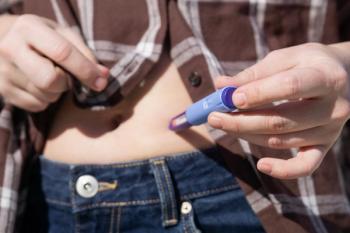
Alternatively to oral JAK inhibitors, there are currently 4 FDA-approved biologic therapies that are also efficacious options for treating AD rather than SCS cycling.2 Although some patients may experience early itch and skin relief, the biologics may take a little longer to control AD than oral JAK inhibitors, given their mechanism of action, but they offer less frequent dosing options for patients who prefer injectables.
The consensus provides practical transition logic that clinicians can execute without adding complexity.
If SCS exposure is under 3 weeks, tapering is generally unnecessary. Complete the short course and initiate the advanced systemic therapy (oral JAK inhibitor or biologic) promptly thereafter to prevent rebound and maintain control.
If SCS exposure is 3 weeks or longer at doses above physiologic replacement, initiate the advanced systemic therapy during the taper, then taper the corticosteroid gradually. The clinical goal is straightforward: Avoid abrupt discontinuation that recreates the flare and avoid prolonged exposure that extends cumulative harm.
AD treatment labels commonly include language such as use in patients whose disease is not adequately controlled with other systemic therapies (oral JAK inhibitor) or topical therapies (biologics), or when use of those therapies is inadvisable. For AD, SCS fit squarely into “inadvisable” systemic therapy for routine management because of the risk profile, the lack of durable disease control, and the widely recognized concern about repeated bursts.
The consensus gives you a clean, defensible way to document that logic. Here is an example simple paragraph template you can use in the note and prior authorization:
“Patient has moderate to severe AD requiring systemic corticosteroid rescue. Expert consensus guidance defines short-term systemic corticosteroid exposure in AD as less than 4 weeks and emphasizes clinically meaningful risks even with short courses. Per consensus, any SCS exposure constitutes a systemic therapy trial that supports transition to an advanced systemic therapy, which is appropriate to achieve rapid and sustained control and reduce repeated SCS exposure.”
SCS were meant to be a bridge. Too often, they become the destination. This consensus gives clinicians an off-ramp by defining short-term exposure, treating any SCS use in AD as a systemic therapy trial, and supporting timely transition to advanced systemic therapy when rapid and long-term control is needed.
References
7 months ago
Dermatology Times February 2026 Print Recap7 months ago
New Dermatology Technologies in 2026