

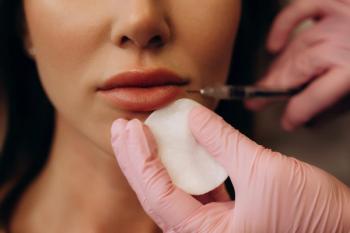
News|Articles|September 9, 2025
Topical JAK Inhibitor Shows Rapid Repigmentation in NSV
Listen
0:00 / 0:00
Key Takeaways
- Ruxolitinib cream showed significant repigmentation and quality-of-life improvements in NSV patients over 12 weeks, with notable reductions in vitiligo area scores.
- The study highlighted psychological benefits, with improvements in alexithymia and quality-of-life measures, suggesting enhanced emotional well-being.
Forty percent of participants achieved at least a 75% reduction in facial vitiligo scores.
Advertisement
Traditional therapeutic strategies for vitiligo, including narrowband ultraviolet B (NB-UVB) phototherapy, topical corticosteroids, and topical calcineurin inhibitors, frequently provide only temporary benefits, with relapse rates approaching 40% within 1 year of discontinuation. This limitation has prompted the investigation of new, targeted treatments such as Janus kinase (JAK) inhibitors.1
A recent real-world study published in the International Journal of Dermatology evaluated the effectiveness and safety of ruxolitinib cream 15 mg/g in adults with nonsegmental vitiligo (NSV). Although previous phase 3 randomized trials established the efficacy of topical ruxolitinib in repigmentation, this retrospective analysis offers valuable insight into outcomes under routine clinical practice conditions.2
Study Design and Patient Population
The single-center study was conducted at the Allergology and Clinical Immunology Unit of Bari Polyclinic in Italy, and included 50 adult patients with NSV. Eligibility required vitiligo involvement of 0.5% to 10% body surface area and facial lesions. Patients underwent diagnostic screening to exclude comorbid autoimmune conditions or contraindications to JAK inhibition. All participants applied ruxolitinib cream twice daily for 12 weeks.
Baseline characteristics reflected a population with a median disease duration of 10 years. Most patients (74%) had Fitzpatrick skin type III, and 38% reported comorbid autoimmune disease, most commonly thyroid disorders. Previous therapies included topical corticosteroids (28%), calcineurin inhibitors (20%), NB-UVB phototherapy (26%), and other modalities.
Clinical Effectiveness
Treatment response was assessed using the Facial Vitiligo Area Scoring Index (F-VASI), Total Vitiligo Area Scoring Index (T-VASI), and the Vitiligo Noticeability Scale (VNS).
After 12 weeks of therapy, significant improvements were observed, including the following:
- Median F-VASI decreased from 1.0 to 0.34 (P < .001), with 40% of patients achieving at least a 75% reduction (F-VASI75).
- Median T-VASI decreased from 2.09 to 0.95 (P < .001), with 42% achieving T-VASI50.
- A notable proportion of patients (24%) reported meaningful repigmentation on the VNS.
Additionally, researchers stated that quality-of-life measures improved substantially. Median Dermatology Life Quality Index scores dropped from 7 to 2, and Vitiligo Quality-of-Life scores decreased from 54 to 25, highlighting the psychological benefit of visible repigmentation.
Psychological and Emotional Outcomes
The investigators also examined changes in alexithymia, a psychological construct associated with difficulty in identifying and expressing emotions, which has been linked to skin disease burden. Significant reductions were recorded across all Toronto Alexithymia Scale domains after 12 weeks, suggesting that improvement in skin appearance may alleviate emotional distress and enhance self-perception.
Safety and Tolerability
Ruxolitinib cream was well tolerated. No severe adverse events were reported, and patients did not require treatment discontinuation. The findings align with the favorable safety profile observed in prior clinical trials, consistent with the drug’s minimal systemic absorption.
Clinical Implications
This study supports the real-world effectiveness of ruxolitinib cream for NSV, confirming results from controlled clinical trials and demonstrating meaningful repigmentation within 3 months. The rapid onset of benefit, coupled with improvements in psychosocial well-being, underscores the therapy’s potential value in routine practice.
However, the authors note limitations, including the retrospective design, small sample size, and relatively short observation period. Larger and longer-term studies are needed to assess the durability of response, optimal treatment duration, and potential long-term risks.
Conclusion
Topical ruxolitinib cream demonstrated significant improvements in repigmentation, quality of life, and emotional well-being among adults with NSV in a real-world clinical setting. These results strengthen the evidence base for JAK inhibition as a novel therapeutic approach to vitiligo and highlight the importance of addressing both physical and psychological aspects of the disease.
References
- Cavalié M, Ezzedine K, Fontas E, et al. Maintenance therapy of adult vitiligo with 0.1% tacrolimus ointment: a randomized, double blind, placebo-controlled study. J Invest Dermatol. 2015;135(4):970-974. doi:10.1038/jid.2014.527
- Cristallo M, Zaza I, Daddato MF, et al. Effectiveness and safety of ruxolitinib cream 15 mg/g in patients with non-segmental vitiligo: a real-life study. Int J Dermatol. Published online September 1, 2025. doi:10.1111/ijd.70049
Advertisement
Related Content
Advertisement


Advertisement
Advertisement
Trending on Dermatology Times
1
How Emerging Androgenetic Alopecia Therapies Target DHT at the Scalp Level
2
Tildrakizumab Partially Reverses Epigenetic Aging in Psoriasis, Pilot Study Shows
3
Field-Directed Therapy Favored for Actinic Keratosis Management
4
From Biopsy to Biomarkers: Experts Navigate Skin Cancer Diagnosis and Staging
5