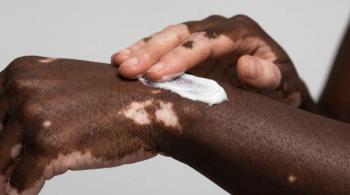
Longer treatment duration was independently associated with VASI improvement, while publicly insured patients experienced higher topical JAK inhibitor denial rates.
Spatial transcriptomics reveals how UVB phototherapy calms vitiligo skin, silencing IFN-γ pathways and memory T cells to drive repigmentation.
A new study from Dutta et al. provides important mechanistic insight into the immunologic effects of narrow-band UVB (NBUVB) phototherapy in vitiligo, using spatial transcriptomics to characterize changes in the cutaneous immune microenvironment at the epidermal–dermal junction, the key site of melanocyte destruction.1 Although NBUVB is widely used and clinically effective for inducing repigmentation, its precise impact on lesional immune architecture has remained incompletely defined.
Vitiligo is driven by autoreactive cytotoxic CD8+ T cells that target melanocytes, largely through an interferon (IFN)-γ–mediated inflammatory cascade.2 Tissue-resident memory T cells and other innate immune populations contribute to disease persistence by sustaining this inflammatory milieu. In this context, the study aimed to evaluate how NBUVB modulates both gene expression and immune cell composition directly within lesional skin.
The investigators conducted a prospective, translational study in a small cohort of 5 Indian patients with active vitiligo who had not received treatment in the preceding 6 months. Patients underwent a standardized 3-month course of NBUVB phototherapy, resulting in clinically evident repigmentation. Paired lesional biopsies were obtained before treatment and after repigmentation.
Spatial transcriptomic profiling was performed using the NanoString GeoMx Digital Spatial Profiler, with regions of interest specifically selected based on CD3+ T-cell localization at the epidermal–dermal junction. This approach enabled high-resolution, spatially resolved gene expression analysis. Complementary immunofluorescence and histologic techniques were used to validate immune cell populations and tissue-level changes.
At the transcriptomic level, NBUVB treatment was associated with a marked global suppression of inflammatory signaling. Among nearly 10,000 differentially expressed genes identified, 470 were significantly downregulated compared with only six upregulated genes, indicating a dominant inhibitory effect on gene activity. Downregulated pathways included those central to vitiligo pathogenesis, particularly the positive regulation of immune responses, IFN-γ signaling, antigen presentation, and innate immune activation. Gene set enrichment analysis further confirmed suppression of immune-related pathways alongside decreased ribosomal and translational activity, consistent with reduced cellular activation.
Protein–protein interaction network analysis reinforced these findings, identifying key clusters of downregulated genes involved in ribosomal biogenesis and IFN-γ–mediated immune responses. Given the established role of the IFN-γ/CXCL10 axis in recruiting cytotoxic T cells to lesional skin, its suppression following NBUVB provides a plausible molecular basis for clinical repigmentation.
Spatial immune deconvolution and immunofluorescence analyses demonstrated concordant changes at the cellular level. NBUVB significantly reduced multiple innate and adaptive immune cell populations implicated in disease propagation, including CD8+ memory T cells, mast cells, dendritic cells, monocytes, and regulatory T cells. Notably, mast cells—recently implicated as IFN-γ–producing contributors to inflammation—were significantly decreased following treatment. Similarly, CD3+ T cells and CD11b+ myeloid cells were markedly reduced within lesional skin.
Another key finding was the reduction in tissue-resident memory T cells, identified by decreased expression of CD69 and CD103. These cells are thought to play a central role in disease persistence and relapse by maintaining local immune memory and promoting recruitment of circulating effector cells. Their depletion following NBUVB suggests that phototherapy not only suppresses active inflammation but may also disrupt pathogenic immune memory within the skin.
In parallel, the study observed a decrease in activated T-cell populations (CD4+ CD45RO+) alongside a paradoxical increase in naïve CD4+ T cells (CD4+ CD45RA+). This shift toward a less differentiated T-cell phenotype represents a previously underrecognized aspect of NBUVB-induced immune remodeling. However, the clinical implications of this finding are complex. The authors speculate that increased naïve T cells could represent a repopulating pool capable of reactivation under pro-inflammatory conditions, potentially contributing to the well-recognized phenomenon of disease relapse after cessation of phototherapy.
Overall, this research supports a model in which NBUVB exerts broad immunomodulatory effects, suppressing both innate and adaptive immune responses, reducing pathogenic memory T-cell populations, and altering T-cell differentiation states. This extends beyond its traditionally understood role as a localized anti-inflammatory therapy and highlights its capacity to reshape the immune landscape in vitiligo.
References
1. Dutta A, Gupta D, Ajnabi J, Dam B, Shilpashree P, Jamora C. Spatial transcriptomic analysis of the immune landscape following NBUVB treatment of vitiligo skin. ClinTransl Immunol, 2026;15: e70080. https://doi.org/10.1002/cti2.70080
2. Frisoli ML, Essien K, Harris JE. Vitiligo: Mechanisms of Pathogenesis and Treatment. Annu Rev Immunol. 2020;38:621-648. doi:10.1146/annurev-immunol-100919-023531