




Vitiligo
Latest News
Advertisement
Latest Videos




Advertisement
More News
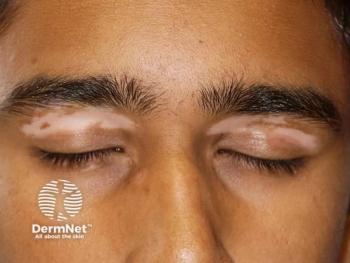
Forty percent of participants achieved at least a 75% reduction in facial vitiligo scores.

In part 3 of this Case-Based Roundtable supplement, Seemal Desai, MD, FAAD; Ted Lain, MD, MBA, FAAD; and Pearl Grimes, MD, FAAD, discuss real-world vitiligo scenarios, offering diagnostic insights, therapeutic strategies, and practical pearls from their own experiences.

New findings reveal the effectiveness of corticosteroids and Janus kinase (JAK) inhibitors post noncultured epidermal suspension (NCES) transplantation for vitiligo, highlighting varied repigmentation responses.
In part 2 of this Case-Based Roundtable supplement, Seemal Desai, MD, FAAD; Ted Lain, MD, MBA, FAAD; and Pearl Grimes, MD, FAAD, discuss real-world vitiligo scenarios, offering diagnostic insights, therapeutic strategies, and practical pearls from their own experiences.
In part 1 of this Case-Based Roundtable supplement, Seemal Desai, MD, FAAD; Ted Lain, MD, MBA, FAAD; and Pearl Grimes, MD, FAAD, discuss real-world vitiligo scenarios, offering diagnostic insights, therapeutic strategies, and practical pearls from their own experiences.

Tofacitinib shows promise in treating vitiligo secondary to discoid lupus erythematosus, achieving significant repigmentation and lesion resolution.

At a Dermatology Times Case-Based Roundtable event, Pearl Grimes, MD, led discussions on diverse vitiligo cases spanning adult, pediatric, and rapidly progressive disease, emphasizing individualized treatment strategies.

Ted Lain, MD, MBA, moderated a Case-Based Roundtable event to discuss diverse case presentations of vitiligo and how to build a treatment regimen.

TikTok's vitiligo content reveals a critical need for reliable clinical information from HCPs, highlighting the gap between engagement and accuracy in health education.

Vitiligo significantly influences patients' quality of life, affecting major life decisions and increasing perceived stigma.

Put your dermatology expertise to the test with Dermatology Times’ interactive quiz series!
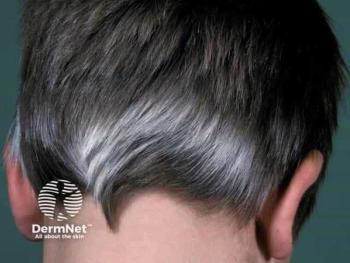
VYNE Therapeutics reveals disappointing phase 2b trial results for repibresib gel in nonsegmental vitiligo, missing key efficacy endpoints.

Tildrakizumab, HCP-administered biologics, and lifestyle-based decision-making took center stage in an interactive discussion led by Omar Noor, MD, FAAD, and colleagues.

Topical ruxolitinib, phototherapy, and psychosocial care took center stage in an interactive discussion between Seemal Desai, MD, FAAD, and colleagues, on managing complex vitiligo cases.

At a recent Dermatology Times Case-Based Roundtable event, Stephanie Simmerman, DNP, APRN-C, discussed treatment selection, access challenges, and more for patients with vitiligo.

A systematic review reveals significant Treg cell deficiencies in vitiligo, highlighting their role as therapeutic targets for improved treatment strategies.
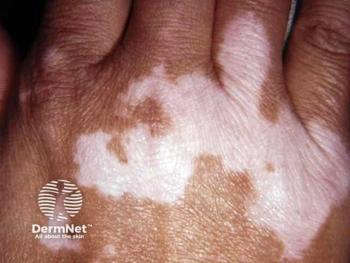
A recent study reveals distinct patterns of nonsegmental vitiligo lesions on hands.

After 4 months of treatment with the dual therapy, patients with refractory vitiligo exhibited an overall 55% remission rate.

A pilot study evaluates tildrakizumab's safety and potential in treating stable nonsegmental vitiligo, highlighting the need for further research on IL-23 inhibitors.
Ongoing maintenance therapy is essential to avoid relapse and preserve gains in repigmentation for patients with vitiligo, according to Gina Mangin, MPAS, PA-C.

Discover the latest advancements in vitiligo treatment and awareness as Dermatology Times highlights this year's progress during Vitiligo Awareness Month.
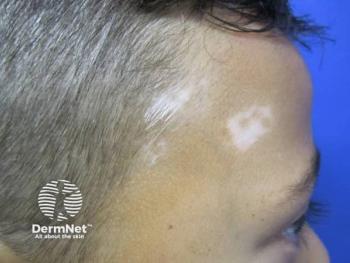
The VALIANT survey uncovers alarming depression rates in vitiligo patients, highlighting the urgent need for improved mental health screenings and interventions.

Discover promising advancements in vitiligo treatments, including innovative therapies and combination approaches that enhance skin repigmentation and improve patient quality of life.
Recent research outlined 5 subtypes of vitiligo that can be used to guide therapeutic choices.

At a recent Dermatology Times Case-Based Roundtable event, Michael Gold, MD, explored innovative vitiligo treatment strategies through complex cases and emerging therapies.
Advertisement
Advertisement
Trending on Dermatology Times
1
From Mechanism to Management: Navigating Male Pattern Hair Loss and New Topical Therapies
2
FDA Approves Baricitinib for Adolescents With Severe Alopecia Areata
3
Tremfya Meets Primary, Major Secondary Endpoints in Phase 4 STAR Study of Axial PsA
4
Dr. Charrow Highlights Earlier Biologic Use and Deroofing in Hidradenitis Suppurativa
5