


Put your dermatology expertise to the test with Dermatology Times’ interactive quiz series.
Put your dermatology expertise to the test with Dermatology Times’ interactive quiz series.

Shawn Demehri, MD, PhD, discussed immunomodulatory and antigen-directed immunotherapy approaches for skin cancer prevention in a recent Dermatology Times interview.

Jennifer Soung, MD, discusses whole patient care for psoriasis and alopecia areata and why setting realistic expectations matters for hair regrowth.

Shawn Demehri, MD, PhD, discusses a calcipotriene/5-FU combination immunotherapy for field cancerization and its potential in organ transplant recipients.

Does "flooding" with 5 to 7 products every night really hydrate the skin or is it just a myth? Read more about the latest social media trend and learn how to counsel your patients in the clinic.
In this episode, Renata Block, DMSc, MMS, PA-C, welcomed Obehi Oriaifo, DNP, FNP-BC, DCNP, founder of DermaNP Solutions, to discuss expanding teledermatology access for rural and underserved patients.

This month’s podcasts highlight the latest clinical insights, emerging therapies, and evolving conversations shaping dermatology practice.
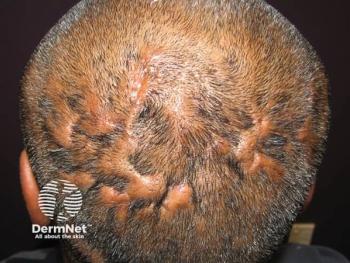
New biopsies reveal hidden scalp inflammation in dissecting cellulitis, even in normal-looking skin, hinting at a field effect behind stubborn recurrences.
Quoin reported positive interim phase 2/3 results for QRX003, which met the primary endpoint in patients with Netherton syndrome.

Derm Dispatch host Renata Block, DMSc, MMS, PA-C, and Obehi Oriaifo, DNP, FNP-BC, DCNP, founder of DermaNP Solutions, discuss barriers driving demand for teledermatology in rural and underserved communities.

Paul Rose, MD, JD, discusses nonscalp hair transplantation, patient selection, common misconceptions, and the future of hair restoration.
Shawn Demehri, MD, PhD, discussed a topical combination immunotherapy being studied for skin cancer prevention in high-risk patients.

Learn more about the in-depth topics covered in the August 2026 issue of Dermatology Times.

The FDA approval, based on phase 3 VALOR trial data, makes brepocitinib the first targeted therapy specifically indicated for dermatomyositis.

Jennifer Soung, MD, discussed whole-person care for psoriasis and alopecia areata and emerging conversations around skin aging and menopause.
Experts map referral pathways and team-based immunotherapy care for advanced cutaneous squamous cell carcinoma, tackling toxicity and follow-up gaps.

Find out what skin care products and aesthetic innovations clinicians are recommending to patients for the month of August.

Verrica Pharmaceuticals has completed enrollment in COVE-2, its first pivotal phase 3 trial of YCANTH for common warts, with topline data expected in the first quarter of 2027.
Experts weigh checkpoint inhibitors for advanced cutaneous squamous cell carcinoma, highlighting real-world safety, immunotherapy referrals, and where cosibelimab may belong.

Europe’s dermatology apps boom, but most lack clinical validation, CE/GDPR transparency, and inclusive AI training, raising safety and reliability concerns for patients.

A secondary analysis of the phase 3 VALOR trial found brepocitinib 30 mg nearly doubled remission-level skin responses and improved itch as early as week 4 compared with placebo.

Shawna Jones, PA-C, shares a road map to aesthetics, emphasizing clinical judgment, anatomy, patient trust, safety, and lifelong learning.
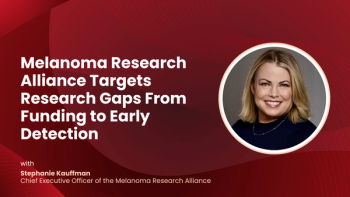
Stephanie Kauffman, chief executive officer of the Melanoma Research Alliance, discussed funding strategy, early career researcher support, and melanoma prevention in a recent Dermatology Times interview.

This review of the latest dermatological studies includes insights on multimodal imaging for rosacea evaluation, growth in pediatric AD patients, botulinum toxin for post-acne sequelae, and more.

Daniel Butler, MD, discusses the 5Ms of geriatric care, shared decision-making, deprescribing, and emerging approaches to chronic itch.

Rezpegaldesleukin improved EASI, itch, and other outcomes in phase 2b REZOLVE-AD, supporting continued phase 3 development.
Multidisciplinary experts rethink advanced cutaneous squamous cell carcinoma care, weighing immunotherapy options, trial data limits, adverse events, and smoother dermatology-oncology referrals.

New trials show oral collagen boosts hydration, elasticity and barrier strength in weeks—while wrinkle and dermal density claims remain unproven.

The latest DermView custom video series explored how molecular tools are reshaping management decisions in cutaneous squamous cell carcinoma.

Heather Woolery-Lloyd, MD, discusses how new linear hair growth rate data translates into real-world results for patients.