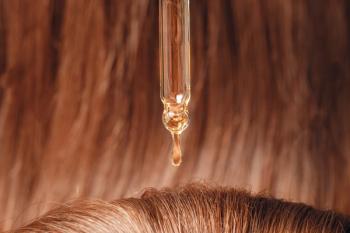
Castor oil has become a popular social media remedy for thicker, longer hair, but evidence supporting its ability to stimulate hair growth remains limited.
Placebo-arm RCTs show gentle cleansing, moisturizing, and sunscreen alone can significantly improve acne, rosacea, AKs, melasma, and PIH, boosting outcomes beyond prescriptions.
A new narrative review suggests that foundational skin care practices, including gentle cleansing, moisturization, and photoprotection, may provide clinically meaningful benefits across several common dermatologic conditions, even in the absence of active prescription medications.1 By examining the vehicle arms of randomized controlled trials (RCTs), investigators found that nonmedicated skin care regimens frequently produced substantial improvements in disease severity, supporting their integration into routine patient management alongside pharmacologic therapies.
The review analyzed placebo-controlled RCTs involving acne vulgaris, actinic keratoses (AKs), melasma, postinflammatory hyperpigmentation (PIH), and rosacea. Rather than focusing on active medications, the authors evaluated outcomes in vehicle treatment groups to better understand the contribution of basic skin care to clinical improvement. Vehicle formulations in dermatology trials typically consist of nonmedicated creams or gels containing moisturizing or barrier-supportive ingredients. Participants in these study arms often also followed standardized skin care protocols that included cleansers and sunscreen.
Among all conditions evaluated, acne produced some of the strongest evidence supporting basic skin care. Two international phase III PERFECT trials, which enrolled a combined 2,817 participants, evaluated trifarotene 0.005% cream for facial and truncal acne. Although active treatment produced superior outcomes, participants receiving only vehicle cream after cleansing also experienced meaningful improvements. Vehicle-treated patients achieved Investigator Global Assessment success rates of up to 25.7% for facial acne and nearly 30% for truncal acne. Reductions in inflammatory lesions reached approximately 51% in both facial and truncal disease.
Additional acne trials incorporating gentle cleansers, moisturizers, and SPF 30 sunscreen also demonstrated clinically meaningful improvements in the vehicle groups. In a phase 4 study, vehicle-treated participants experienced a 39.4% improvement in Investigator Global Assessment scores and a 62.8% reduction in total acne lesions. Another multicenter trial comparing adapalene/benzoyl peroxide with vehicle found inflammatory lesion reductions approaching 58% in the vehicle arm, while a phase 3 retinaldehyde/glycolic acid study reported nearly identical reductions in inflammatory lesions between vehicle and active treatment groups. The authors also highlighted findings from the START study, which demonstrated that consistent use of a basic skin care regimen significantly reduced the development of new atrophic acne scars in patients with active acne.
The review found similar, although more modest, benefits in patients with AKs. In an RCT evaluating diclofenac gel, vehicle treatment alone reduced target lesion counts by nearly 34%. Another multicenter trial involving 468 participants instructed all patients to use SPF 30 sunscreen and practice sun protection while applying either fluorouracil or vehicle cream. Participants receiving vehicle treatment achieved a 24% reduction in AK counts, while 17% experienced complete lesion clearance.
For melasma, sunscreen again appeared to play an important supportive role. One study evaluating topical isotretinoin reported a 60% reduction in Melasma Area and Severity Index scores in the vehicle group. Another hydroquinone trial found that two-thirds of participants using vehicle cream, along with cleanser and sunscreen, achieved partial-to-total clinical improvement.
Similarly, patients with postacne PIH experienced measurable improvement without active medication. In a phase IV trial, overall disease severity improved by 44.9% in the vehicle arm, nearly matching outcomes observed with active treatment. Another PIH study reported a 26.2% reduction in pigmentation severity scores among vehicle-treated participants.
Across two large international phase III ivermectin studies involving more than 1,300 participants, inflammatory lesion counts declined by approximately 50% in vehicle-treated rosacea patients. Although Investigator Global Assessment success rates remained lower than those achieved with ivermectin, participant satisfaction exceeded one-third of patients receiving vehicle alone. A multicenter metronidazole trial similarly demonstrated a 27% reduction in erythema and a 25.4% reduction in inflammatory lesions among patients treated with vehicle cream containing SPF 15.
Across the reviewed studies, vehicle treatments frequently achieved at least half—and in some cases nearly all—of the clinical benefit observed with active therapies. The authors caution, however, that these findings should be interpreted carefully because vehicle formulations differed between studies and outcomes may have been influenced by placebo effects, participant adherence, behavioral changes associated with trial participation, and investigator expectations. Nevertheless, the review reinforces that cleansing, moisturizing, and sun protection provide measurable therapeutic benefit and should be considered essential components of treatment plans rather than optional adjuncts.
Clinicians should routinely educate patients about consistent skin care practices while emphasizing that foundational skin care complements—but does not replace—appropriate prescription therapies. The authors note that incorporating evidence-based skin care into routine management may improve treatment efficacy, support skin barrier function, and potentially help prevent long-term disease sequelae across a range of inflammatory dermatoses.
Reference
1. Siripanich C, Chow YC, Ali FR. Clinical implications of skincare: lessons from placebo-controlled dermatology trials. Skin Health Dis. 2026;6(3):207-213. Published 2026 Apr 2. doi:10.1093/skinhd/vzag020