


Jerry Shapiro, MD, discusses rapid hair growth and safety findings for oral minoxidil, VDPHL01, in female pattern hair loss.
Jerry Shapiro, MD, discusses rapid hair growth and safety findings for oral minoxidil, VDPHL01, in female pattern hair loss.
Isoclear regimen combines topical isotretinoin with stage-specific ingredients from active treatment through long-term maintenance

Leon Kircik, MD, outlines phase 3 zasocitinib data on palmoplantar psoriasis skin clearance presented at the 2026 American Academy of Dermatology (AAD) Innovation Academy.
Aaron Farberg, MD, discusses how localized isotretinoin delivery may affect treatment burden, tolerability, and adherence.

Kimberly Madison, DNP, and Jade Trevino, BSN, RN, discussed nurse-led triage, task shifting, and AI-supported care models for expanding dermatology access in a recent Dermatology Times interview.

Conexeu is advancing its ECM-regenerating tissue tech, targeting wound care via FDA 510(k) and eyeing aesthetics, reconstruction, and beyond.

Karen McGuire, PhD, CEO and co-founder of BioMendics, explains what fast track status means for the investigational treatment and details the drug's mechanism of action in EBS.

Examining a teenager's groin or axilla requires more than clinical skill. The panel discusses consent, comfort, and why HS diagnosis still lags for years.
A 17-year-old with painful, recurrent nodules has quietly given up gym class, social events, and her school prom. The panel walks through what her case demands.
Madison and Trevino discuss how AI can support diagnostic decisions, improve efficiency, and strengthen NP-led dermatology care

Leon Kircik, MD, discusses zasocitinib scalp psoriasis clearance rates from the LATITUDE 1 and 2 trials presented at the 2026 American Academy of Dermatology (AAD) Innovation Academy.

Conexeu is developing an injectable, thermosensitive ECM scaffold to remodel skin after rapid weight loss, aiming beyond fillers to restore tissue structure.

Dr. Chandra examines the safety profiles of the checkpoint inhibitors, cautioning that patient numbers remain small and cross-trial comparisons imperfect.

The panel introduces Case 3—a patient with established CSU, co-existing dermatographia, and incomplete prior treatment records—and discusses how to confirm the diagnosis and prepare for advanced therapy.
"Modern Psoriasis Treatment: From Topicals to IL-23 and IL-17 Biologics" steps back to survey how clinicians actually treat psoriasis in 2026.
Dr. Chandra walks the panel through the systemic therapy toolkit for advanced squamous cell carcinoma, organizing it into three categories.
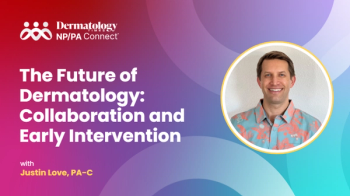
Justin Love, PA-C, explains how multidisciplinary care and earlier targeted therapy can improve chronic inflammatory skin disease outcomes.

Advances in vitiligo, hidradenitis suppurativa, and hair loss were among the key trends Chantel Hillstead, APRN, said APPs should watch.
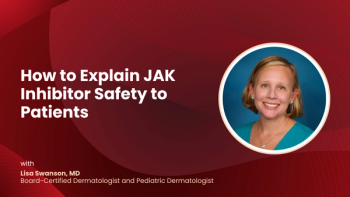
Lisa Swanson, MD, discussed strategies for counseling patients on JAK inhibitor safety and where she sees the drug class expanding next in a recent Dermatology Times interview.

At Elevate-Derm, Justin Love, PA-C, explains why planning is essential for successful and meaningful patient discussions.
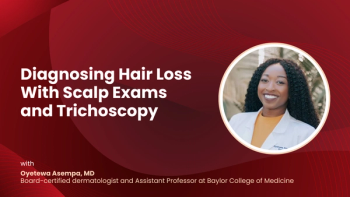
Oyetewa Asempa, MD, discussed the importance of scalp examination, trichoscopy, and culturally informed communication when evaluating patients with hair loss during a recent Dermatology Times interview
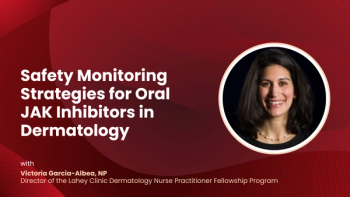
Victoria Garcia Albea, NP, discussed safety monitoring, patient selection, and laboratory screening considerations for oral JAK inhibitors at Elevate-Derm summer 2026
At Elevate Derm, Lisa Swanson, MD, discussed earlier oral JAK inhibitor use for alopecia areata and selecting appropriate patients.
At Elevate-Derm, Justin Love, PA-C, urged clinicians to pair diagnostic expertise with emotional intelligence and thoughtful investigation.

Karen McGuire, PhD, CEO and co-founder of BioMendics, discusses why epidermolysis bullosa simplex remains a difficult gene therapy target.
Aaron Farberg, MD, discusses how Isoclear aims to deliver isotretinoin directly to the skin through a customizable compounded topical system while avoiding the monitoring requirements associated with oral therapy.
Hurley staging built the field's first common language for HS, but the panel explains why it falls short and what newer scoring tools capture instead.
A decade after the first dedicated therapy arrived, the panel reflects on how far HS recognition and treatment have come, and how far they still need to go.

In the latest episode of Don't Be Rash, host Andrew Krakowski, MD, is joined by Raegan D. Hunt, MD, PhD, to discuss newborn skin barrier development, umbilical cord care, and evidence-based product selection.
Building on the first case, Dr. Patel poses a practical dilemma: when a true multidisciplinary team isn't available in real time, who should a community dermatologist reach out to first, a surgeon, a radiation oncologist, or a medical oncologist?