


Opinion|Videos|August 4, 2026
Comparing Safety Profiles of Checkpoint Inhibitors in cSCC
Dr. Chandra examines the safety profiles of the checkpoint inhibitors, cautioning that patient numbers remain small and cross-trial comparisons imperfect.
Advertisement
Episodes in this series
This video series has been produced independently by Dermatology Times and supported through an educational grant by Sun Pharmaceuticals.
Dr. Chandra examines the safety profiles of the checkpoint inhibitors, cautioning that patient numbers remain small and cross-trial comparisons imperfect. Across the anti-PD-1 and anti-PD-L1 agents, grade 3/4 toxicity generally ranges from roughly zero to three percent, already low. Looking more closely, cosibelimab, the newest anti-PD-L1 agent with additional ADCC activity, appears to show somewhat lower grade 3/4 toxicity, but she stresses that the drug was studied largely outside the United States in relatively few patients, so the signal must be read with caution.
Dr. Patel describes himself as a skeptical optimist, wanting healthy skepticism to guard against harm while remaining hopeful about a positive signal. He draws an instructive parallel to hedgehog pathway inhibitors in basal cell carcinoma, where vismodegib and later sonidegib were treated as synonymous for years before accumulated experience revealed meaningful differences in toxicity and drug distribution. He anticipates a similar story may unfold between PD-1 and PD-L1 inhibitors, and offers a mechanistic hypothesis: sparing PD-L2, which is expressed in normal tissues such as lung, might reduce certain toxicities, yet because PD-L2 also drives immune evasion in squamous cell carcinoma, agents targeting PD-1 may achieve the robust responses seen in the neoadjuvant setting.
Dr. Carr endorses the measured view, noting that many of these high-risk patients carry significant comorbidities, so a genuine safety advantage could meaningfully influence agent selection. In closing thoughts, both panelists return to the value of early multidisciplinary discussion and frame the field as undergoing a true paradigm shift. Dr. Patel notes that the case patient ultimately received cosibelimab, achieving a partial response at six months and continuing without significant toxicity.
In the next episode, "Case 2: When to Involve Oncology in a Mohs-Eligible cSCC," Dr. Patel opens the program's second case, a 72-year-old with a rapidly enlarging forehead tumor and a telling tingling sensation, as Dr. Carr weighs whether it belongs in the operating room.
Advertisement
Related to this article
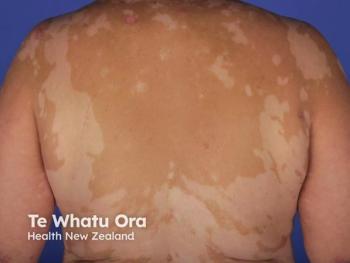
The FDA clearance allows Edesa to expand an ongoing placebo-controlled study of the CXCL10 antibody EB06 to US sites, with topline data expected in the fourth quarter of 2027.

The novel oral helicase-primase inhibitor demonstrated significantly higher rates of complete lesion healing compared with investigator’s choice treatment in the phase 3 PRIOH-1 trial.
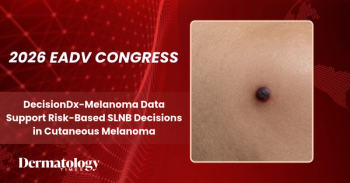
Prospective data suggest DecisionDx-Melanoma may help refine SLNB decisions and identify recurrence risk beyond conventional staging.

Falk G. Bechara, MD, discusses long-term tunnel control, structural damage, and the evolving role of biologics and surgery in HS care.
Galderma has agreed to acquire ZO Skin Health for $1.5 billion, adding the physician-dispensed skincare brand to a portfolio that already includes Cetaphil and Alastin.

New dermatology research explores hidden steroids in OTC products, infant eczema, melanoma prevention, cutaneous lymphoma, and pediatric AD.

SYX-5219 improved disease severity and itch in a Phase 1b trial of adults with moderate to severe atopic dermatitis.

In a survey of 301 employed adults, overall work impairment attributable to CHE was 31.8%, and quality of life worsened in step with self-reported disease severity.
Advertisement
Advertisement
Trending on Dermatology Times
1
FDA Approves Pritelivir for Refractory Mucocutaneous HSV in Immunocompromised Adults
2
GLP-1 Agonists Address Metabolic Risk in Psoriatic Disease
3
EB06 Phase 2 Vitiligo Study Receives FDA IND Clearance
4
EADV 2026 Atopic Dermatitis Highlights: Tilrekimig, RAC2 Inhibition, and Level Up Data
5