Vishal A. Patel, MD, FAAD, FACMS, discusses tan maxing, cumulative UV damage, and how clinicians can approach conversations about tanning habits.
Vishal A. Patel, MD, FAAD, FACMS, discusses tan maxing, cumulative UV damage, and how clinicians can approach conversations about tanning habits.
Dr. Chandra details the CPOST trial, a randomized phase 3 study in which 415 patients received either adjuvant cemiplimab for one year or placebo.
With Mohs surgery complete, three stages to clear a defect greater than four centimeters extending to the periosteum, Dr. Patel details the pathology: a poorly differentiated tumor, 5.7 millimeters thick, with multifocal small-caliber perineural invasion above the clinically significant threshold.
Dr. Patel introduces the second case: a 72-year-old man with a rapidly enlarging lesion on the left forehead, now just over three centimeters, ulcerated, and sitting above the left eyebrow.
Dr. Chandra examines the safety profiles of the checkpoint inhibitors, cautioning that patient numbers remain small and cross-trial comparisons imperfect.
Dr. Chandra walks the panel through the systemic therapy toolkit for advanced squamous cell carcinoma, organizing it into three categories.
Building on the first case, Dr. Patel poses a practical dilemma: when a true multidisciplinary team isn't available in real time, who should a community dermatologist reach out to first, a surgeon, a radiation oncologist, or a medical oncologist?
Dr. Patel presents the program's first case: a 78-year-old woman with an enlarging, ulcerated lesion on the right temple and preauricular area, measuring close to five centimeters.
As systemic therapy enters earlier in the disease course, coordinated care becomes essential. Dr. Carr and Dr. Patel examine the communication infrastructure, such as tumor boards, referral pathways, and cross-specialty literacy, that distinguishes academic centers from community practice.
Over 15 years, advanced cutaneous squamous cell carcinoma has moved from limited chemotherapy and EGFR inhibition to checkpoint blockade. Dr. Chandra and Dr. Patel trace how the 2018 approvals restructured treatment sequencing and the timing of oncologic involvement.
Cemiplimab is revolutionizing treatment for high-risk cutaneous squamous cell carcinoma, bridging gaps in care and improving patient outcomes.
Vishal A. Patel, MD, discusses cemiplimab's FDA approval as a groundbreaking adjuvant therapy for high-risk cutaneous squamous cell carcinoma patients.
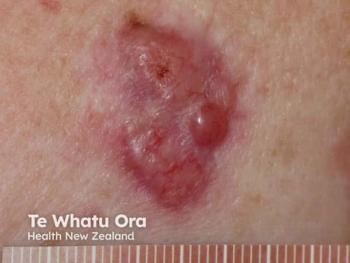
Treatment decisions are increasingly guided by patient values, preferences, and quality-of-life considerations.

Panelists discuss how advanced basal cell carcinoma (BCC) management requires a nuanced approach, emphasizing the importance of early detection, multidisciplinary collaboration, personalized treatment strategies, and ongoing patient monitoring to optimize outcomes and quality of life.
Panelists discuss how setting long-term treatment goals for basal cell carcinoma (BCC) patients involves balancing factors such as disease control, quality of life, and potential adverse reactions to create personalized management plans that address both immediate concerns and future outcomes.
Panelists discuss how a complex case of advanced basal cell carcinoma (BCC) demonstrates the necessity for collaborative care across multiple specialties, highlighting the importance of tailored treatment strategies and coordinated management to achieve the best possible patient outcomes.
Panelists discuss how a multidisciplinary approach involving dermatologists, surgeons, radiation oncologists, and medical oncologists is crucial for optimal decision-making and management of complex basal cell carcinoma (BCC) cases, ensuring comprehensive care and improved patient outcomes.
Panelists discuss how advanced basal cell carcinoma (BCC) presents unique treatment challenges and examine recent developments that show promise for improving outcomes in patients with this aggressive form of skin cancer.
Sherrif F. Ibrahim, MD, PhD, and Vishal Patel, MD, FAAD, FACMS, provide initial impressions of the case and discuss the use of immune checkpoint inhibitors.

Sherrif F. Ibrahim, MD, PhD, presents the case of a 49-year-old White woman with neglected large basal cell carcinoma.

Expert dermatologists discuss future directions for the management of basal cell carcinoma.
Sherrif F. Ibrahim, MD, PhD, and Vishal Patel, MD, FAAD, FACMS, discuss the impact of immune checkpoint inhibitors used in BCC.
Experts in dermatology discuss the treatment landscape for BCC.
Drs Sherrif F. Ibrahim and Vishal Patel discuss the importance of a multidisciplinary team in the treatment of BCC as well as best practices for preventing advanced BCC.
Sherrif F. Ibrahim, MD, PhD, and Vishal Patel, MD, FAAD, FACMS, provide an overview of BCC and discuss disease burden.

September 23rd 2022
September 30th 2022

September 23rd 2022
September 30th 2022