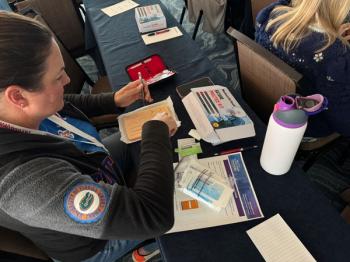
Faculty from the Cutaneous Oncology Workshop answer practical questions spanning skin cancer prevention, diagnosis, treatment, and follow-up.
Cemiplimab is revolutionizing treatment for high-risk cutaneous squamous cell carcinoma, bridging gaps in care and improving patient outcomes.
Patel highlighted that many high-risk CSCC patients may miss the window for neoadjuvant therapy, which is shown to enhance immune priming and outcomes. Cemiplimab's adjuvant indication now offers a critical "bridge" for such patients—those who urgently require surgery or who reveal unexpected high-risk features only after surgical staging. He believes this treatment can prevent poor outcomes in these vulnerable populations.
“It's really going to help change and kind of, as I like to say, fill the gaps where we have cracks and patients fall through those cracks...the approval is going to help plug those gaps up,” Patel told Dermatology Times.
He also outlined ongoing and upcoming clinical trials for cemiplimab across multiple skin cancers, including melanoma and basal cell carcinoma. Notably, a phase 3 trial is investigating intralesional cemiplimab as an alternative to surgery for early-stage CSCC, especially for patients unfit for surgery. Other trials explore combination approaches (e.g., with radiation) and neoadjuvant settings, potentially reshaping treatment standards further.
Patel's final message to dermatologists stresses the importance of awareness and involvement. He reminds that patients often return to dermatology clinics after cancer treatment, and dermatologists should be informed about this approval to guide further care or referral. He underscored that the benefit in disease-free survival is substantial, even in preventing distant metastases, and that this may be more meaningful to older patients than overall survival. While the therapy’s safety is manageable, he urged dermatologists to assess the risk-benefit in the context of individual patients they’ve often known for years. Engaging in multidisciplinary care, formally or informally, will be key to optimizing outcomes for high-risk CSCC patients.
“I think that this is a really exciting time and a dermatologist may not be thinking about adjuvant oncology studies or a really landmark, seminal trial like C-POST,” Patel concluded.