


Opinion|Videos|August 11, 2026
Adjuvant Radiation and Risk Stratification Tools in cSCC
With Mohs surgery complete, three stages to clear a defect greater than four centimeters extending to the periosteum, Dr. Patel details the pathology: a poorly differentiated tumor, 5.7 millimeters thick, with multifocal small-caliber perineural invasion above the clinically significant threshold.
Advertisement
Episodes in this series
This video series has been produced independently by Dermatology Times and supported through an educational grant by Sun Pharmaceuticals.
With Mohs surgery complete, three stages to clear a defect greater than four centimeters extending to the periosteum, Dr. Patel details the pathology: a poorly differentiated tumor, 5.7 millimeters thick, with multifocal small-caliber perineural invasion above the clinically significant threshold. The patient went on to adjuvant radiation, and Dr. Patel asks Dr. Carr to reason through that decision.
Dr. Carr explains that the field is getting better at selecting who benefits from radiation, even though most supporting data are retrospective. Radiation can reduce poor outcomes, local recurrence, nodal and distant metastasis, and disease-specific death, by roughly half, but staging systems like AJCC8 and Brigham are heterogeneous, so a blanket approach based on stage alone is imprecise. He points to newer prognostic tools: the U.S.-based RISCC propensity-score model and the Dutch Erasmus MC model, which, used alongside subclassification, yield more meaningful individualized risk estimates and support genuine shared decision-making. Dr. Patel adds that the RISCC tool is available as an app supported by the ACMS Foundation, likening it to the melanoma nomograms clinicians already use.
Turning to gene expression profiling, Dr. Carr describes a 40-gene panel that stratifies tumors into classes 1, 2A, and 2B, with 2B the highest risk. Emerging data suggest 2B tumors may derive greater benefit from adjuvant radiation, though he cautions that the 2B cohort is small and the test requires nuanced interpretation. Dr. Patel notes that he reaches for gene expression profiling selectively, most often to support de-escalation, where the data are more robust, while weighing its cost as a send-out test. Both agree that for this patient, referral to radiation oncology and consideration of radiation are appropriate.
In the next episode, "Adjuvant Immunotherapy for High-Risk cSCC," Dr. Chandra details the practice-changing CPOST data on adjuvant immunotherapy, and Dr. Carr explains why the trial's strict high-risk criteria matter so much for choosing the right patient.
Advertisement
Related to this article
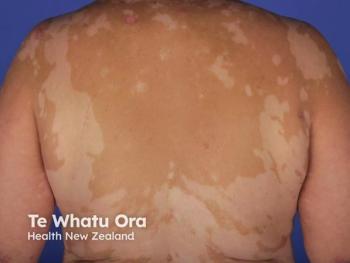
The FDA clearance allows Edesa to expand an ongoing placebo-controlled study of the CXCL10 antibody EB06 to US sites, with topline data expected in the fourth quarter of 2027.

The novel oral helicase-primase inhibitor demonstrated significantly higher rates of complete lesion healing compared with investigator’s choice treatment in the phase 3 PRIOH-1 trial.
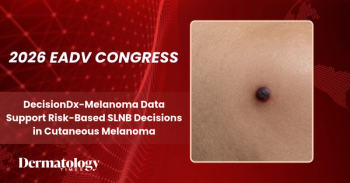
Prospective data suggest DecisionDx-Melanoma may help refine SLNB decisions and identify recurrence risk beyond conventional staging.

Falk G. Bechara, MD, discusses long-term tunnel control, structural damage, and the evolving role of biologics and surgery in HS care.
Galderma has agreed to acquire ZO Skin Health for $1.5 billion, adding the physician-dispensed skincare brand to a portfolio that already includes Cetaphil and Alastin.

New dermatology research explores hidden steroids in OTC products, infant eczema, melanoma prevention, cutaneous lymphoma, and pediatric AD.

SYX-5219 improved disease severity and itch in a Phase 1b trial of adults with moderate to severe atopic dermatitis.

In a survey of 301 employed adults, overall work impairment attributable to CHE was 31.8%, and quality of life worsened in step with self-reported disease severity.
Advertisement
Advertisement
Trending on Dermatology Times
1
FDA Approves Pritelivir for Refractory Mucocutaneous HSV in Immunocompromised Adults
2
GLP-1 Agonists Address Metabolic Risk in Psoriatic Disease
3
EB06 Phase 2 Vitiligo Study Receives FDA IND Clearance
4
EADV 2026 Atopic Dermatitis Highlights: Tilrekimig, RAC2 Inhibition, and Level Up Data
5