

Opinion|Videos|August 11, 2026
Case 2: When to Involve Oncology in a Mohs-Eligible cSCC
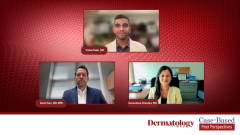
Dr. Patel introduces the second case: a 72-year-old man with a rapidly enlarging lesion on the left forehead, now just over three centimeters, ulcerated, and sitting above the left eyebrow.
Advertisement
Episodes in this series
This video series has been produced independently by Dermatology Times and supported through an educational grant by Sun Pharmaceuticals.
Dr. Patel introduces the second case: a 72-year-old man with a rapidly enlarging lesion on the left forehead, now just over three centimeters, ulcerated, and sitting above the left eyebrow. His history is limited to hypertension and hypercholesterolemia, with no immunosuppression, and this is his first skin cancer. He reports an intermittent tingling or zapping sensation radiating to the forehead and scalp. There is no palpable lymphadenopathy; an MRI ordered for suspected perineural invasion shows no radiographic PNI, with tumor confined to the subcutaneous tissue and sparing bone. He is referred to Dr. Carr for Mohs surgery.
Dr. Carr identifies the high-risk features, size above two centimeters and the tingling sensation, which raises the question of true perineural invasion of the supraorbital or supratrochlear nerve versus simple pressure on a nerve. With no lymphadenopathy and a reassuring MRI, he considers this a very approachable tumor and a reasonable candidate for surgery. He emphasizes technique: beyond clearing the tumor, taking true debulk specimens with vertical sections allows careful analysis of high-risk factors that will guide later treatment decisions.
Dr. Patel asks whether an oncologist needs to be involved at this stage. Dr. Chandra frames her central question as whether anything she can offer would reduce the risk of relapse, pointing to the CPOST data on adjuvant immunotherapy after radiation and to reviewing clinical and histologic characteristics before considering a year of adjuvant cemiplimab. She also weighs whether neoadjuvant therapy might downstage the tumor or ease surgery. Crucially, she reminds the panel that not every patient needs neoadjuvant or adjuvant therapy, the ability to treat does not always mean one should.
In the next episode, "Adjuvant Radiation and Risk Stratification Tools in cSCC," Dr. Carr unpacks the post-Mohs pathology and the case for adjuvant radiation, drawing on prognostic tools like RISCC and gene expression profiling to sharpen the decision.
Advertisement
Related to this article
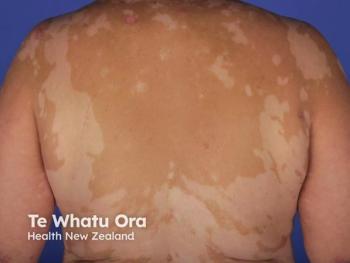
The FDA clearance allows Edesa to expand an ongoing placebo-controlled study of the CXCL10 antibody EB06 to US sites, with topline data expected in the fourth quarter of 2027.

The novel oral helicase-primase inhibitor demonstrated significantly higher rates of complete lesion healing compared with investigator’s choice treatment in the phase 3 PRIOH-1 trial.
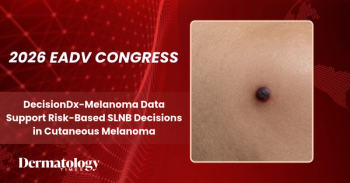
Prospective data suggest DecisionDx-Melanoma may help refine SLNB decisions and identify recurrence risk beyond conventional staging.

Falk G. Bechara, MD, discusses long-term tunnel control, structural damage, and the evolving role of biologics and surgery in HS care.
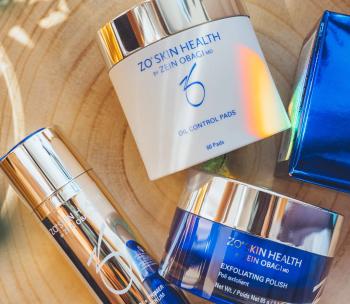
Galderma has agreed to acquire ZO Skin Health for $1.5 billion, adding the physician-dispensed skincare brand to a portfolio that already includes Cetaphil and Alastin.

New dermatology research explores hidden steroids in OTC products, infant eczema, melanoma prevention, cutaneous lymphoma, and pediatric AD.

SYX-5219 improved disease severity and itch in a Phase 1b trial of adults with moderate to severe atopic dermatitis.

In a survey of 301 employed adults, overall work impairment attributable to CHE was 31.8%, and quality of life worsened in step with self-reported disease severity.
Advertisement
Advertisement
Trending on Dermatology Times
1
FDA Approves Pritelivir for Refractory Mucocutaneous HSV in Immunocompromised Adults
2
GLP-1 Agonists Address Metabolic Risk in Psoriatic Disease
3
EB06 Phase 2 Vitiligo Study Receives FDA IND Clearance
4
EADV 2026 Atopic Dermatitis Highlights: Tilrekimig, RAC2 Inhibition, and Level Up Data
5