

Opinion|Videos|July 21, 2026
Shifting the Dermatology Mindset: Multidisciplinary Care in cSCC
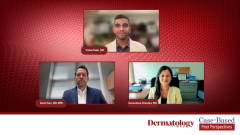
As systemic therapy enters earlier in the disease course, coordinated care becomes essential. Dr. Carr and Dr. Patel examine the communication infrastructure, such as tumor boards, referral pathways, and cross-specialty literacy, that distinguishes academic centers from community practice.
Advertisement
Episodes in this series
This video series has been produced independently by Dermatology Times and supported through an educational grant by Sun Pharmaceuticals.
Dr. Carr describes how the surgical mindset has evolved over his fifteen years in practice. Where clinicians once simply cut, removing large tumors without other options, medical oncology is now involved both earlier, in the neoadjuvant setting, and later, in the adjuvant setting. He frames this as a genuinely new management plan for squamous cell carcinoma, one that depends heavily on communication. Academic centers, he notes, are often well positioned with multidisciplinary tumor boards and established relationships with medical and radiation oncology, but many community systems lack those communication patterns, making the groundwork of connecting patients to the right specialists a real challenge.
Dr. Patel emphasizes that meaningful shifts have occurred even within the last five years, and that nimble adjustment is harder outside academic settings. He raises a practical question for the audience, largely dermatologists, about how established clinicians with decades of experience treating squamous cell carcinoma should recalibrate their thinking. Dr. Carr responds that interpreting oncology trials is a new skill set dermatologists must develop, and points to encouraging signs: professional meetings such as the Mohs college gathering have become markedly more oncology-heavy than a decade ago, offering real avenues to learn.
Dr. Patel closes by turning toward the referral process itself. He observes that dermatologists are broadly familiar with immunotherapy, whether from the AAD, Mohs meetings, or even television advertising, but that knowing when and to whom to refer remains the practical hurdle. He asks how clinicians should judge when it is appropriate to bring in a medical oncologist like Dr. Chandra, or a community oncology colleague, setting up the case-based discussion to follow.
In the next episode, "Case 1: Approaching a Borderline Resectable Advanced cSCC," Dr. Patel presents the panel's first case, a 78-year-old with a large, ulcerated temple tumor, and Dr. Carr walks through why borderline resectability pushes the conversation toward neoadjuvant immunotherapy.
Advertisement
Related to this article

Stratman discusses individualized eczema care, expanding treatment options, and the potential of precision medicine to guide therapy.

Face taping promises smoother skin and fewer wrinkles without injectables, but evidence suggests any visible benefits are largely temporary.

Explore trending plant oils in skincare and haircare, plus 2026’s hottest actives like ectoin and hypochlorous acid—balancing glow, barrier repair, and irritation risks.

Houston dermatology clinicians compared severity scoring, JAK inhibitor safety data, and psychosocial counseling strategies across 3 alopecia areata patient cases.

Preview the trial data dermatology NPs and PAs will dissect in small-group sessions on AD, psoriasis, and type 2 disease at Horizons in Advanced Practice.
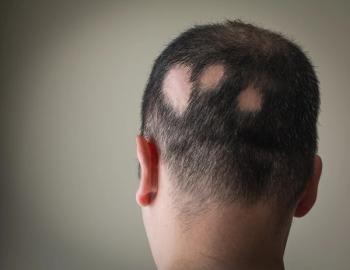
The September issue highlights advances in alopecia areata, cosmetic SPF, psoriasis treatment, teledermatology, and atopic dermatitis.

Phase 3 data show intismeran plus pembrolizumab reduced recurrence or death risk by 42% in patients with resected stage IIB-IV melanoma.
The 3rd annual meeting in Atlanta gives dermatology NPs and PAs 4 case-based breakout sessions and a general education session in a focused, small-group setting.
Advertisement
Advertisement
Trending on Dermatology Times
1
Clinicians Debate JAK Inhibitor Selection in Alopecia Areata
2
Menopause and the Skin: Recognizing Changes Beyond Aging
3
Lutikizumab Meets Primary End Point in Phase 3 HS Trial
4
AAD, HS Foundation Issue First Joint Hidradenitis Suppurativa Guidelines
5